 Save to Pinterest
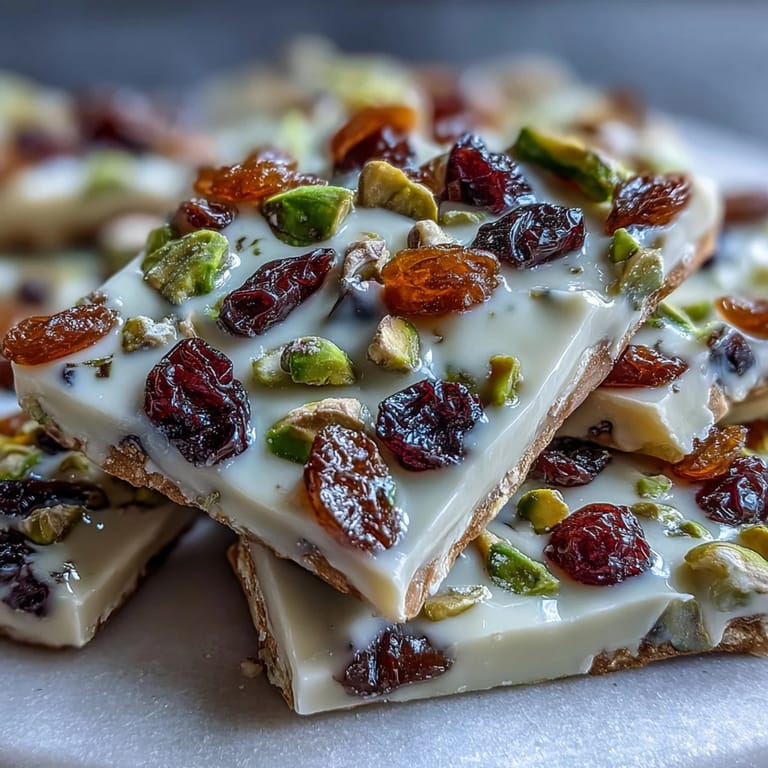
 I discovered this bark while reorganizing my kitchen one rainy afternoon, staring at a half-melted bar of white chocolate that refused to cooperate in a previous baking disaster. Instead of tossing it, I wondered what would happen if I leaned into simplicity—just smooth chocolate, the green crunch of pistachios, and those jewel-toned dried fruits catching the light. Fifteen minutes later, I had something so elegant it surprised me, something that looked far more complicated than it actually was.
My sister brought her new boyfriend to dinner once, and I had this bark chilling in the fridge as an afterthought. When I set the plate down, he actually paused mid-conversation—something about the contrast of creamy white chocolate with those bright cranberry flecks just stopped him. He ate three pieces before asking for the recipe, and now apparently he makes it every holiday. Food has a way of doing that, creating small moments that stick around longer than you expect.
- High-quality white chocolate, 400 g chopped: This is where your bark lives or dies; cheap chocolate tastes waxy and won't set properly, so invest in something with real cocoa butter if you can find it.
- Shelled pistachios, 80 g roughly chopped: The uneven chop matters because different sizes create textural surprise, and their natural saltiness balances the sweetness beautifully.
- Dried cranberries, 60 g chopped: Their tartness cuts through the richness and gives you visual drama with those deep red pockets throughout.
- Dried apricots, 40 g chopped: These add a subtle honey-like warmth and help bind the bark together as they soften slightly from the chocolate heat.
- Prepare your canvas:
- Line a baking sheet with parchment paper, making sure the corners are tucked flat so the chocolate doesn't seep underneath.
- Melt with patience:
- If using a double boiler, let the water barely simmer—too hot and the chocolate breaks down. If you're microwaving, those 30-second bursts matter; it's slower but gives you control and prevents scrambled-looking chocolate.
- Spread while it's warm:
- Pour the chocolate onto parchment and use a spatula to nudge it into a rectangle about 1 cm thick, working quickly before it starts setting at the edges.
- Scatter and press:
- Sprinkle all your pistachios, cranberries, and apricots across the warm chocolate immediately, then use your spatula to gently press them down so they nestle in rather than sit on top.
- The hardest part—waiting:
- Room temperature takes an hour but gives you the most even set; refrigeration works in 20-30 minutes if you're impatient like I usually am.
- Break into beauty:
- Use a sharp knife for cleaner edges, or just break it by hand for those rustic, irregular shards that somehow taste better.
 Save to Pinterest
 Tired of Takeout? 🥡
Get 10 meals you can make faster than delivery arrives. Seriously.
One email. No spam. Unsubscribe anytime.
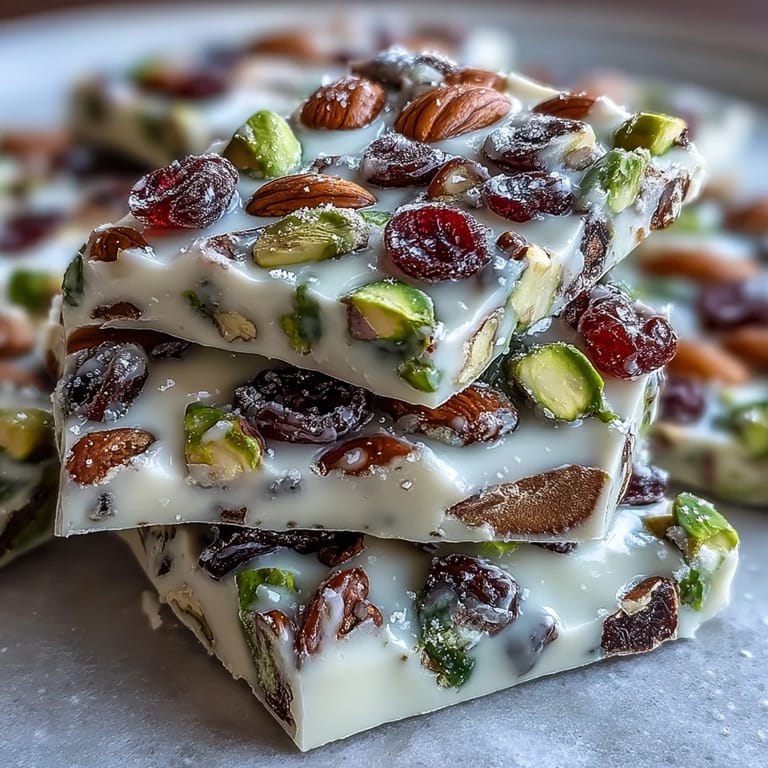
There's something almost meditative about watching this bark come together, the way the colored fruit gets suspended in creamy white like tiny edible stained glass. I made a batch once just to have something nice to look at while I worked through a problem, and somehow the finished product felt like I'd actually accomplished something tangible that day.
Once you understand the basic formula, you can play endlessly with what you top it with. Dried cherries and blueberries create a more sophisticated, wine-pairing situation, while mango and coconut flakes push it tropical. I've even done a winter version with candied ginger and pistachios, which sounds odd but somehow tastes like Christmas. The white chocolate acts as a blank canvas, so trust your instincts about what sounds good together.
A pinch of flaky sea salt sprinkled across the chocolate before it sets is the difference between nice and memorable. Don't go heavy—you're looking for a whisper of salt that makes people pause and say they can't quite name what they're tasting. I learned this by accident when someone's salt shaker tipped near my cooling bark, and now I do it intentionally every time because that subtle contrast is what makes people eat more than one piece.
This bark lives happily in an airtight container at room temperature for two weeks, though honestly it rarely lasts that long in my house. In warmer months, keep it in the fridge so the chocolate doesn't soften, but let it come to room temperature before eating so you get the full melt-on-your-tongue experience. For gifting, layer pieces between parchment in a box tied with ribbon, and include a small note that it's homemade and gluten-free if that matters to them.
- Wrap individual pieces in wax paper for a more polished gift presentation.
- Pair a box with a nice tea or coffee for a thoughtful, composed gift.
- Make it the day before gifting so the chocolate has time to fully harden and won't stick to wrapping.
 Save to Pinterest
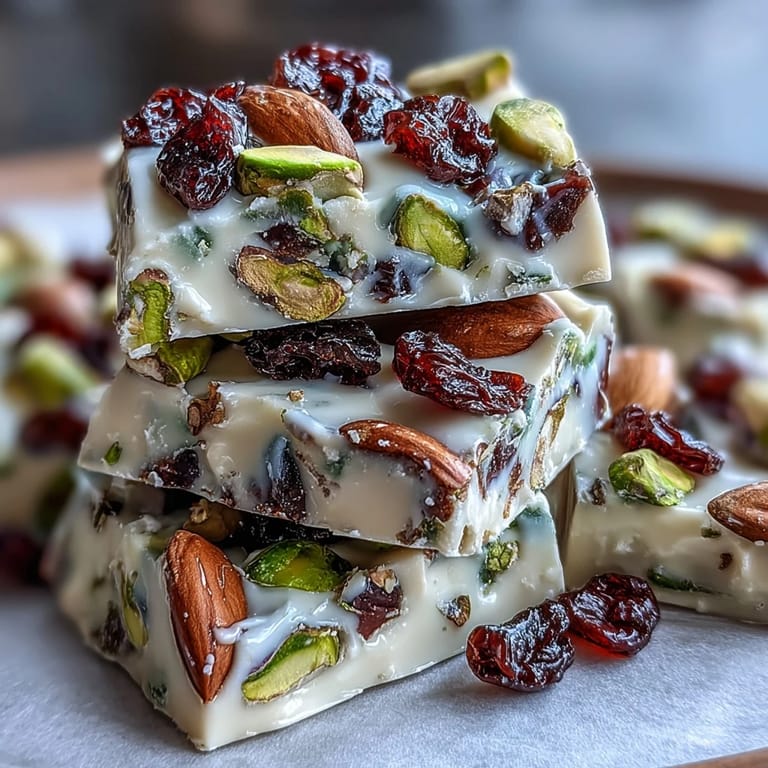
 This bark has become my go-to when I want to feel like I've made something special without the stress of elaborate baking. It's the kind of recipe that reminds you that simplicity and quality ingredients are often enough.
Recipe FAQ
- → How do I melt white chocolate without burning it?
Use a double boiler or microwave in short bursts (30 seconds), stirring well between each to prevent overheating and ensure smooth melting.
- → Can I substitute other nuts for pistachios?
Yes, almonds, hazelnuts, or cashews can be used to add a different crunch and flavor while keeping the texture contrast.
- → What dried fruits work best as toppings?
Dried cranberries and apricots add vibrant color and tartness, but cherries, blueberries, or mango pieces also complement the white chocolate nicely.
- → How should I store the finished chocolate bark?
Store in an airtight container at room temperature or in the refrigerator to maintain freshness and prevent softening.
- → Is it possible to add a salty element to balance sweetness?
A light sprinkle of flaky sea salt over the chocolate before it sets enhances flavor by contrasting the sweetness and deepening taste complexity.