 Save to Pinterest
 My sister called mid-afternoon asking if I could pull together dinner for her surprise visit, and I found myself staring at a beautiful pork tenderloin that had been sitting in the fridge all week. Rather than panic, I remembered something my neighbor had mentioned about roasting vegetables and protein together on a single pan. That one conversation sparked this whole approach, and now it's become the recipe I reach for whenever I need something that looks impressive but doesn't demand hours in the kitchen.
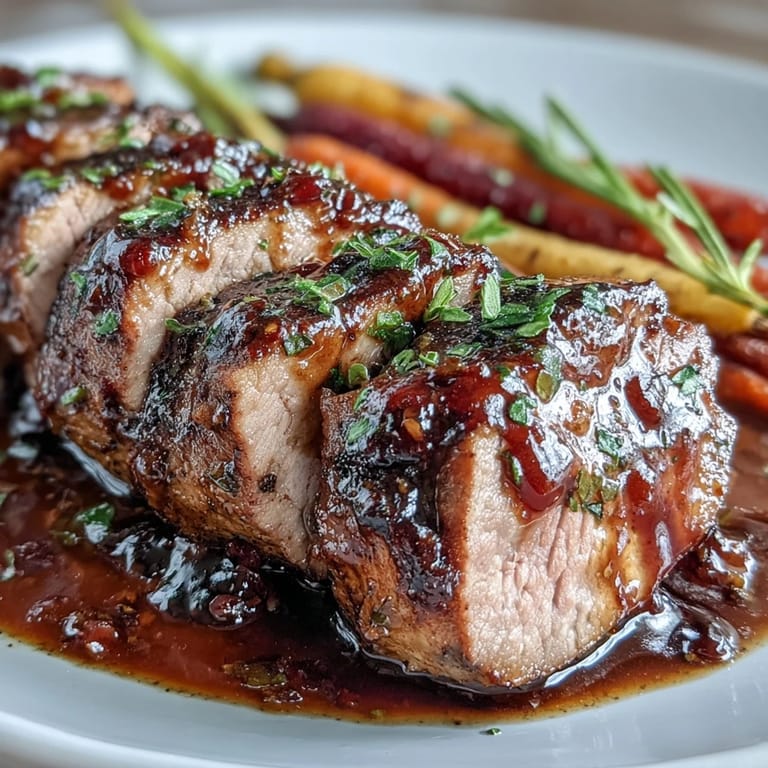
When my sister walked through the door, the kitchen smelled like caramelized honey and charred thyme, and she immediately asked what I was making. I explained the whole concept while the pork was in its final minutes, and she watched from the counter as I pulled it out and let it rest. Somehow the simplicity of the process made the final plate feel even more special, like I'd managed to make something beautiful without any stress.
Ingredients
- Pork tenderloin (1 ½ lbs, trimmed): This cut is lean and cooks quickly, which is exactly why it won't dry out in the 25-30 minute window, but make sure it's actually trimmed of its silver skin or the exterior won't brown properly.
- Olive oil (2 tbsp total, divided): The oil creates that golden crust on both the pork and carrots that keeps everything from sticking to the pan.
- Kosher salt and fresh black pepper: These aren't just seasoning—they're what actually help the pork develop flavor as it roasts, so don't skip grinding the pepper fresh.
- Honey (3 tbsp): Pure honey gives you that glossy, caramelized finish that you simply can't replicate with any other sweetener.
- Balsamic vinegar (2 tbsp): The acidity balances the honey so the glaze isn't one-note sweet, and it actually darkens as it cooks, which creates visual drama on the plate.
- Dijon mustard (1 tbsp): This acts as an emulsifier that helps the glaze cling to the pork, plus it adds a subtle sharpness that cuts through the richness.
- Garlic cloves (2, minced): Mince these as fine as you can because whole pieces burn in the oven, and minced garlic distributes the flavor evenly throughout the glaze.
- Dried or fresh thyme (1 tsp or 1 tbsp): Thyme has this earthy quality that makes pork taste more like itself, and it actually smells incredible as it roasts.
- Rainbow carrots (1 lb, peeled and halved lengthwise): Cutting them lengthwise instead of into rounds means they caramelize on the flat side while staying tender inside, and the colors stay vibrant.
Tired of Takeout? 🥡
Get 10 meals you can make faster than delivery arrives. Seriously.
One email. No spam. Unsubscribe anytime.
Instructions
- Get your oven ready and prep your pan:
- Preheat to 425°F and line a rimmed baking sheet with parchment or foil—this isn't just about cleanup, it's about preventing any sticking so your vegetables brown instead of steam. The higher heat is what gives everything that golden-brown exterior you're after.
- Season and arrange the carrots:
- Toss the halved carrots with olive oil, salt, and pepper, then spread them around the edges of your baking sheet in a single layer. This arrangement matters because it leaves the hot center of the pan for the pork while the carrots cook gently around the sides.
- Prepare the pork with a dry surface:
- Pat the pork completely dry with paper towels—moisture is the enemy of browning. Rub it all over with oil and season generously, making sure to get the sides and ends, not just the top.
- Make your glaze while the pan is empty:
- Whisk together honey, balsamic vinegar, Dijon mustard, minced garlic, and thyme in a small bowl until it looks like a loose sauce. This is your moment to taste it (though it'll be raw), and adjust the balance if it tastes too sweet or too sharp.
- Place the pork and brush on the first coat:
- Nestle the pork in the center of the pan among the carrots and brush half the glaze over the top and sides. Don't worry if it pools on the pan—it'll reduce and coat everything as it roasts.
- Roast for 15 minutes, then flip and glaze again:
- Remove the pan carefully (the glaze will be bubbling), brush the remaining glaze over the pork, and return it to the oven. At this point you should start checking the carrots to see if they're starting to brown at the edges.
- Finish roasting until the pork reaches 145°F:
- Continue roasting for another 10-15 minutes—the exact time depends on the thickness of your tenderloin, which is why the meat thermometer is your best friend here. The carrots should be deeply caramelized and tender when you pierce them with a fork.
- Rest the pork before slicing:
- Transfer the pork to a cutting board and let it sit for 5 minutes—this allows the juices to redistribute so your slices stay moist instead of releasing all their liquid onto the plate. Use that resting time to scoop the pan juices into a small serving bowl.
 Save to Pinterest
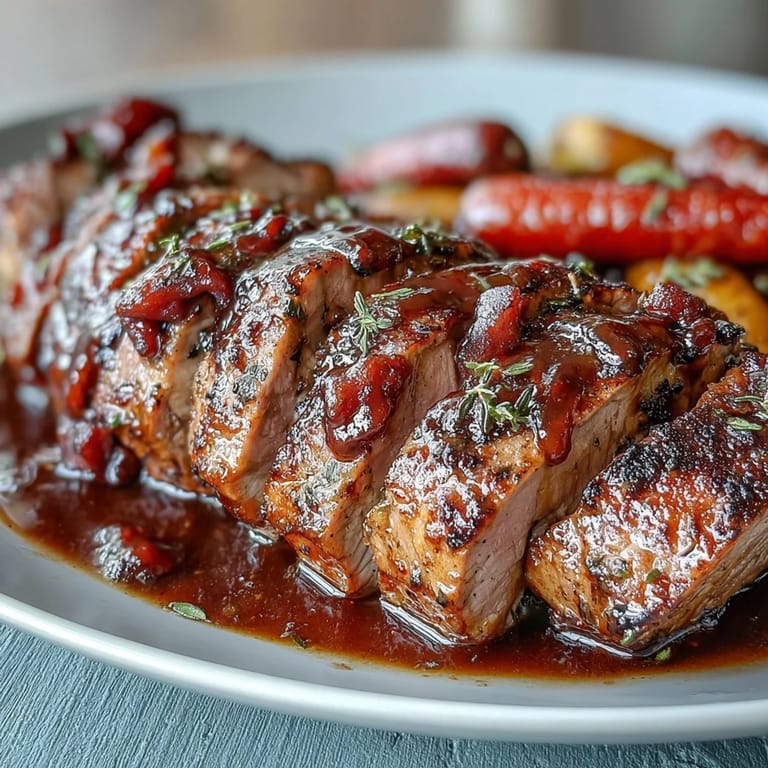
 About halfway through that dinner with my sister, she paused mid-bite and said the pork tasted like something from a restaurant she'd been to in Portland. I realized then that it wasn't actually about the complexity of the recipe—it was about how the honey and balsamic created this perfect sweet-savory balance that elevated something simple into something memorable. That's when cooking stopped feeling like a task and started feeling like a small form of generosity.
The Magic of One-Pan Cooking
There's something almost meditative about one-pan cooking, where the vegetables and protein cook in the same space, their flavors mingling as the moisture from the carrots seasons the pork and vice versa. The pan juices that drip from the pork get absorbed by the carrots, creating a natural sauce that tastes like you actually spent time on the stovetop reducing things. You're not actually multitasking—you're just being smart about heat and space.
Why This Glaze Works So Well
The honey provides the sweetness and helps everything caramelize, while the balsamic adds depth and prevents the glaze from tasting one-dimensional. The Dijon mustard is the secret ingredient that most people skip—it acts as a binder, keeps the glaze from separating, and adds a subtle complexity that makes people ask what's in it. The garlic and thyme round out the flavor profile, creating something that tastes way more complicated than it actually is.
Variations and Swaps That Actually Work
While rainbow carrots are beautiful and slightly sweeter than regular carrots, you can absolutely swap in regular orange carrots, baby carrots, or even parsnips if that's what you have. The beauty of this dish is its flexibility—if you're out of Dijon mustard, whole grain mustard works just as well, and if you don't have fresh thyme, rosemary or oregano would be equally delicious. Some nights I've added a tablespoon of balsamic reduction to the glaze for extra depth, and other times I've drizzled fresh lemon juice over everything just before serving.
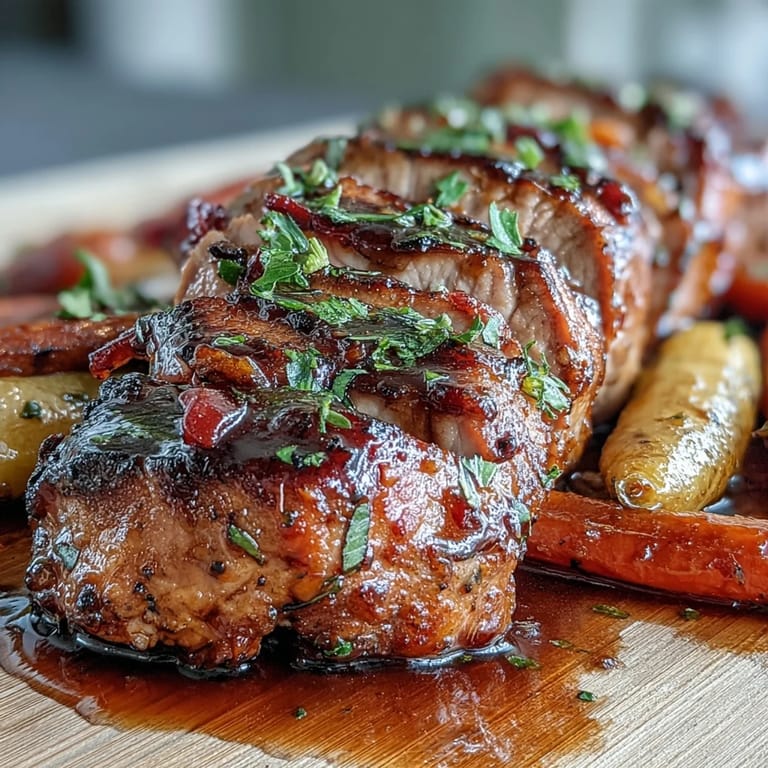
- Fresh herbs sprinkled over the finished dish add brightness and a restaurant-quality touch that takes about ten seconds.
- If your pork is significantly thicker or thinner than average, adjust oven time accordingly—use that meat thermometer and don't rely on timing alone.
- Leftovers sliced thinly and served at room temperature with a small green salad make an excellent lunch the next day.
 Save to Pinterest
 This recipe became my go-to dinner solution because it proves that impressive food doesn't require a list of impossible ingredients or hours of fussing. Every time I make it, I'm reminded that sometimes the best meals are the ones we throw together with confidence, not the ones we overthink.
Recipe FAQ
- → What is the best way to check pork doneness?
Use a meat thermometer to ensure the internal temperature reaches 145°F (63°C) for safe, juicy pork.
- → Can I substitute rainbow carrots?
Yes, regular carrots or parsnips work well as alternatives, offering similar sweetness and texture.
- → How do I achieve a caramelized finish on the carrots?
Toss carrots with olive oil, salt, and pepper and roast them uncovered at a high temperature to encourage caramelization.
- → Is it necessary to let the pork rest after cooking?
Resting allows juices to redistribute, resulting in tender, more flavorful slices.
- → What herbs complement this dish best?
Thyme adds a subtle earthiness, but fresh herbs like rosemary or parsley can also enhance the flavors.