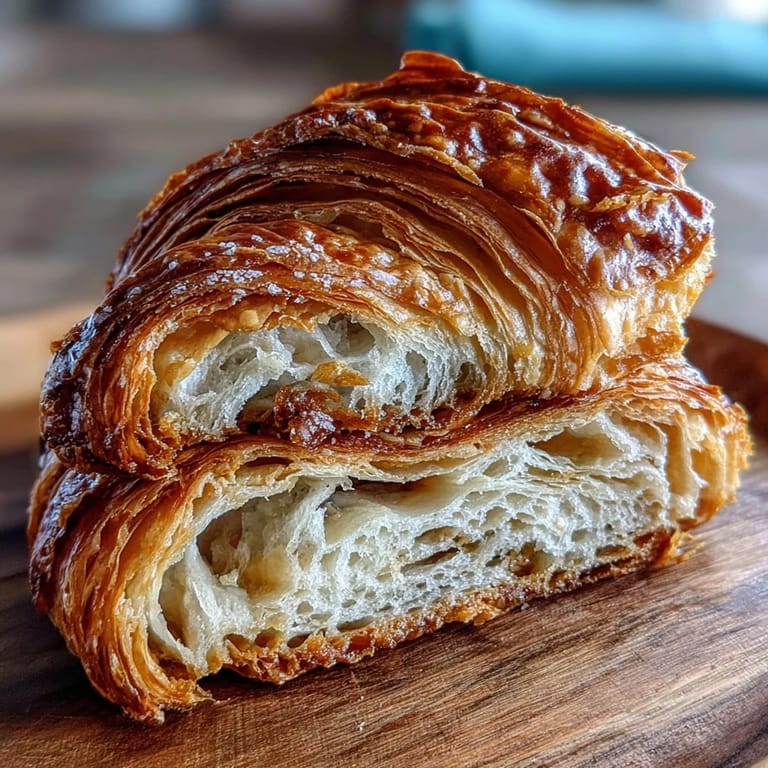
 Save to Pinterest
 The first time I attempted sourdough croissants, I was standing in my kitchen at 6 AM on a Saturday, staring at a butter block I'd just spent twenty minutes pounding flat. My starter had been bubbling away on the counter for weeks, and I kept thinking, why not push it further? What started as curiosity turned into an obsession with laminated dough, and now whenever someone mentions croissants, I think of that morning—flour dust catching the light, the crisp snap of parchment paper, the smell of butter beginning to toast.
I brought a batch to a neighborhood coffee gathering last spring, and watching someone close their eyes after that first bite—really close them—that's when I knew this recipe had something special. The sourdough gave these croissants a personality that store-bought versions just don't have, and the texture was so delicate it practically dissolved.
Ingredients
- Bread flour (500 g): Its higher protein content creates the structure needed for lamination; I learned to never swap this for all-purpose flour if you want those distinct, separate layers.
- Granulated sugar (60 g): Feeds the starter and adds subtle sweetness without overwhelming the delicate sourdough flavor.
- Fine sea salt (10 g): Controls fermentation speed and enhances the subtle tang from your starter.
- Cold whole milk (240 ml): The temperature matters more than you'd think; cold milk keeps the dough manageable while you're working the butter in.
- Active sourdough starter at 100% hydration (100 g): This is your flavor secret, and it needs to be bubbly and fed a few hours before mixing.
- Softened unsalted butter for dough (30 g): Just enough to enrich without interfering with lamination; softened means it mixes smoothly.
- Cold unsalted butter for the block (250 g): This is what creates those shattered layers, so it must stay cold and firm until you fold it in.
- Egg (1 large) and milk (1 tbsp): The egg wash gives that signature burnished golden shine and helps everything brown evenly.
Tired of Takeout? 🥡
Get 10 meals you can make faster than delivery arrives. Seriously.
One email. No spam. Unsubscribe anytime.
Instructions
- Mix the foundation:
- Combine flour, sugar, and salt in a large bowl, then add your cold milk, bubbly starter, and softened butter. Mix just until combined, then knead for about 8 minutes until the dough feels smooth and elastic—you're building gluten structure, not overdeveloping it.
- First chill:
- Shape your dough into a rough rectangle, wrap it tightly in plastic, and let it rest in the refrigerator for at least 2 hours. This pause lets the gluten relax and the flavors meld slightly.
- Prepare the butter block:
- Place your 250 g of cold butter between two sheets of parchment paper and pound it gently until it's pliable, then roll it into a 20 x 15 cm rectangle. The goal is butter soft enough to fold without cracking but firm enough to maintain distinct layers.
- First fold (the lock-in):
- Roll your chilled dough out to 40 x 20 cm, place the butter block on one half, fold the dough over it like closing a book, and press the edges to seal. You've just encased your butter, and this is where the magic begins.
- First turn:
- Rotate the dough 90 degrees and roll it out to 60 x 20 cm, then fold it into thirds like a letter. Wrap it, chill for 1 hour, and repeat this rolling and folding process two more times, always chilling between turns.
- Extended rest:
- After your final fold, wrap the dough and refrigerate overnight, ideally 8-12 hours. This long chill develops flavor and makes shaping so much easier the next morning.
- Shape and cut:
- Roll your chilled dough to 60 x 30 cm, about 5 mm thick, then cut it into 12 long triangles. Keep everything cool and work quickly so the butter doesn't soften.
- Roll into crescents:
- Starting from the wide end of each triangle, roll gently toward the point, then curve slightly into a crescent shape and tuck the tip underneath. Place them on parchment-lined baking sheets as you go.
- Final proof:
- Cover the croissants loosely with a towel and let them proof at room temperature until they've doubled, about 2-3 hours. You'll see them puff slightly and feel a bit springy when you gently poke one.
- Finish and bake:
- Preheat your oven to 200°C (400°F), whisk together the egg and milk for your wash, and brush it lightly onto each croissant. Bake for 18-22 minutes until they're deeply golden and sound crisp when you tap them.
 Save to Pinterest
 There's a moment during that final proof when you walk past the counter and catch the buttery, yeasty smell—that's when you know you're close. I always sit down with my first croissant still warm, a cup of coffee, and that quiet satisfaction that comes from making something beautiful with your own hands.
Why Sourdough Changes Everything
Regular croissants are delicious, but sourdough croissants have a subtle complexity that sneaks up on you. The starter adds a whisper of tang that balances the richness of the butter, and it gives the whole thing a more interesting flavor arc. I started doing this because I wanted to use my starter in more ways, but it became my favorite way to bake these, hands down.
Make-Ahead Magic
The beauty of this recipe is built into its timing—that overnight chill means you can do most of the work the day before and wake up to just shaping and baking. I often prepare everything through the final fold in the afternoon, chill overnight, and the next morning I'm rolling and shaping while my coffee brews. It's the kind of recipe that fits into real life instead of demanding your whole day.
Variations and Serving Ideas
Once you've mastered the basic croissant, the possibilities open up beautifully. You can brush them with vanilla extract before the final proof for a subtle floral note, or slip a square of dark chocolate into each one before rolling. They're equally stunning with a smear of almond butter and jam, a slice of gruyere tucked inside, or even filled with ham and mustard for a breakfast that feels more substantial.
- For chocolate croissants, place a small bar or chocolate chips at the wide end before rolling, and watch them melt into pockets of joy.
- A teaspoon of vanilla in the dough creates a more rounded sweetness that pairs beautifully with morning coffee.
- Freeze unbaked, shaped croissants on a tray, then bag them; bake straight from frozen, adding just a few extra minutes to the baking time.
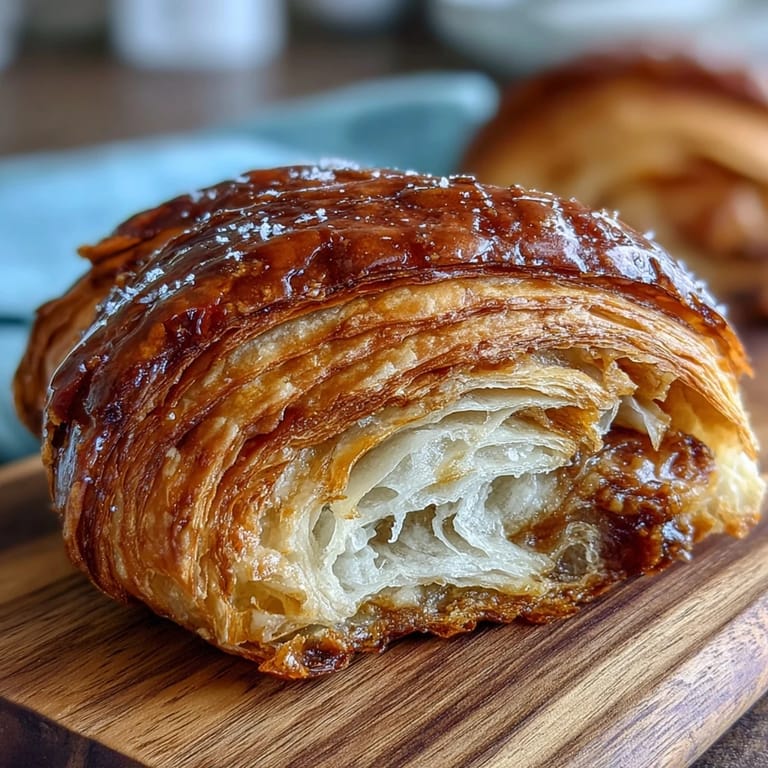 Save to Pinterest
 Every time I pull a tray of these golden crescents from the oven, I'm reminded that good things really do take patience. These croissants are proof that the techniques that matter most are the ones that slow you down.
Recipe FAQ
- → What makes the croissants flaky?
The alternating layers of dough and cold butter create steam during baking, separating the layers and producing flakiness.
- → How does the sourdough starter affect flavor?
The sourdough starter imparts a subtle tanginess and depth, enhancing the overall taste of the croissants.
- → Why is the dough chilled between folds?
Chilling relaxes gluten and keeps the butter firm, which helps maintain distinct layers and prevents butter melting into the dough.
- → Can these croissants be frozen?
Yes, they can be frozen after baking and reheated while retaining their crispness and flavor.
- → What is the purpose of the egg wash?
Brushing egg wash before baking promotes a shiny, golden-brown crust and adds visual appeal.