 Save to Pinterest
 My sister called one Tuesday asking if I could make something comforting but not heavy, and turkey meatballs came to mind—that moment when you realize the simplest dishes often taste the best. There's something almost meditative about rolling each ball between your palms, feeling the mixture hold together just right, knowing you're about to create something that fills both the kitchen and the people around you with warmth. These aren't fancy; they're honest food that somehow always finds its way back to my table.
I made this for my friend who'd just moved into her first apartment with barely any equipment, and watching her face light up when the sauce started simmering in that single borrowed saucepan told me everything I needed to know about why this recipe matters. It's forgiving, it's foolproof, and it tastes like someone who knows you took time in the kitchen.
Ingredients
- Ground turkey: The foundation—lean enough to feel virtuous but needs that gentle binding from egg and breadcrumbs or it becomes dense and sad.
- Egg: Your binder, the thing that holds the story together; one large egg is all you need.
- Breadcrumbs: Not just filler—they soften and lighten, making meatballs tender instead of springy, and milk blooms them so they hydrate from within.
- Milk: A trick I learned after one too many dense batches; it awakens the breadcrumbs and keeps everything moist.
- Parmesan cheese: Grated fresh, not pre-shredded, because those anti-caking agents betray you in cooking.
- Garlic and parsley: Where the personality lives; fresh parsley if you can find it, dried if that's what your kitchen holds.
- Oregano: Italian by habit, but it earns its place through pure flavor.
- Crushed tomatoes: Use canned if fresh feels like a chore; they're cooked and concentrated, ready to become something beautiful.
- Olive oil: For building the sauce base, where onions soften and garlic whispers its sweetness into everything.
- Basil: Added to the sauce, not the meatballs, keeping flavors distinct and bright.
Tired of Takeout? 🥡
Get 10 meals you can make faster than delivery arrives. Seriously.
One email. No spam. Unsubscribe anytime.
Instructions
- Mix without overworking:
- Combine turkey, egg, breadcrumbs soaked in milk, Parmesan, garlic, parsley, oregano, salt, and pepper in one bowl, stirring just until the ingredients disappear into each other. Overworking toughens turkey, so use restraint.
- Shape into rounds:
- Roll sixteen to eighteen golf-ball-sized meatballs between your palms, pressing gently so they hold together but don't compress into hockey pucks. Line them on parchment paper with space to breathe.
- Bake until golden:
- Twenty minutes at 200°C, turning halfway through, gives you lightly browned exteriors and cooked-through centers without drying them out. They won't be brown-brown; they'll be pale and set.
- Build the sauce while they bake:
- Heat olive oil, sauté onion until it softens and turns translucent, add garlic for just a minute, then pour in crushed tomatoes with basil, oregano, a pinch of sugar if acidity seems sharp, salt, and pepper. Let it simmer gently, tasting and adjusting as you go.
- Finish together in sauce:
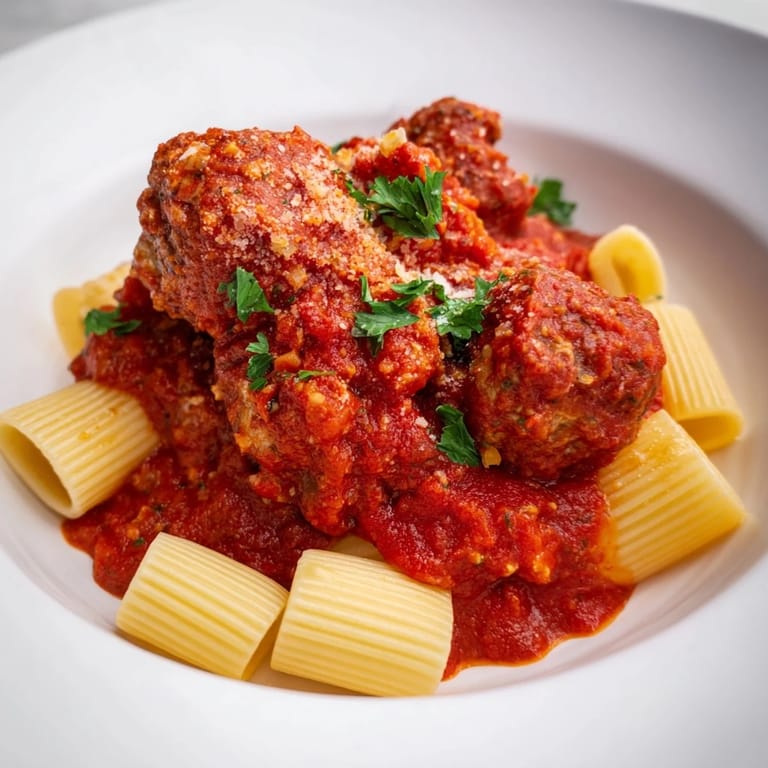
- Transfer baked meatballs into the warm sauce, spooning it over them, and let everything marry for ten minutes on low heat. This isn't about cooking the meatballs further; it's about flavor moving between the sauce and the meat.
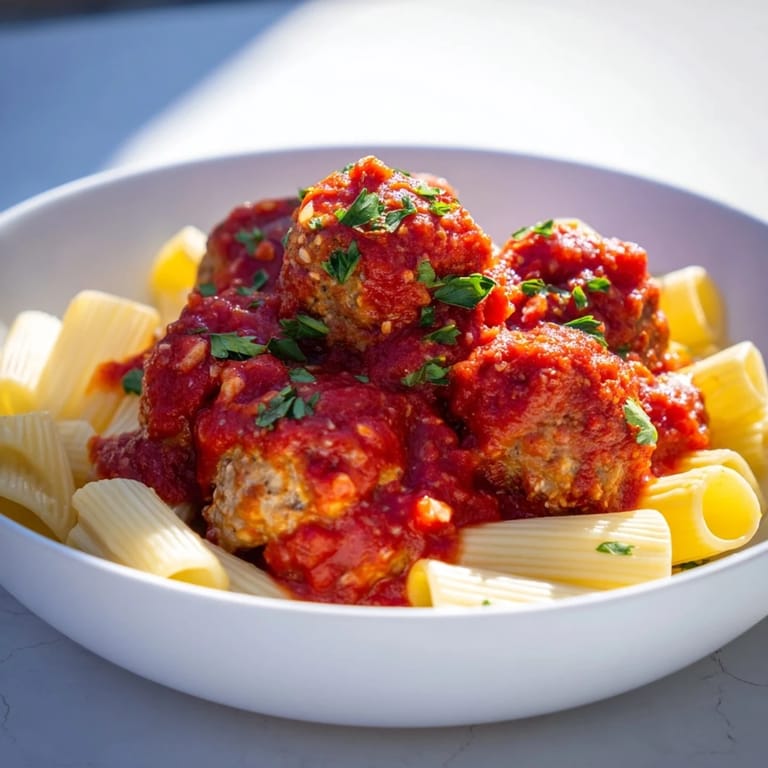
- Serve over pasta or rice:
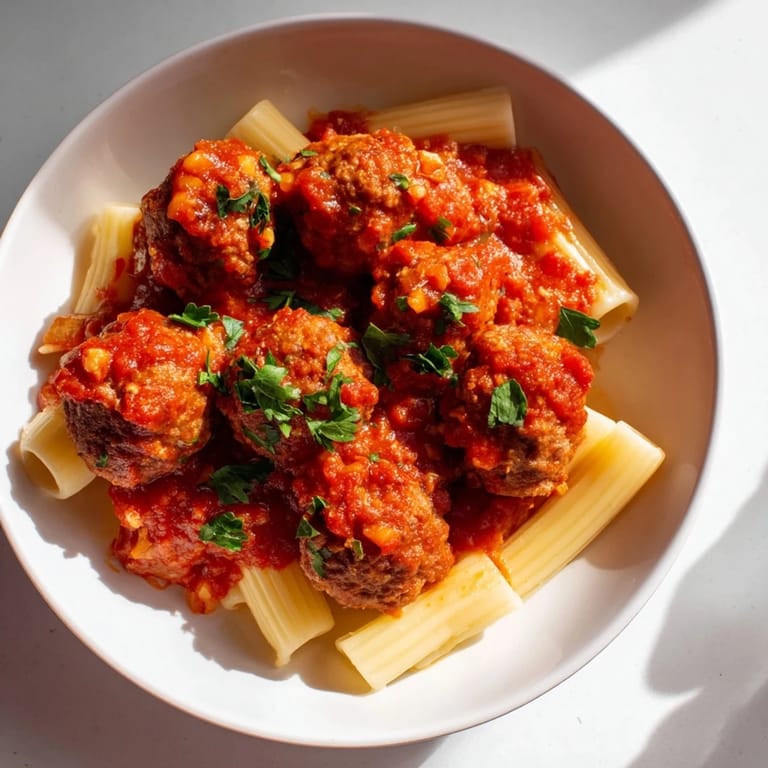
- Use whatever grain you have or what your mood calls for—both work, both are right. Garnish with fresh herbs and Parmesan if the spirit moves you.
 Save to Pinterest
 There was a night when my neighbor came over just as the sauce was building, and she stayed for dinner without asking because the smell coming from my kitchen made staying seem like the only sensible option. That's when I understood these aren't just meatballs; they're an invitation.
Keeping Them Tender
Turkey naturally skews toward dry if you're not careful, which is why that milk-soaked breadcrumb mixture becomes so essential—it's insurance. I've learned to never skip the gentle mixing step, to never cook them harder than they need, and to remember that residual heat keeps working even after you pull them from the oven. The moment meatballs hit the sauce is the moment they're cradled rather than cooked, which matters more than any temperature you'll check.
Sauce as Character
The tomato sauce is where your kitchen develops personality, where you can taste if you're patient, where a careful pinch of sugar balances years of acidity on the shelf, where garlic becomes sweet if you treat it gently. I've made this sauce dozens of times now, and it never tastes the same way twice—sometimes it's brighter, sometimes deeper, sometimes more herbal. That variability isn't failure; it's the sauce responding to your hand, your timing, your ingredients on that particular day.
Making It Your Own
These meatballs are a canvas if you want them to be, responding to whatever your kitchen holds or your cravings demand. I've stretched them with gluten-free breadcrumbs for friends with sensitivities, stirred chili flakes through the mixture for nights when spice felt necessary, swapped zucchini noodles for pasta when I wanted lightness. The foundation holds; the variations bloom from there.
- Add red pepper flakes to the meat mixture if heat calls you, or to the sauce if you want to build it gradually.
- Fresh mint in the sauce instead of basil transforms the whole thing into something unexpectedly bright.
- A splash of red wine in the sauce softens and deepens, turning something simple into something that tastes older than it is.
 Save to Pinterest
 These turkey meatballs have become my answer to the question I ask myself most nights: what can I make that feels like care? They're simple enough to teach someone, real enough to feed people you love, and flexible enough to bend toward whatever you need that evening.
Recipe FAQ
- → How should the turkey balls be cooked?
Shape the mixture into small balls and bake them at 200°C for 18–20 minutes until lightly golden and cooked through.
- → Can these be prepared gluten-free?
Yes, use gluten-free breadcrumbs and pasta or rice to keep the dish gluten-free without sacrificing texture.
- → What herbs enhance the tomato sauce?
Oregano and basil are used to flavor the tomato sauce, providing a classic aromatic profile.
- → Is it possible to add spice to this dish?
Adding chili flakes during simmering can give the sauce a nice spicy kick if desired.
- → What serving options are best for these meatballs?
They pair well with pasta or cooked rice and can be garnished with fresh basil, parsley, and grated Parmesan.
- → How long is the total preparation and cooking time?
The entire process takes around 50 minutes, including 20 minutes prep and 30 minutes cooking time.