 Save to Pinterest
 My coworker Sarah brought leftovers to the office one Tuesday that smelled absolutely incredible—creamy, spicy, and nothing like the mac and cheese I grew up with. She'd combined her two favorite comfort foods: a silky cheese sauce and Korean-inspired ground turkey with gochujang, and I immediately asked for the recipe. The first time I made it at home, my kitchen filled with the aroma of toasted sesame oil and garlic, and I realized this was the kind of dish that bridges two worlds on one plate without feeling forced or confused about its identity.
I made this for my partner on a rainy Sunday when we were both tired and craving something warm but interesting, and watching their face light up as they tried it reminded me why fusion cooking matters—it's not about showing off, it's about making something that feels entirely new while still feeling like home.
Ingredients
- Elbow macaroni (12 oz): The shape matters here because those little tubes trap the creamy sauce and turkey pieces, making every bite balanced and satisfying.
- Whole milk (2 cups): Don't skip the whole milk or try to stretch it with water—the fat content is what makes the sauce silky and prevents that grainy texture that happens with skim.
- Unsalted butter (2 tbsp): Unsalted lets you control the salt level, which matters when gochujang already brings sodium to the party.
- All-purpose flour (2 tbsp): This creates the roux that thickens everything; cook it for just a minute to remove the raw flour taste without letting it brown.
- Sharp cheddar cheese (1 1/2 cups): The sharpness cuts through the richness and stands up to the Korean flavors instead of disappearing into them.
- Mozzarella cheese (1/2 cup): This adds stretchiness and creaminess; the combination of cheddar and mozzarella is more interesting than either alone.
- Kosher salt and black pepper: Taste as you go because the turkey mixture brings its own seasoning, and you don't want the final dish to be oversalted.
- Ground turkey (1 lb): Choose the fattier ground turkey (85/15 blend) if you can find it, as extra-lean turkey can dry out and taste stringy.
- Gochujang (2 tbsp): This Korean chili paste is the soul of the dish—find it in Asian markets or online, and note that different brands vary in heat and sweetness, so adjust to your preference.
- Low-sodium soy sauce (1 tbsp): Low-sodium is essential here or the whole dish becomes too salty; the soy adds umami depth that regular salt can't.
- Honey (1 tbsp): This balances the gochujang's heat and saltiness, creating that sweet-spicy tension that makes the turkey addictive.
- Toasted sesame oil (2 tsp): Use actual toasted sesame oil, not the clear kind—the flavor difference is night and day, and a little goes a long way.
- Garlic and ginger: Fresh, never powdered—the aromatic base that makes the turkey smell incredible while it cooks.
- Red pepper flakes (optional): If you like serious heat, add these to the turkey; if you like mild, skip them entirely.
- Scallions (4, thinly sliced): The brightness and fresh bite at the end prevent the dish from feeling heavy, and they look beautiful too.
- Toasted sesame seeds: A tiny sprinkle adds textural contrast and visual appeal without changing the flavor much.
Tired of Takeout? 🥡
Get 10 meals you can make faster than delivery arrives. Seriously.
One email. No spam. Unsubscribe anytime.
Instructions
- Get the pasta started:
- Bring a large pot of salted water to a rolling boil—the water should taste like the sea—then add your elbow macaroni and cook according to the package time, stirring occasionally. Drain and set aside, but don't rinse it; you want that starch on the surface to help the cheese sauce cling.
- Build the cheese sauce base:
- Melt butter in a large skillet over medium heat, then whisk in flour and cook for exactly one minute while stirring constantly to create a smooth paste without any lumps. Pour milk in slowly while whisking continuously—this is where patience matters, because rushing this step creates a lumpy sauce that no amount of straining can fix.
- Bring the sauce together:
- Keep whisking as the mixture thickens, about 3 to 4 minutes, until it coats the back of a spoon and you can draw a line through it with your finger. Lower the heat to medium-low and add your shredded cheeses, stirring until completely melted and smooth, then season with salt and black pepper and keep it warm on low heat.
- Cook the Korean turkey:
- Heat sesame oil in a separate skillet over medium-high heat, then add minced garlic and ginger and sauté for about 1 minute until fragrant and starting to turn golden. Add your ground turkey and break it up with a wooden spoon as it cooks, stirring every minute or so, until there's no pink remaining—this takes about 5 to 6 minutes depending on how fine you crumble it.
- Season the turkey magic:
- Stir in gochujang, soy sauce, and honey, mixing until every piece of turkey is coated in the glossy sauce, then cook for another 2 to 3 minutes until the sauce slightly thickens and the flavors meld. Add red pepper flakes now if you want extra heat, taste it, and remember that you can always add more spice but you can't take it out.
- Combine everything:
- Pour your cooked macaroni into the cheese sauce and stir gently but thoroughly until every piece is coated with that creamy coating. Fold in half of your cooked turkey mixture and give it a gentle stir—don't overmix or you'll make the dish heavy.
- Plate and finish:
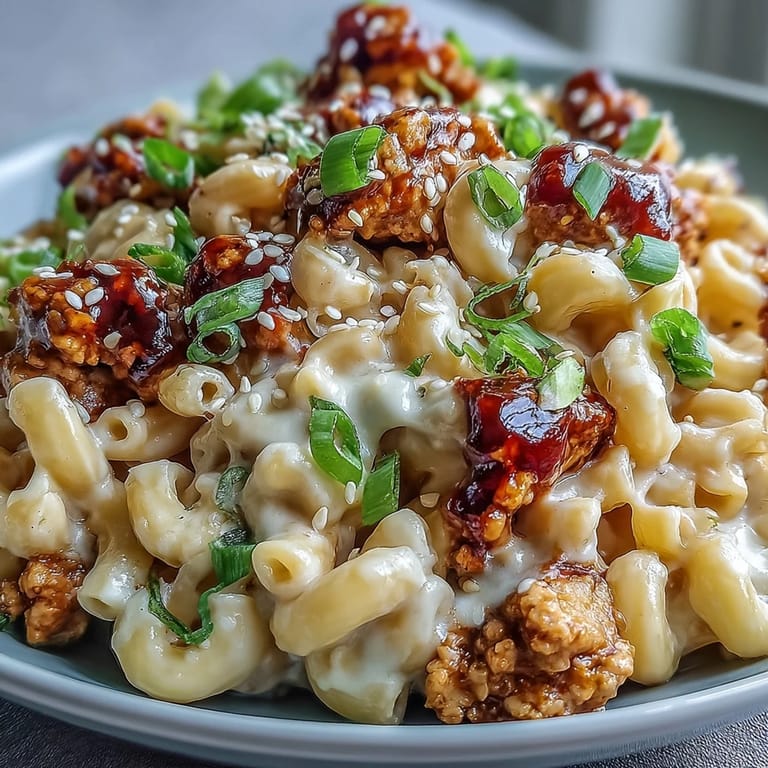
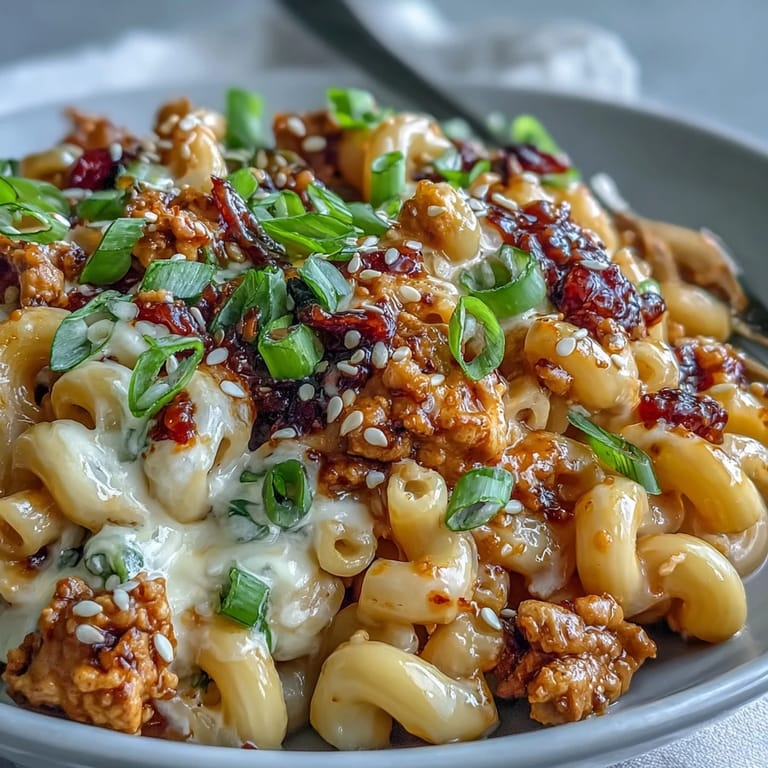
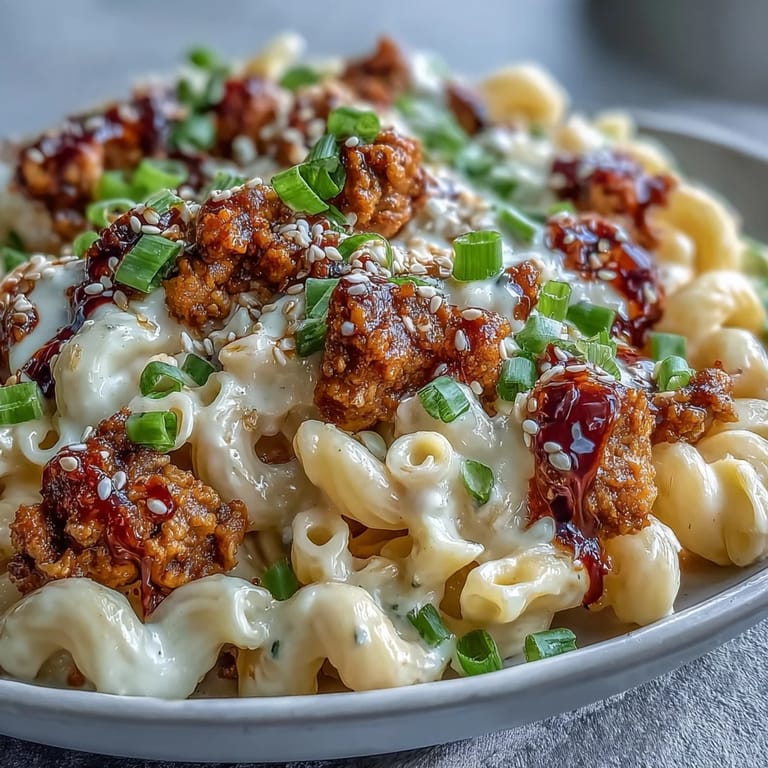
- Divide the mac and cheese among serving bowls, then top each with the remaining turkey crumbles, sliced scallions, and a small sprinkle of toasted sesame seeds if you want that extra textural touch. Serve immediately while everything is still warm and the cheese sauce flows like silk.
 Save to Pinterest
 My mom tried this dish at a family dinner and called it "the thing that finally proves you know what you're doing in the kitchen," which stuck with me because it wasn't fancy or complicated—it was just thoughtful and delicious. That's when I understood that fusion cooking isn't about impressing people; it's about respecting both traditions enough to let them speak together.
The Gochujang Question
I learned quickly that not all gochujang is created equal, and the brand you choose genuinely matters for this dish. Some versions are quite hot and fermented-tasting, while others lean sweet and mild, so your first time making this, taste your gochujang straight from the jar to know what you're working with. I've had batches where 2 tablespoons was perfect and others where I needed only 1 1/2 tablespoons because the spice level was so much higher. If you find a brand you love, stick with it, because recipe consistency depends on knowing your ingredient, not just measuring it out.
Make It Your Own
The beauty of this dish is that it's flexible enough to become whatever you need it to be on any given night. I've made it with ground chicken when turkey wasn't available, and while the flavor is slightly lighter, the technique and spice balance work exactly the same way. Some people add steamed broccoli florets or thinly sliced bell peppers folded into the mac and cheese itself for vegetables, and others serve it with a simple green salad on the side to balance the richness. Once you understand how the sauce and turkey work together, you can adjust anything else without breaking the dish.
Storage and Reheating Tips
This dish keeps well in the refrigerator for up to three days in an airtight container, though the pasta will absorb sauce and become thicker, which some people actually prefer. To reheat, warm it gently in a skillet over medium-low heat with a splash of milk to loosen it back to the creamy consistency you started with, and taste it before serving because sometimes the spice feels stronger after it sits overnight. You can also freeze individual portions for up to a month, though the texture of the sauce changes slightly during freezing—it never becomes unpleasant, just a touch less silky than freshly made.
- Always reheat gently and slowly, as high heat can break the cheese sauce and make the pasta tough.
- Add fresh scallions and sesame seeds after reheating for brightness that brings everything back to life.
- Make this on a Sunday evening for meal prep, because it's just as good cold or room temperature as it is hot.
 Save to Pinterest
 This recipe sits at the intersection of two kitchens and two comfort zones, which is exactly why it feels right and tastes like something you've always known how to make. Make it tonight, and you'll understand why fusion food matters.
Recipe FAQ
- → What makes this Korean-style?
The ground turkey is seasoned with gochujang (Korean chili paste), soy sauce, honey, garlic, ginger, and toasted sesame oil—classic Korean flavors that add sweet and spicy notes to the dish.
- → Can I make this less spicy?
Absolutely. Reduce or omit the gochujang and crushed red pepper flakes. You can also substitute with a milder chili paste or add extra honey to balance the heat.
- → What cheese works best?
Sharp cheddar provides bold flavor while mozzarella adds creaminess and melt. You can also use gruyère, fontina, or Monterey jack for different flavor profiles.
- → Can I use other pasta shapes?
Yes. Shells, cavatappi, penne, or fusilli all work well. Choose shapes that hold sauce well in their crevices for the creamiest result.
- → How do I store leftovers?
Refrigerate in an airtight container for up to 3 days. Reheat gently with a splash of milk to restore creaminess. The turkey topping can be stored separately and reheated in a skillet.
- → Can I use ground chicken or beef instead?
Yes. Ground chicken works similarly to turkey. Ground beef adds more richness—consider reducing the honey slightly if you prefer less sweetness.