 Save to Pinterest
 There's something about assembling a Mediterranean bowl that feels less like cooking and more like painting with ingredients. I discovered this shrimp version on a Thursday evening when my fridge held a scatter of vegetables that needed rescuing, and somehow throwing them together with perfectly seared shrimp and tahini sauce turned into something I couldn't stop eating. The simplicity of it—no complicated techniques, just fresh components and good timing—made me realize I'd been overcomplicating weeknight dinners. Now it's become my go-to when I want something that tastes impressive but doesn't demand hours in the kitchen.
I made this for my sister last summer when she mentioned feeling stuck in a cooking rut, and watching her face light up after that first bite reminded me why food matters. She kept asking about the sauce, convinced there was something exotic happening, but it was just tahini and lemon doing what they do best—making everything taste alive. She's made it twice since, texting me photos of her variations, and somehow that small moment turned into a regular thing we cook together when she visits.
Ingredients
- Large shrimp (1 lb): Choose ones with a firm texture and sweet smell, as they're the star here and deserve quality—frozen works perfectly if you thaw them properly with a little patience in the fridge.
- Olive oil: Use a good one you actually enjoy tasting, since it coats the shrimp and mingles with the tahini sauce.
- Smoked paprika (1 tsp): This spice adds a subtle warmth without heat, giving the shrimp a gentle depth that plays beautifully with the Mediterranean vegetables.
- Cooked quinoa (1 cup): This is your grain base, though brown rice, farro, or couscous work equally well depending on texture preference and what you have on hand.
- Cherry tomatoes (1 cup): Halving them releases their juices slightly, creating little pockets of brightness throughout the bowl.
- Cucumber (1 cup, diced): The coolness and crunch here balance the warm shrimp and creamy sauce, so don't skip it or cut it too small.
- Kalamata olives (1/2 cup): These bring a briny, salty note that anchors everything—taste your sauce before adding more salt, as the olives contribute their own seasoning.
- Red onion (1/2 cup, thinly sliced): Slice it thin enough to give a sharp bite without overwhelming the other flavors, and if it feels too intense, let it sit in a bit of lemon juice for softness.
- Fresh greens (1 cup): Baby spinach or arugula adds earthiness and nutrition, and the heat from the shrimp will slightly wilt the leaves if you layer correctly.
- Tahini (1/4 cup): This is the soul of the bowl—smooth, creamy, and nutty, it ties everything together with grace.
- Fresh lemon juice (2 tbsp): Freshly squeezed is non-negotiable here, as bottled lemon juice won't give you that brightness the sauce needs.
- Garlic (3 cloves total): Two for the shrimp, one for the sauce—mince them finely so they disappear into the marinade rather than announce themselves in bites.
- Ground cumin (1/4 tsp): Just a whisper of this spice in the tahini sauce adds warmth that makes people ask what's in there.
- Fresh parsley (2 tbsp, chopped): This final garnish isn't just decoration—it adds a fresh, grassy note that brightens the whole bowl.
Tired of Takeout? 🥡
Get 10 meals you can make faster than delivery arrives. Seriously.
One email. No spam. Unsubscribe anytime.
Instructions
- Get your grains ready:
- If you haven't already cooked your quinoa or chosen grain, now's the time—this is your foundation, so don't rush it. You want each grain fluffy and separated, not mushy or clumpy.
- Dress the shrimp:
- In a medium bowl, toss your peeled shrimp with olive oil, minced garlic, smoked paprika, salt, and pepper until each one is lightly coated. This only takes a minute, but it matters—you're building flavor into the protein itself.
- Sear the shrimp:
- Heat your skillet over medium-high heat until it's genuinely hot, then add the shrimp in a single layer. Listen for the sizzle—that's your signal things are happening. Cook for about 2 to 3 minutes per side until they turn from gray to pink and opaque, then transfer to a plate.
- Make the tahini sauce:
- In a small bowl, whisk together tahini, fresh lemon juice, water, minced garlic, cumin, and salt until it's smooth and pourable. If it's too thick, add water a tablespoon at a time until it reaches the consistency you want—it should drizzle, not plop.
- Layer your bowl:
- Start with your grain base, then arrange your greens, tomatoes, cucumber, olives, and red onion in sections or scattered, depending on your mood. There's no wrong way here, just aim for color balance so it looks as good as it tastes.
- Top and finish:
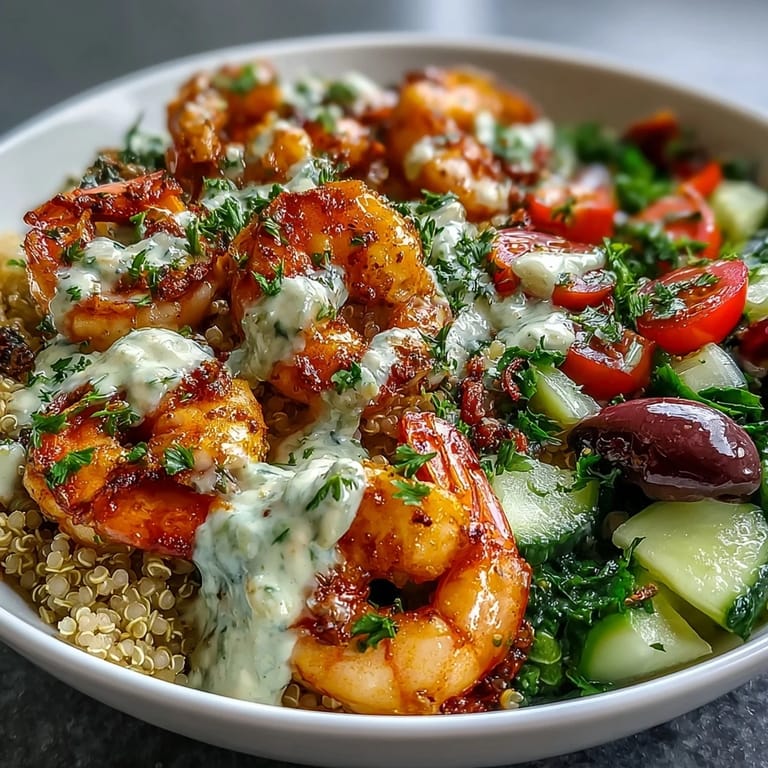
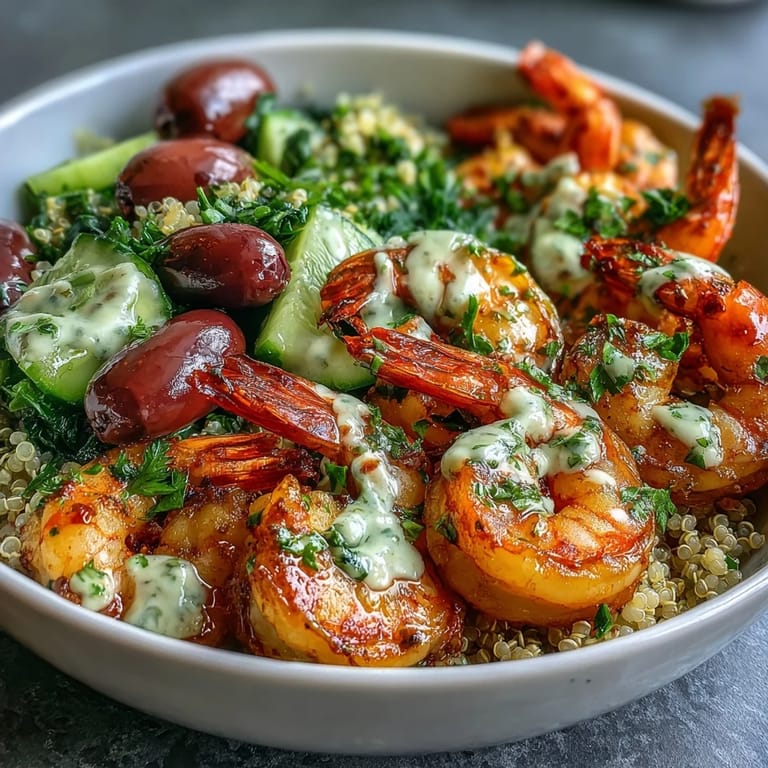
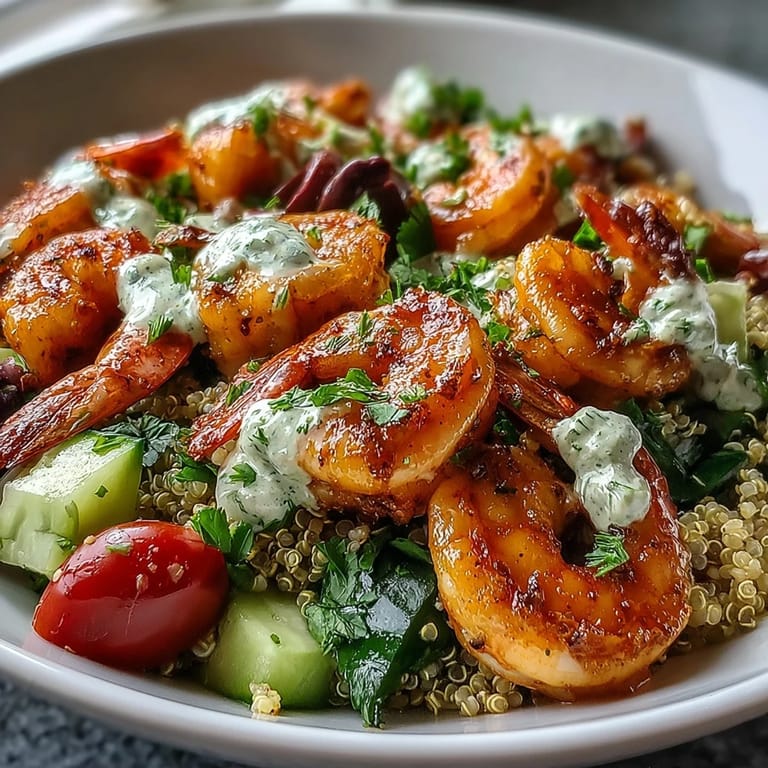
- Crown each bowl with the seared shrimp, then drizzle generously with tahini sauce—don't be shy, this sauce is the glue that holds everything together. Scatter fresh parsley on top and serve with lemon wedges so everyone can brighten their bowl to their liking.
 Save to Pinterest
 There was a moment recently when a friend told me this bowl reminded her of vacations she hadn't taken yet, which was the highest compliment I've received for anything I've cooked. Food has that quiet power sometimes—it can transport you somewhere, make you feel nourished in ways that go beyond nutrition, and remind you that simple meals made with intention are worth the few minutes they take.
Why Tahini Sauce Changes Everything
I spent years thinking tahini was just a hummus ingredient, relegated to Middle Eastern dishes, until I realized it's actually one of the most versatile sauces in any kitchen. Once you understand that tahini is just ground sesame seeds and becomes creamy sauce with the right liquid and acid, you start seeing possibilities everywhere. The lemon juice wakes it up, the garlic and cumin ground it in Mediterranean flavors, and suddenly you have a sauce that elevates every vegetable and protein it touches without needing cream or dairy.
The Art of Building a Better Bowl
Bowl meals seem simple until you realize there's actually strategy involved—the order of layers, the balance of textures, the way warm and cool components interact. I learned this by accident when I layered everything incorrectly and ended up with sad, wilted greens by the time I got to eating. Now I know that putting the grain down first acts as an insulator, then the greens, then the vegetables that won't wilt, and finally the warm shrimp on top creates this moment of temperature contrast that feels genuinely elegant. The tahini sauce ties everything together regardless, but knowing this order means each bite feels intentional rather than haphazard.
Customization Without Limits
What makes this bowl truly special is that it works as a template rather than a strict formula. Tired of shrimp? Grilled chicken, crumbled tofu, roasted chickpeas, or even seared scallops all work beautifully with the tahini sauce and vegetables. Change the grains, swap the vegetables for what's in season, adjust the spice level—this bowl is forgiving enough to handle your preferences while staying fundamentally delicious. The only non-negotiable elements are the tahini sauce and some form of fresh greens, everything else is yours to make your own.
- Add crumbled feta cheese if you're not keeping things dairy-free, especially if you want something that feels richer and more substantial.
- Keep extra lemon wedges nearby because half the joy of eating this is squeezing brightness over everything whenever you feel like it.
- Make the tahini sauce ahead if you're meal prepping, as it keeps beautifully in the fridge for three days and actually tastes better once the flavors meld.
 Save to Pinterest
 This bowl has become my answer to the question of what to cook when I want to feel like I'm taking care of myself. It's nourishing without being fussy, elegant without requiring special skills, and genuinely satisfying in a way that lingers long after you've finished eating.
Recipe FAQ
- → What grains work best for this dish?
Quinoa, brown rice, farro, or couscous complement the flavors and textures perfectly, offering a hearty base.
- → How is the tahini sauce prepared?
Mix tahini with fresh lemon juice, water, garlic, cumin, and sea salt until smooth, thinning with water as needed.
- → Can the shrimp be substituted?
Yes, grilled chicken, tofu, or chickpeas can be used as alternative proteins to suit dietary preferences.
- → What is the cooking time for the shrimp?
Sauté shrimp for 2 to 3 minutes per side until opaque and pink for optimal tenderness.
- → Are there any notable allergens in this dish?
It contains shellfish and sesame from the tahini; depending on grain choice, gluten may be present.
- → How should this bowl be served?
Layer cooked grains and vegetables, top with shrimp, drizzle with tahini sauce, then garnish with parsley and lemon wedges.