 Save to Pinterest
 The first time I made a poke bowl at home, I was trying to recreate that feeling of sitting at a beachside café with a perfect, colorful lunch in front of me. I'd just returned from a trip where I'd eaten poke almost every day, and the craving stuck with me long after I got back. What started as a simple attempt to capture that memory turned into my favorite weeknight ritual—something that feels fancy enough for guests but easy enough that I can pull it together in under an hour.
I remember my friend Marcus watching me assemble these bowls for the first time and saying, "Wait, is this actually hard?" When I showed him it wasn't, he became the person who requests them most often. Now whenever he texts about coming over, there's usually a winking emoji followed by a bowl emoji. That's when I knew this recipe had become something more than just dinner.
Ingredients
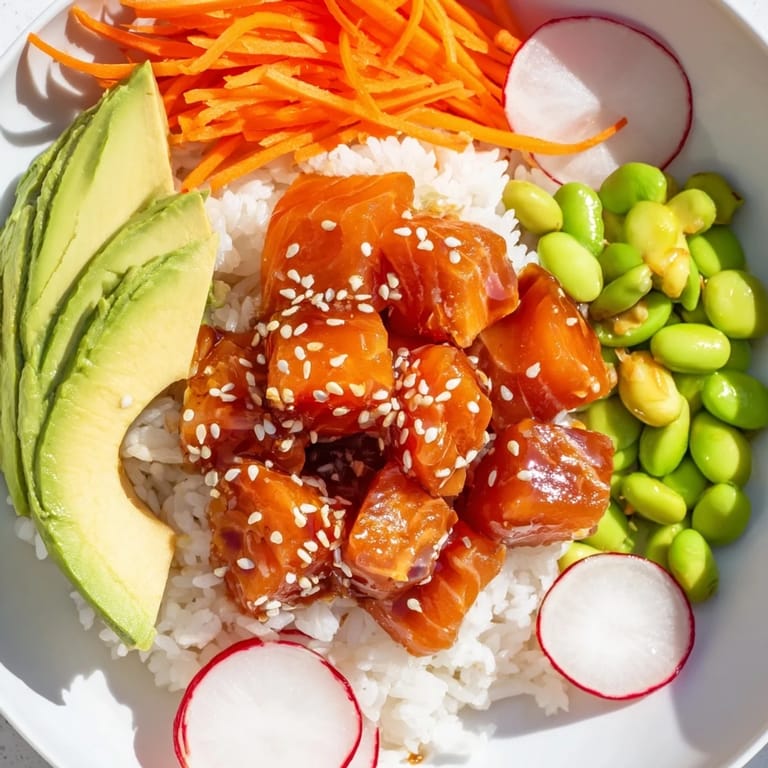
- Sushi-grade salmon or tuna, diced (400 g): This is the star, so buy from a fishmonger you trust or a store known for sushi-grade fish; the difference in freshness changes everything.
- Soy sauce (2 tbsp for marinade): Use tamari if you need gluten-free, and don't skip the quality here since it flavors the whole dish.
- Sesame oil (1 tbsp): Just a bit of toasted sesame oil creates that nutty depth you can't fake.
- Rice vinegar (1 tbsp for marinade, plus 2 tbsp for rice): The acidity keeps everything bright and balanced.
- Fresh ginger, grated (1 tsp): Use a microplane if you have one—it releases the oils and spreads more evenly than chopped.
- Honey or agave (1 tsp): Just enough sweetness to round out the salt and acid in the marinade.
- Sushi rice (320 g): Short-grain rice matters because it's stickier and holds the bowl together; don't substitute with long-grain.
- Water (480 ml): The ratio is crucial for rice—too much and it's mushy, too little and it's crunchy in a bad way.
- Ripe avocado: Pick one that yields slightly to pressure; if it's hard, buy it the day before and let it sit on the counter.
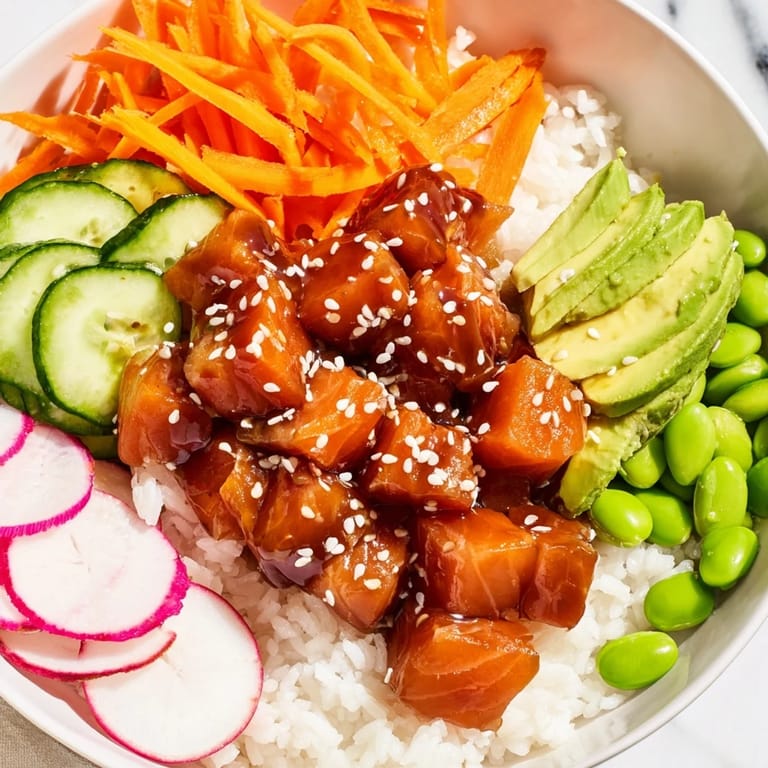
- Cucumber, carrots, radishes (fresh and crisp): The vegetables add texture and cut through the richness of the fish and avocado.
- Edamame beans, shelled and cooked (100 g): These add protein and a pop of green; frozen works perfectly.
- Spicy mayo: Mixing mayo with sriracha gives you that creamy heat without buying a jar of expensive specialty sauce.
- Nori strips and sesame seeds (for garnish): These finish the bowl with an umami punch and crunch.
Tired of Takeout? 🥡
Get 10 meals you can make faster than delivery arrives. Seriously.
One email. No spam. Unsubscribe anytime.
Instructions
- Rinse and cook the sushi rice:
- Rinsing the rice under cold water removes the starch and prevents it from turning into a gluey mess. Once it's clear, combine it with water in a saucepan, bring it to a boil, then cover and drop the heat to low for exactly 15 minutes—no peeking.
- Steam and season the rice:
- Let the rice sit covered for 10 minutes off the heat so the moisture distributes evenly. Then stir in the rice vinegar, sugar, and salt while it's still warm so the grains absorb all that salty-sweet flavor.
- Marinate the fish:
- Whisk together soy sauce, sesame oil, rice vinegar, ginger, and honey in a bowl, then add the diced fish and toss gently so it gets coated without breaking apart. Let it sit in the fridge for 10 to 15 minutes—any longer and the acid starts to cure it too much, any less and the flavor doesn't stick.
- Slice and prep the toppings:
- Avocado goes in last so it doesn't oxidize and turn brown. Everything else can be prepped ahead and stored in separate containers, which makes assembly a breeze when you're actually hungry.
- Assemble the bowls:
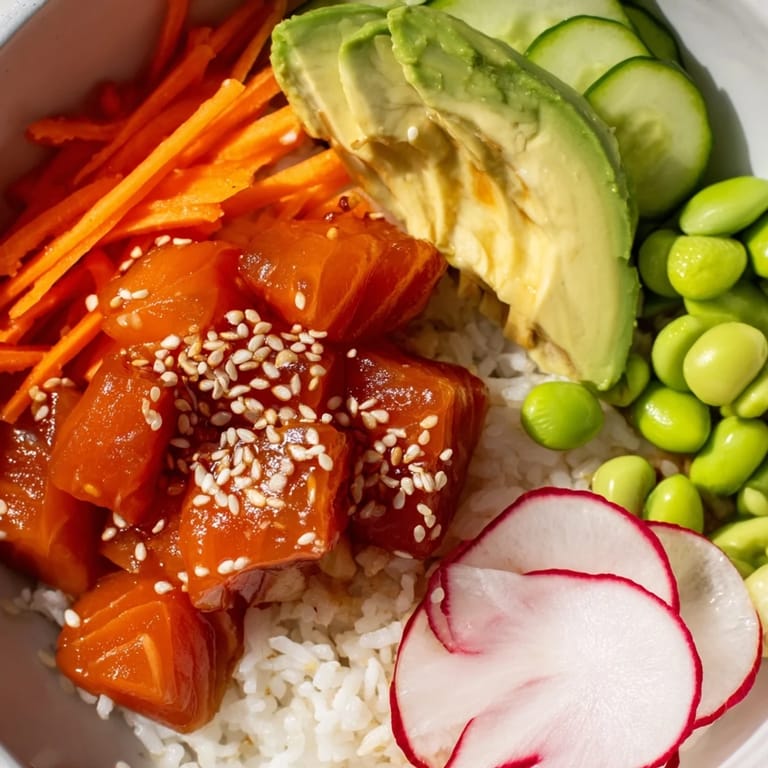
- Start with a bed of rice, then arrange the fish and vegetables in sections around the bowl so each spoonful gets a bit of everything. The presentation matters because you eat with your eyes first.
- Finish and serve:
- Drizzle with spicy mayo and soy sauce, add a pinch of nori and sesame seeds, then serve right away while the rice is still warm and the vegetables are crisp.
 Save to Pinterest
 One afternoon, I made these bowls while my sister was visiting, and we sat on the porch eating in almost complete silence—the kind of quiet that means someone's really enjoying their food. She looked up and said, "This tastes like vacation." That's exactly what I was going for, and somehow it landed.
Building Your Own Poke Bowl
The beauty of poke is that it's a canvas. I've made it with mango instead of avocado on a summer evening, swapped cucumber for pickled daikon, and even tried it with seared tuna when I was feeling a little fancier. The marinade stays the same, but everything else can shift based on what's in season or what you're craving. My partner jokes that my poke bowls are never the same twice, but that's kind of the point—it keeps you interested in making it again.
The Spicy Mayo Difference
At first, I thought the spicy mayo was optional, just a nice-to-have drizzle. Then I skipped it one night to cut calories, and the whole bowl felt flat and one-dimensional. Now I understand that the heat and creaminess tie all the fresh, raw ingredients together and give the bowl a real center of gravity. It's not overpowering—just enough to make every bite satisfying.
Making It Your Own
Over time, I've learned that the best version of this recipe is the one that matches your mood and what you have on hand. Some nights I go minimal with just fish, rice, and avocado; other nights I pile on seven different vegetables and call it abundance. The core stays solid, but the details are yours to play with.
- Keep extra nori sheets and sesame seeds in your pantry so you can make these spontaneously whenever you want.
- If you make a bigger batch of spicy mayo, it keeps in the fridge for about a week and works on other things too.
- Leftover marinated fish shouldn't sit more than a day, so plan to use it fresh or freeze it for next week.
 Save to Pinterest
 These poke bowls have become my answer to the question of what to make when I want something that tastes impressive but doesn't demand hours in the kitchen. They're the kind of meal that feels like taking care of yourself.
Recipe FAQ
- → What type of fish works best for this bowl?
Sushi-grade salmon or tuna is ideal for a tender, fresh flavor. Alternatively, marinated tofu or tempeh can be used for a vegetarian option.
- → How is the rice prepared for the bowl?
The rice is rinsed until clear, cooked with water, then steamed. It’s finished with rice vinegar, sugar, and salt for a balanced taste.
- → Can the toppings be customized?
Yes, vegetables like avocado, cucumber, carrots, radishes, and edamame can be substituted or added based on preference or seasonality.
- → What sauces complement the bowl?
Spicy mayo made with mayonnaise and sriracha, along with soy sauce, add creaminess and umami. Pickled ginger and lime wedges offer bright accents.
- → Is this dish suitable for any dietary preferences?
It suits pescatarian and dairy-free diets when prepared with fish and without dairy-based sauces. Gluten-free options depend on sauce ingredients.