 Save to Pinterest
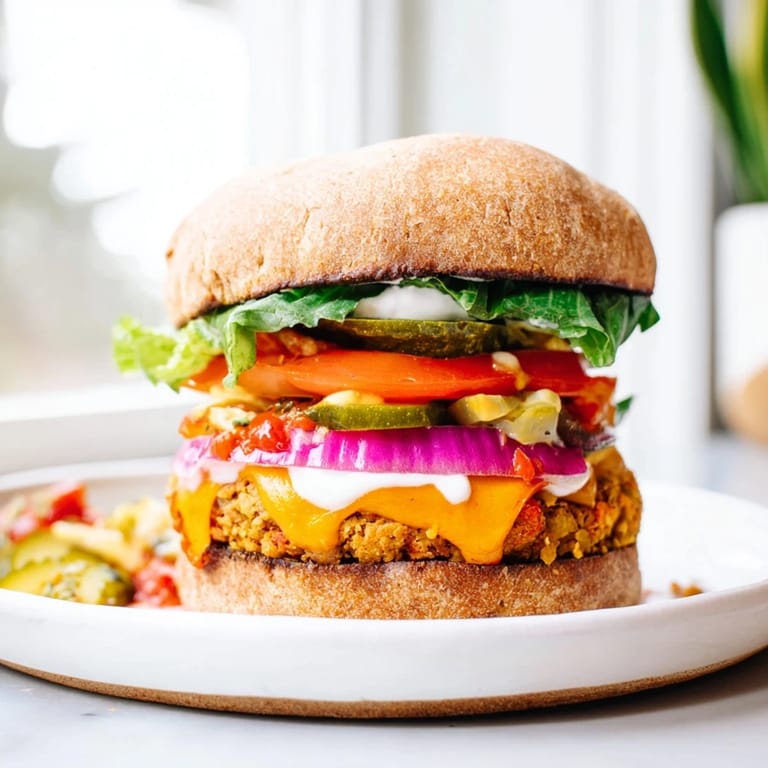
 I made these veggie burgers on a whim one Saturday when my roommate insisted she could never go vegetarian because she'd miss real burgers. Watching her take that first bite, then pause mid-chew with a genuinely surprised expression, felt like winning an argument I wasn't even having. The trick isn't trying to imitate meat—it's building something sturdy and flavorful enough to stand on its own, with chickpeas and oats doing the heavy lifting.
I remember my sister bringing her boyfriend over for dinner and mentioning casually that we were having veggie burgers. He nodded politely, the way people do when they're pretending to be enthusiastic about something they're not excited about. Twenty minutes later he asked for the recipe, which my sister found hilarious and I found deeply satisfying.
Ingredients
- Chickpeas: One can is your base; they're mild enough not to overpower but protein-rich enough to make the patty substantial and satisfying.
- Grated carrot and zucchini: They add moisture and sweetness, but squeeze the zucchini hard or your patties will fall apart when cooking.
- Red onion and garlic: Finely chopped so they distribute evenly and give you flavor in every bite.
- Rolled oats: The binder that holds everything together; they also add texture and absorb the moisture from the vegetables.
- Fresh parsley: A brightness that keeps the burger from feeling heavy.
- Cumin and smoked paprika: The seasonings that make people ask what's in here.
- Egg: Acts as the glue; use ground flaxseed mixed with water if you're going vegan and the patties will hold just fine.
- Olive oil: For frying and getting that golden crust.
Tired of Takeout? 🥡
Get 10 meals you can make faster than delivery arrives. Seriously.
One email. No spam. Unsubscribe anytime.
Instructions
- Mash your chickpeas:
- Use a fork or potato masher and work through the can until mostly broken down but still a little chunky. This gives you texture instead of a dense paste.
- Mix in everything else:
- Add the carrot, zucchini, onion, garlic, oats, parsley, and spices, stirring until it all comes together evenly. Don't skip the squeezing step with the zucchini or you'll end up with soggy patties.
- Let it rest:
- Add your egg and stir, then let the mixture sit for 5 minutes so the oats can absorb moisture and the mixture becomes workable. This is when you can feel whether you need more salt.
- Shape into patties:
- Divide into 4 equal portions and shape them firmly into patties about three-quarters of an inch thick. Wetter mixture means you need to be more gentle and firm with your shaping.
- Cook until golden:
- Heat oil in a nonstick skillet over medium heat and cook each patty 4 to 5 minutes per side until the outside is crispy and golden brown and the inside is heated through. You'll know they're ready to flip when they release easily from the pan.
- Toast your buns:
- While the patties finish cooking, lightly toast the burger buns so they don't get soggy from condiments and toppings.
- Build your burger:
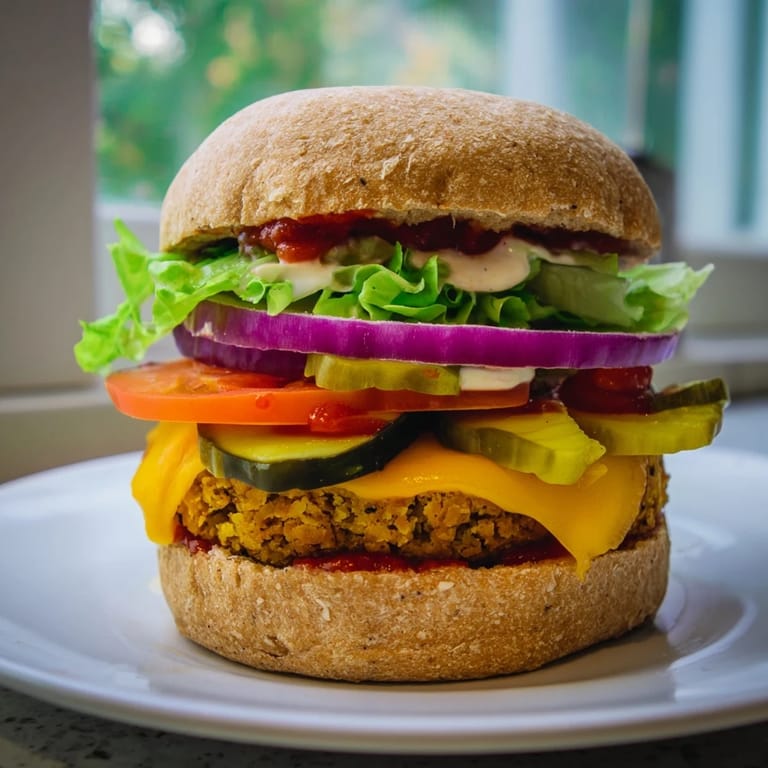
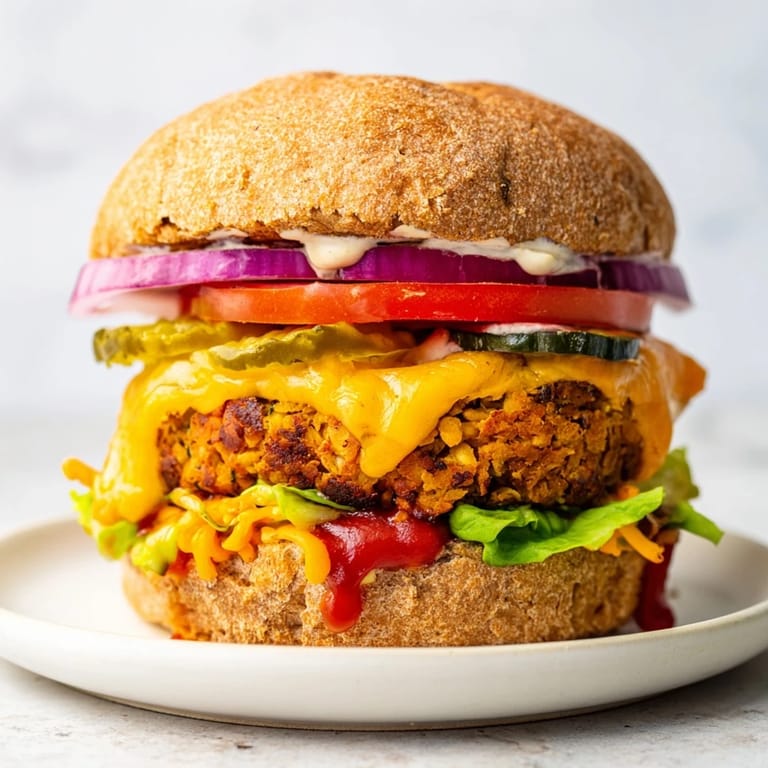
- Spread mayo on the bottom bun, then layer lettuce, patty, cheese, tomato, onion rings, and pickles. Add ketchup and mustard, top with the other bun, and serve immediately while everything is still warm.
 Save to Pinterest
 My dad, who eats meat at basically every meal, admitted these were better than the frozen veggie burgers he'd tried years ago, which is the closest thing to a compliment I've ever heard from him on this topic. Something about making food from actual whole ingredients instead of processing it into something unrecognizable just hits different.
Making Them Your Own
Once you have the basic formula down, these burgers become a canvas. I've added everything from diced bell peppers to sun-dried tomatoes to a tablespoon of miso paste for extra umami. The structure stays solid as long as you're not adding more than a quarter cup of extra wet ingredients. Some people swear by adding a tablespoon of soy sauce or tamari for a deeper savory note, and I've done it both ways depending on what I'm craving.
The Assembly Game
The magic happens when you don't overthink the toppings. I keep things simple most days—lettuce, tomato, onion, pickles, mayo, and mustard—but I've also gone wild with crispy bacon for someone who eats meat, sliced avocado for creaminess, or homemade coleslaw for crunch. The burger is sturdy enough to handle whatever you pile on it without falling apart, which is honestly half the battle with plant-based patties.
Storage and Reheating
If you make these ahead, the uncooked patties keep in the fridge for a day or two, and you can cook them straight from cold without thawing. Leftover cooked patties reheat beautifully in a toaster oven or skillet so you can have lunch ready in minutes. I've even frozen the uncooked patties between layers of parchment paper, and they fry up just as well from frozen, though they take an extra minute or two on each side.
- Store uncooked patties between parchment sheets in the fridge for up to 2 days.
- Freeze cooked patties for quick reheating on busy weeknights.
- Always let a patty come to room temperature before eating if you've refrigerated it, or the texture is better.
 Save to Pinterest
 These burgers remind me that vegetarian cooking isn't about pretending to eat something else—it's about making something delicious in its own right. Serve them with sweet potato fries or a crisp salad and you've got a meal worth planning a whole evening around.
Recipe FAQ
- → What vegetables are used in the patties?
Chickpeas, grated carrot, and grated zucchini form the base, enhanced with red onion and fresh parsley for added flavor.
- → How are the patties cooked?
The patties are pan-fried in olive oil over medium heat for 4–5 minutes on each side until golden and heated through.
- → Can this be made vegan?
Yes, replace the egg with a flaxseed mixture and use vegan cheese and mayonnaise to keep it fully plant-based.
- → What spices enhance the flavor?
Ground cumin and smoked paprika add a warm, smoky depth, balanced by salt, pepper, and fresh parsley.
- → What are good side dishes to accompany this burger?
Sweet potato fries, fresh green salad, or crunchy coleslaw complement the burger perfectly.