 Save to Pinterest
 There's something about the sizzle of salmon hitting a hot pan that still makes me pause, even now. Years ago, I watched a friend plate up a teriyaki salmon bowl at a dinner party, and the way the glaze caught the light seemed almost intentional, like she'd planned the whole moment. That night, I realized how a good teriyaki sauce could turn something simple into something that tasted like you'd spent hours in the kitchen. Now it's become my go-to when I want impressive without the stress, and honestly, it tastes even better the second time around.
I made this for my sister on a random Tuesday when she was stressed about work, and watching her eyes light up at the first bite was the kind of small joy that sticks with you. She said it tasted like the restaurants we could never afford, and I loved that a handful of pantry staples had done that. Now whenever she's had a rough week, this is what she asks for, and I've stopped pretending it's any trouble to make.
Ingredients
- Salmon fillets: Look for ones that are bright and firm to the touch; they should smell fresh and oceanic, never fishy or ammonia-like.
- Soy sauce: The backbone of your glaze, so don't skimp—a good quality sauce makes a noticeable difference in depth.
- Mirin: This sweet rice wine is what gives the glaze its signature shine and smooth sweetness; if you can't find it, a pinch of honey works in a pinch.
- Brown sugar: Adds depth that white sugar can't match, and it dissolves more easily into the warm sauce.
- Rice vinegar: A splash of this keeps the glaze from being cloying and adds a subtle brightness that rounds out all the flavors.
- Sesame oil: Just a little goes a long way—it's fragrant and rich, so resist the urge to pour it generously.
- Garlic and ginger: Fresh is best here; garlic powder and ground ginger will make the sauce taste tired and dusty by comparison.
- Cornstarch slurry: This is what gives the glaze its clingy, glossy quality that makes the salmon look restaurant-worthy.
- Jasmine or sushi rice: Jasmine has a delicate floral note that plays nicely with the teriyaki flavors, and it stays fluffy instead of turning into a dense brick.
- Mixed vegetables: Use whatever is fresh and looks good at the market; the variety of colors and textures is part of what makes this dish feel vibrant.
- Sesame seeds and spring onions: These garnishes aren't decorative—they add texture and a final layer of flavor that feels intentional.
Tired of Takeout? 🥡
Get 10 meals you can make faster than delivery arrives. Seriously.
One email. No spam. Unsubscribe anytime.
Instructions
- Prepare your rice with intention:
- Rinse the rice under cold water until the water runs almost clear—this removes excess starch and keeps each grain from sticking to its neighbors. Combine rice and water in a saucepan, bring to a boil, then cover, reduce heat to low, and let it simmer quietly for 15 minutes; the steam will do the work for you.
- Build your glossy glaze:
- In a small saucepan, combine soy sauce, mirin, brown sugar, rice vinegar, sesame oil, minced garlic, and grated ginger over medium heat. Stir occasionally as the sugar dissolves, letting the kitchen fill with an aroma that will make you hungry within seconds, then add your cornstarch slurry and cook for 1 to 2 minutes until it thickens into something luxurious and glossy.
- Sear the salmon until it's just right:
- Season your fillets with salt and pepper on both sides, then place them skin-side down in a hot nonstick skillet with a splash of oil. After 3 to 4 minutes, you'll hear the skin crackle slightly and see the flesh begin to turn opaque around the edges—that's your signal to flip.
- Glaze and finish with the sauce:
- After flipping, cook the salmon for another 2 to 3 minutes, then brush it generously with your teriyaki glaze and let it cook for one more minute so the sauce clings to the fish and creates a light caramelization.
- Stir-fry vegetables until they're still snappy:
- In a wok or large skillet over high heat, add your oil and let it shimmer before tossing in your vegetables; they should cook for 3 to 4 minutes total, staying crisp enough that they have a little resistance when you bite down.
- Assemble and serve with confidence:
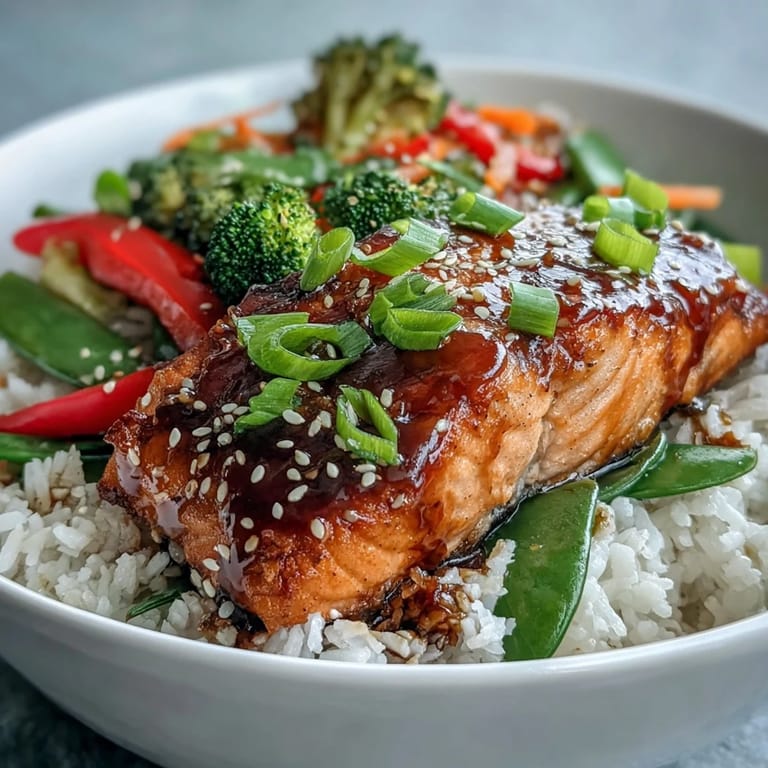
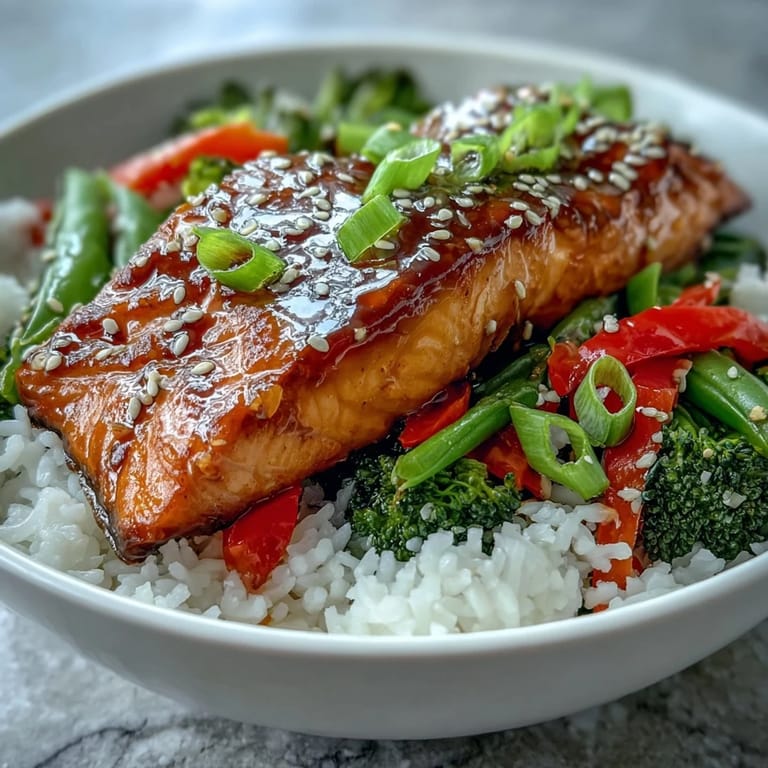
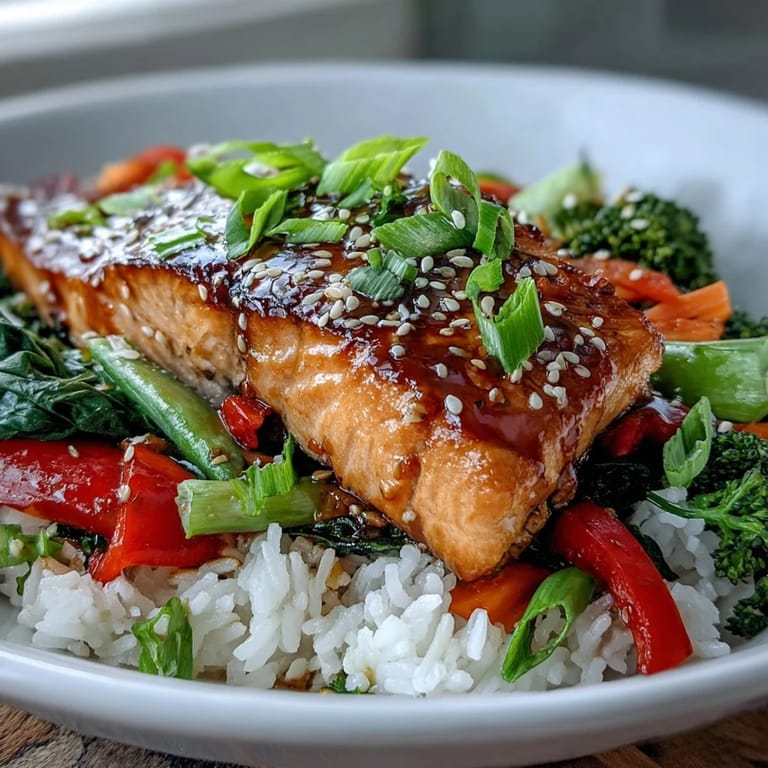
- Divide your fluffy rice among bowls, top with the stir-fried vegetables, then place a piece of glazed salmon on top. Drizzle any remaining sauce over everything, scatter sesame seeds and sliced spring onions across the top, and serve while the rice is still warm.
 Save to Pinterest
 The moment everything comes together on the bowl—when you drizzle that final bit of sauce and the steam rises up from the warm rice—feels like you've accomplished something real. It's the kind of meal that makes you want to eat slowly and actually taste what you've made, which is exactly what good food should do.
The Magic of a Good Teriyaki Glaze
A teriyaki glaze isn't complicated, but it's also not forgiving if you rush it. The key is building the flavors slowly, letting the garlic and ginger infuse into the soy and mirin without burning, and then using the cornstarch to turn everything into something that clings to the salmon rather than running off. I learned this the hard way, once, when I cranked the heat too high and ended up with a broken, separated sauce that looked like it had given up. Now I treat it like something I'm listening to rather than something I'm just cooking—you'll know by smell and sound when it's ready.
Choosing Salmon That Actually Tastes Good
Not all salmon is created equal, and your choice here will influence the entire dish. Look for fillets that are bright and firm, with flesh that springs back when you gently press it. Ask your fishmonger if they know when the salmon came in; fresher is always better, and a good fishmonger will tell you honestly rather than trying to sell you something that's been sitting around. The color should be a vibrant orange or pink, not pale or gray, and the smell should make you think of the ocean on a good day, not a stagnant dock.
Vegetables That Play Well Together
The vegetables in this bowl are just as important as the salmon, because they provide texture, brightness, and a reason to keep eating. The red bell pepper adds sweetness and crunch, the broccoli becomes tender on the inside and slightly caramelized on the edges, and the snap peas stay firm with just a hint of char. In summer, I swap these for zucchini and cherry tomatoes; in winter, I add mushrooms and baby corn. The real trick is not crowding the pan, because vegetables need space to cook rather than steam, and they need that high heat to develop something beyond just softness.
- Cut your vegetables relatively evenly so they cook at the same rate and nothing is left raw or overdone.
- If you're using vegetables like mushrooms or zucchini that release water, dry them on a paper towel first so the pan stays hot and they can actually caramelize.
- Don't add sauce to the vegetables while they're still in the pan—the moisture will drop the temperature and you'll lose that snappy texture you worked for.
 Save to Pinterest
 This bowl has become my answer to so many different situations—when someone needs comfort food that's also healthy, when I want to feel accomplished without spending all evening in the kitchen, or when I'm trying to prove to myself that I can still cook something good. Make it once and it'll find its way back onto your table again and again.
Recipe FAQ
- → Can I use other types of fish?
Yes, this works well with other firm fish like cod, halibut, or sea bass. Adjust cooking time based on thickness to avoid overcooking.
- → Is the teriyaki sauce spicy?
Not at all. The sauce focuses on savory-sweet flavors from soy sauce, mirin, and brown sugar. Add sriracha or chili flakes if you prefer heat.
- → Can I make this gluten-free?
Absolutely. Use tamari or gluten-free soy sauce instead of regular soy sauce. The rest of the ingredients are naturally gluten-free.
- → How do I store leftovers?
Store components separately in airtight containers. Refrigerate for up to 2 days. Reheat rice and vegetables gently, and warm salmon briefly to avoid drying.
- → Can I substitute the vegetables?
Certainly. Use whatever vegetables you enjoy or have on hand—zucchini, mushrooms, baby corn, bok choy, or snap peas all work beautifully.
- → Can I use brown rice instead?
Yes, brown rice adds nutty flavor and extra fiber. Just adjust cooking time to about 40-45 minutes and use slightly more water.