 Save to Pinterest
 Last spring, my neighbor knocked on the door with a basket of fresh peas from her garden, and I suddenly had to figure out what to do with them before they wilted. I threw together whatever green things I could find in my fridge, mixed them with pasta, and created this dressing on the fly—it was so bright and alive that it became my go-to dish for every warm weather gathering that followed.
I'll never forget watching my sister take one bite at a picnic and immediately ask for the recipe, then text me a photo of hers a week later—it made me realize that sometimes the simplest dishes spark the most genuine moments of sharing.
Ingredients
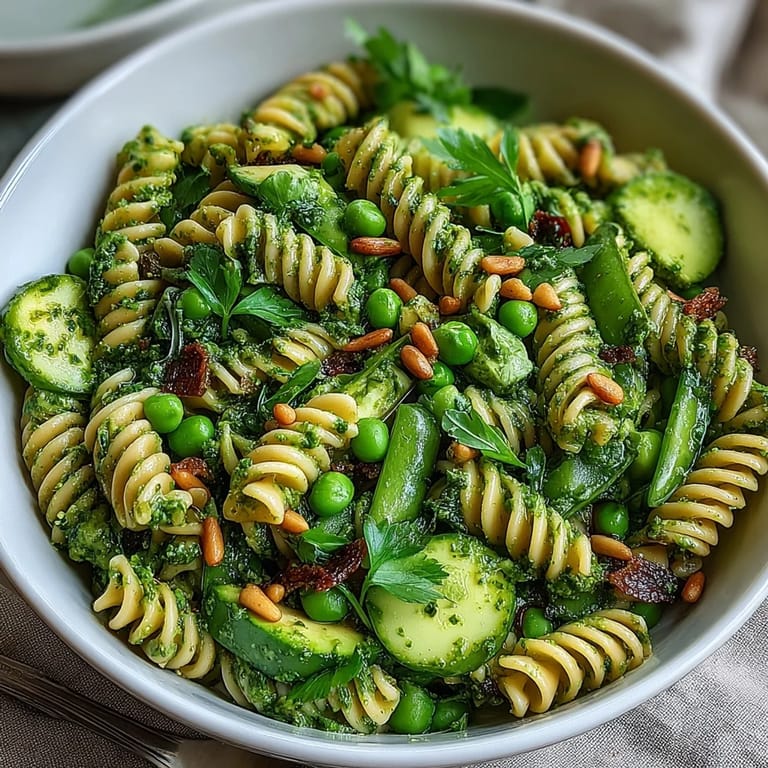
- Short pasta (250 g): Choose fusilli, penne, or farfalle because their ridges and curves catch the dressing beautifully and hold it better than smooth shapes.
- Fresh or frozen peas (1 cup): Either works wonderfully, though frozen actually locks in the sweetness—add them in the last two minutes of cooking so they stay tender, not mushy.
- Sugar snap peas (1 cup): These add a delicate crunch and sweetness that makes people notice the texture difference immediately.
- Cucumber (1 small): Thinly slicing it means more surface area to absorb the dressing flavors.
- Baby spinach (2 cups): The rough chop keeps it from getting lost in all the other vibrant greens.
- Spring onions (2): The white parts add bite while the greens contribute to the fresh appeal.
- Avocado (1 small): Dice it just before tossing so it keeps its creamy texture instead of turning brown and mushy.
- Greek yogurt (1/2 cup): This is the secret to a lighter dressing that doesn't coat your mouth but still feels rich and satisfying.
- Mayonnaise (1/4 cup): It adds just enough emulsification to make the dressing silky without being heavy.
- Fresh herbs (parsley, basil, chives, tarragon): Use whatever is at its peak in your market or garden—the more vibrant green the blend, the more beautiful and flavorful the dressing.
- Lemon juice (2 tbsp): This brightens everything and prevents the avocado from browning as quickly.
- Garlic (1 small clove): One clove is enough to whisper its presence without overwhelming the delicate herbs.
- Olive oil (2 tbsp): Good quality makes a noticeable difference in the final taste.
- Toasted pine nuts (2 tbsp): Optional but worth the extra minute—toasting them brings out a nutty sweetness that makes people ask what that flavor is.
Tired of Takeout? 🥡
Get 10 meals you can make faster than delivery arrives. Seriously.
One email. No spam. Unsubscribe anytime.
Instructions
- Boil the pasta and peas together:
- Bring a large pot of generously salted water to a rolling boil, then add your pasta and let it cook according to the package directions. In the final two minutes, toss in the peas and sugar snap peas so they just kiss the heat but stay crisp and sweet. Drain everything into a colander and run it under cold water, stirring gently so the pasta separates as it cools.
- Make the goddess dressing:
- While your pot is busy, throw the Greek yogurt, mayonnaise, parsley, basil, chives, tarragon if you're using it, lemon juice, and that single garlic clove into a blender with the olive oil, salt, and pepper. Blend until it's smooth and an almost impossible shade of green, then taste and adjust anything that feels off—sometimes you need more lemon, sometimes more salt.
- Combine everything:
- In a big mixing bowl, toss together your cooled pasta and peas with the cucumber, spinach, spring onions, and avocado, being gentle with the avocado so it doesn't break apart. Pour the dressing over top and toss everything together with a light hand, making sure every pasta piece gets coated but nothing gets mashed.
- Finish and serve:
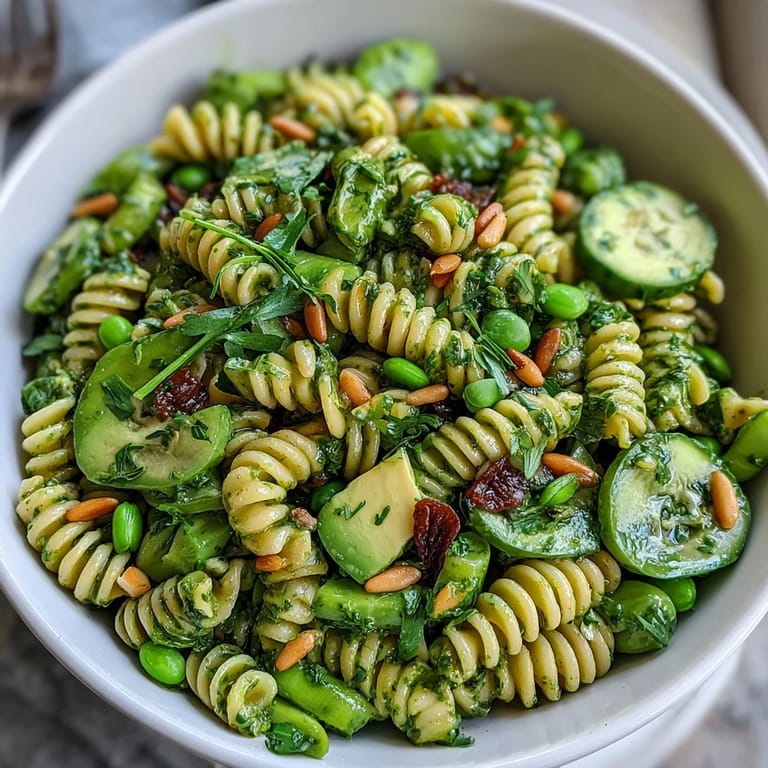
- Scatter the toasted pine nuts over top and sprinkle on extra fresh herbs for color and flavor. Serve it chilled straight from the fridge or let it sit out for a bit—it tastes just as good either way.
 Save to Pinterest
 There's something almost magical about how a salad this simple can taste so complicated and intentional, like you spent hours planning when really you just grabbed what was green and in season. That's when I knew this recipe had become something special—it made me look like I'd thought things through even when I was just cooking from instinct.
Swaps and Additions That Work
This salad is forgiving in the best way, which means you can play with it depending on what you have and what you're hungry for. If chicken sounds right, grill some breasts and slice them thin, or stir in white beans or chickpeas for vegetarian protein that holds up beautifully. I've also swapped the tarragon for dill when I had it, traded the pine nuts for sunflower seeds, and even added a handful of radish slices for peppery crunch instead of cucumber on days when I wanted something different.
Making It Your Own
The dressing is really where you get to make this recipe feel like yours, because fresh herbs vary wildly depending on the season and what your local market offers. I've learned to always taste as I blend and adjust the lemon juice and salt first—these two ingredients are the ones that make the biggest difference in how bright everything tastes. Don't be shy about adding more garlic if you love it stronger, or cutting back if you prefer a gentler flavor that lets the herbs shine.
Storage and Make-Ahead Tips
This salad is actually nicer if you prep the components separately and assemble it closer to when you want to eat it, which makes it perfect for busy days when you want something ready but still fresh. Store the dressed pasta in one container and the vegetables in another, then toss everything together with the avocado right before serving, and it stays vibrant and properly textured for a full day in the fridge. The dressing keeps beautifully for up to three days, so you can make it ahead and use it on other greens or grain bowls through the week.
- Keep the avocado separate until the very last moment or it will brown and the texture suffers.
- If you're making this for a potluck, pack the dressing separately and toss it in just before laying out the salad.
- Taste the seasoning right before serving because sometimes the salt settles and you need to wake everything back up with lemon juice.
 Save to Pinterest
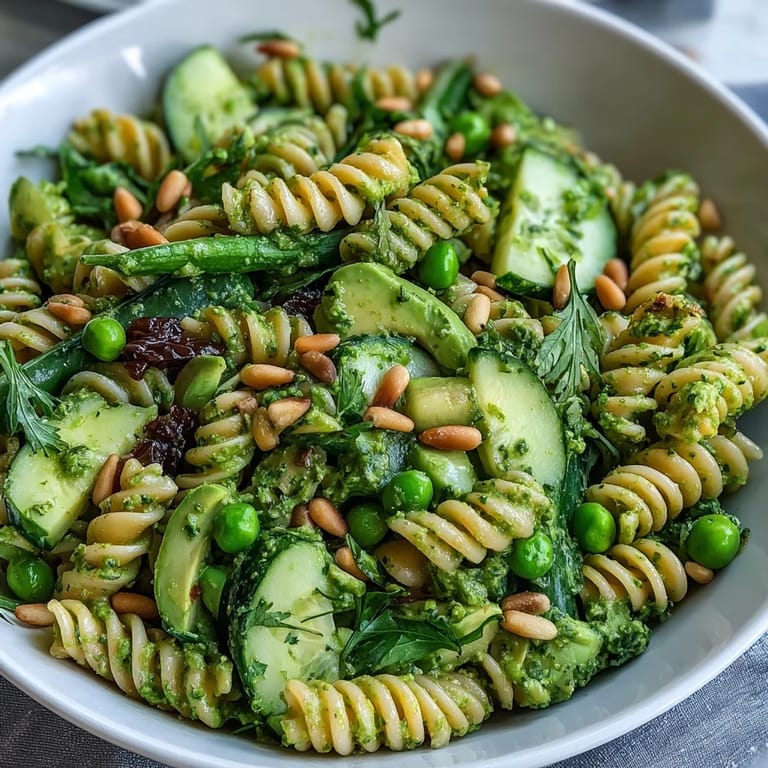
 This salad has become my answer to that question of what to bring when someone asks for something special but also easy, and I love how it tastes like spring no matter what time of year I make it. Every time I blend those herbs into the dressing, I'm reminded that the best recipes are the ones that adapt to what you have and taste like home.
Recipe FAQ
- → What type of pasta works best for this dish?
Short pasta like fusilli, penne, or farfalle holds the dressing well and pairs nicely with the fresh peas and herbs.
- → Can I use frozen peas for the salad?
Yes, frozen peas work well. Add them to the boiling pasta in the last two minutes of cooking to retain their sweetness and texture.
- → How is the green goddess dressing prepared?
The dressing is blended using Greek yogurt, mayonnaise, fresh parsley, basil, chives, lemon juice, garlic, olive oil, salt, and pepper for a creamy, herbaceous flavor.
- → Is it possible to make a vegan version?
Substitute Greek yogurt and mayonnaise with dairy-free alternatives to create a vegan-friendly dressing without compromising flavor.
- → Can I add protein to this dish?
For extra protein, consider adding grilled chicken slices or chickpeas, which complement the fresh ingredients well.
- → Should the pasta salad be served chilled or warm?
This dish is best served chilled or at room temperature to highlight the fresh herbs and crisp vegetables.