 Save to Pinterest
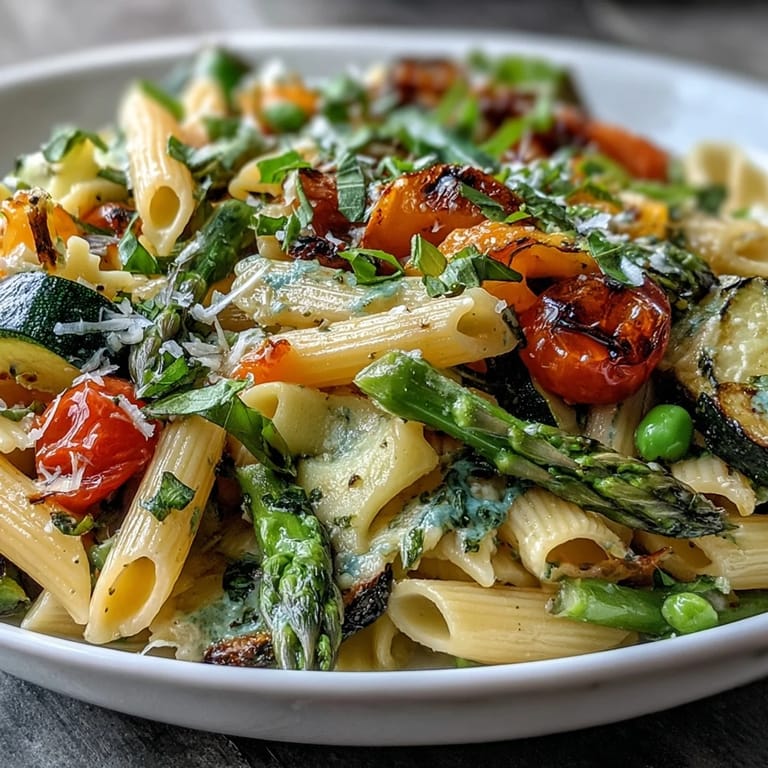
 The first time I made Spring Pasta Primavera, the kitchen windows were open and the breeze carried in the scent of grass and flowers. I remember pulling fresh asparagus out of the grocery bag, the stalks still cool from the morning market. As I sliced the zucchini, cherry tomatoes tumbled onto the cutting board, a few rolling off and nearly landing on my toes. There was something playful about the colors and shapes, each vegetable adding its own personality to the bowl. That sense of lightness stuck with me as I cooked, reminding me that meals can feel just as joyful as the season.
I once made this pasta for a weeknight dinner with friends after a busy day, and the kitchen was filled with laughter and splashes from rinsing basil in the sink. Someone dropped a pea, and we all watched as it rolled under the fridge like it owned the place. I ended up serving the pasta straight from the skillet, everyone diving in before I got a chance to sprinkle the last bit of Parmesan. That casual energy made it feel like more than just a recipe—it became a ritual we looked forward to each spring.
Ingredients
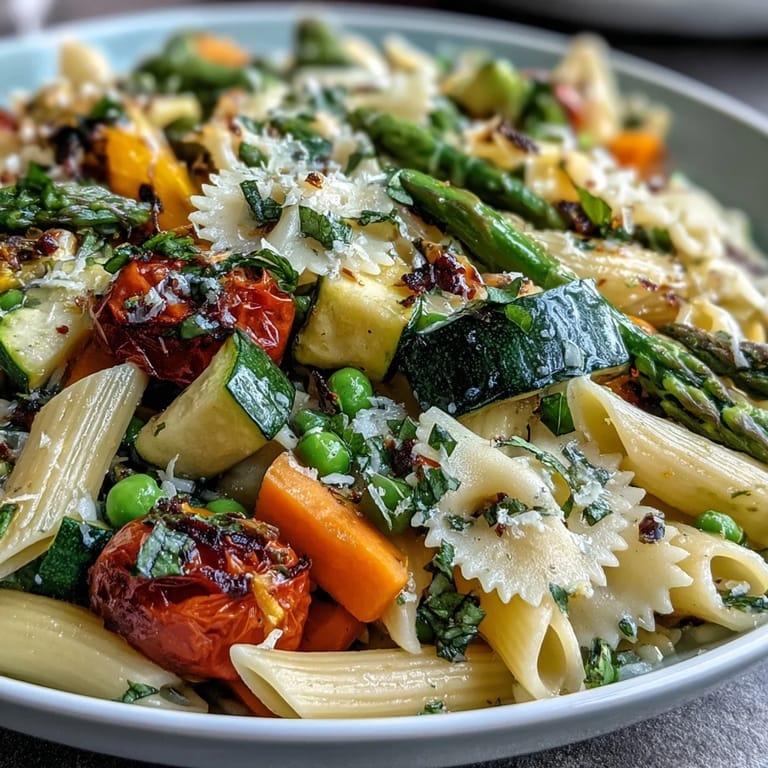
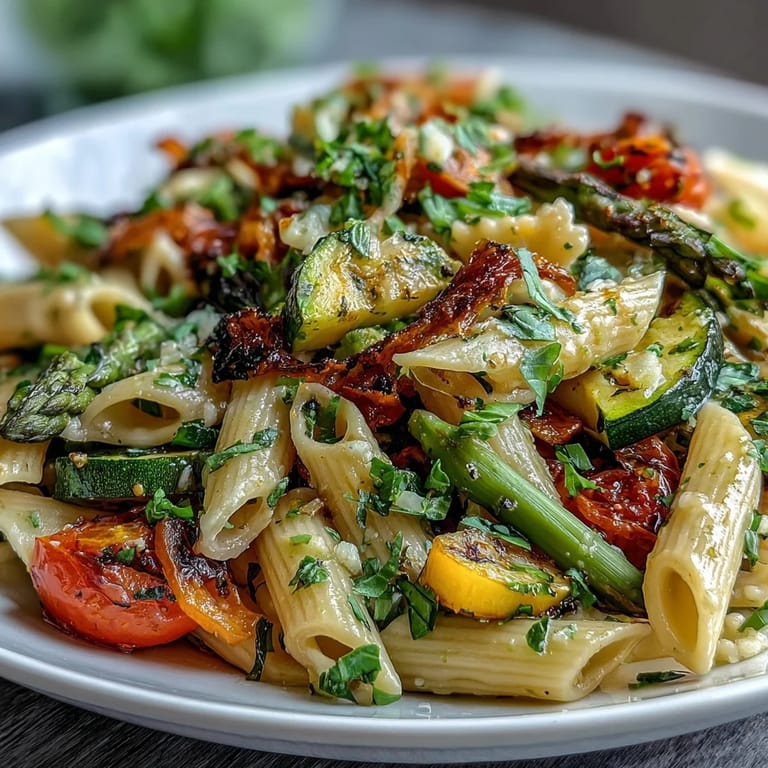
- Pasta: Penne and farfalle both hold the sauce well, but I’ve found that salting the water generously makes all the difference for flavor.
- Zucchini & Yellow Squash: Slice these into half-moons so they cook quickly and add texture without getting mushy.
- Asparagus: Trim the woody ends and cut into bite-sized pieces so each spear stays tender.
- Cherry Tomatoes: Halve them to release their juices at just the right stage in the skillet.
- Red Bell Pepper: Thin slices give a sweet crunch; I like to use a bright red one for color.
- Peas: Fresh peas snap brightly, but frozen work if you don’t have time to shell.
- Garlic & Shallot: Mincing these together fills the air with a savory aroma as they hit the hot oil.
- Basil & Parsley: Chop these just before adding so their flavors don’t fade.
- Lemon Zest & Juice: The zest gives subtle fragrance, and juice lifts the whole dish with bright acidity.
- Extra-Virgin Olive Oil: Dividing the oil between sautéing and finishing keeps the flavors fresh.
- Parmesan Cheese: Grate off the block for the best melt; skip or substitute if you’re making it vegan.
- Salt, Black Pepper, Red Pepper Flakes: Seasoning is key—to taste means tasting as you go, and the flakes lend gentle heat if you want.
Tired of Takeout? 🥡
Get 10 meals you can make faster than delivery arrives. Seriously.
One email. No spam. Unsubscribe anytime.
Instructions
- Get the pasta boiling:
- Fill a large pot with water and a handful of salt, then set it to boil while you chop vegetables. Let the pasta cook until al dente—just tender but still a little resistant when bitten.
- Sauté the aromatics:
- Drizzle olive oil into a wide skillet and add minced shallot and garlic. Stir them around for a minute; you'll know they're ready when the fragrance lifts and the edges just begin to turn golden.
- Add spring veggies:
- With the skillet hot, drop in zucchini, squash, asparagus, and bell pepper. Toss everything gently, letting the sizzling sounds tell you when to flip for tender texture.
- Bright veggies, brighter color:
- Cherry tomatoes and peas join next, their colors deepening as you stir. Cook just long enough for the tomatoes to soften and peas to heat through.
- Combine pasta and veggies:
- Drain the pasta, save some starchy water, and tumble noodles into the skillet. Gently mix so every piece is coated, then pause and admire how lively it all looks.
- Herbs, lemon, and seasonings:
- Pour in reserved pasta water, lemon zest and juice, basil, and parsley. Add another splash of olive oil, tossing everything so the sauce glistens; taste and adjust salt or pepper.
- Finishing touches:
- Remove the skillet from heat, gently fold in Parmesan until it melts and clings. Serve right away with a shower of more cheese and scattered herbs for freshness.
 Save to Pinterest
 Sharing this primavera with my sister last spring, I remember her pausing mid-bite, closing her eyes, and saying, “It tastes like someone bottled the garden.” That tiny compliment felt bigger than any fancy plating. I realized that simple meals, especially those celebrating fresh produce, carry a kind of happiness that lingers beyond the last forkful.
Choosing Your Veggie Mix
Spring vegetables are flexible—some days I add snap peas, baby spinach, or whatever looks crisp at the market. The trick is to cut everything to similar sizes for even cooking, and not to overcrowd the skillet so they stay vibrant. If you’re short on a veggie, swap in another or stretch what you have; the flavors always play well together.
Pasta Shapes and Cooking Tips
Different pasta shapes give distinct personalities to the dish. Penne holds sauce in its tubes, while farfalle lets the veggies nestle in its folds. I set a timer and taste a noodle early, because biting into just-overcooked pasta is my least favorite surprise—al dente keeps the texture lively.
Fresh Herbs and Final Touches
Sprinkling chopped herbs right at the end wakes up the plate, and a little extra lemon zest makes the colors pop even more. Resist overmixing so the veggies keep their shape, and serve fast—the freshness is best enjoyed right away.
- Keep a wedge of lemon at the table for anyone who loves extra brightness.
- If your herbs wilt, tuck a few sprigs on top just before eating.
- Don’t forget the last handful of Parmesan—it’s the finishing flourish.
 Save to Pinterest
 I hope your kitchen feels as lively as mine did when making this primavera. It’s a simple, happy dish that always feels festive, no matter the occasion.
Recipe FAQ
- → Which pasta shapes work best?
Penne and farfalle are ideal, but any short pasta holds the sauce and veggies well.
- → Can I use frozen vegetables?
Frozen peas are fine, but fresh vegetables add best flavor and texture. Adjust cooking time if needed.
- → How do I make this vegan?
Omit Parmesan or use a plant-based cheese. Make sure your pasta is egg-free and check all labels.
- → What herbs can substitute basil or parsley?
Try fresh mint, chives, or oregano for a different aromatic twist. Add after cooking for best flavor.
- → What wine pairs well with this dish?
Crisp Pinot Grigio or Sauvignon Blanc complement the freshness and lightness of the meal.
- → Can I add more vegetables?
Yes, snap peas or baby spinach are excellent additions for extra spring flavor and nutrition.