 Save to Pinterest
 My grandmother used to say that black-eyed peas on New Year's Day weren't just about tradition—they were about insurance, like you were making a deal with the universe for a better year ahead. I didn't fully understand it until I was standing in her kitchen at dawn on January first, watching her crack open a bag of dried peas with the kind of reverence usually reserved for something precious. The steam from the simmering pot carried that unmistakable smell of smoky sausage and bay leaves, and suddenly the whole ritual made sense: this wasn't superstition, it was love served in a bowl.
I made this for a potluck once when I was running late and feeling guilty about not cooking something more elaborate, but the moment people tasted it, something shifted in the room—everyone went quiet except for the sound of spoons scraping bowls clean. An older woman I'd never met before asked for the recipe and told me it reminded her of her mother's kitchen in Louisiana, and that single conversation somehow mattered more than any fancy dish ever could.
Ingredients
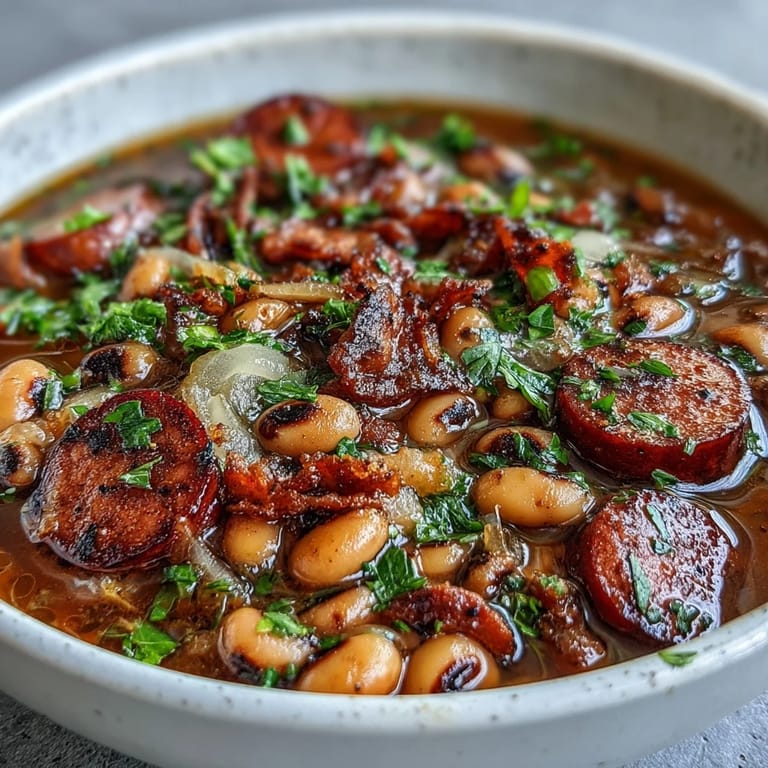
- Smoked sausage (Andouille or Kielbasa), sliced: This is where most of the flavor lives, so don't skimp on quality—look for sausage with actual smoke flavor, not just liquid smoke in the ingredient list.
- Thick-cut bacon, diced: The rendered fat becomes your flavor base and the crispy bits add textural contrast that keeps every spoonful interesting.
- Dried black-eyed peas, rinsed and sorted: Dried peas are superior here because they absorb all the broth flavors; always sort through them first because occasionally you'll find a tiny stone hiding among them.
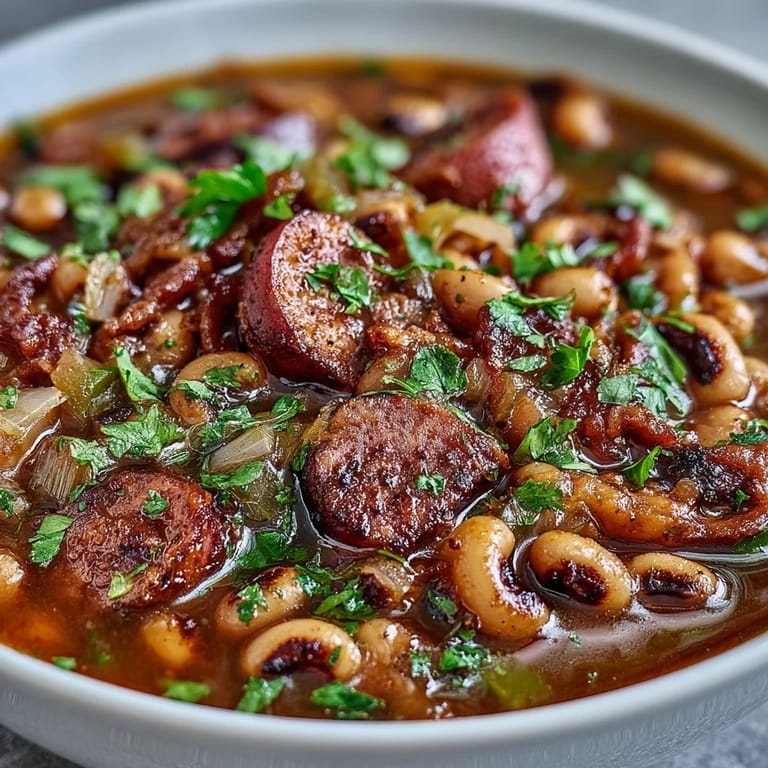
- Onion, green bell pepper, and celery: This holy trinity of vegetables creates the aromatic foundation—never skip the sauté step because it softens their raw edge and builds flavor.
- Garlic, minced: Add it after the other vegetables soften or it'll burn and turn bitter; a minute is all it needs.
- Low-sodium chicken broth and water: The combination keeps the broth from becoming oversalted while the water allows the peas to fully hydrate and break down slightly.
- Bay leaves, smoked paprika, thyme, and cayenne: These spices work together to create that warm, slightly smoky Creole flavor—the paprika especially shouldn't be skipped because it's doing the heavy lifting here.
- Kosher salt and black pepper: Taste as you go because the sausage and bacon add their own saltiness and you don't want the final dish to be overseasoned.
- Fresh parsley: A bright, fresh finish that cuts through the richness of the broth and meat.
Tired of Takeout? 🥡
Get 10 meals you can make faster than delivery arrives. Seriously.
One email. No spam. Unsubscribe anytime.
Instructions
- Prepare your peas the night before (or use the quick method):
- Dried peas need to soften before cooking, so soak them overnight in plenty of cold water if you're planning ahead. If you're short on time, pour boiling water over the peas, let them sit for an hour, then drain and rinse—you'll still get good results, just not quite as tender.
- Render the bacon until it's gloriously crisp:
- Use a large Dutch oven over medium heat and let the bacon release its fat slowly, stirring occasionally—this takes about 8-10 minutes and your kitchen will smell incredible. Remove it with a slotted spoon and set aside on a paper towel, leaving that precious fat in the pot.
- Brown the sausage in that bacon fat:
- The sliced sausage needs just a few minutes per side to develop a caramelized crust that adds complexity to the broth. You're not cooking it through; you're building flavor, so don't crowd the pot or it'll steam instead of brown.
- Build your flavor base with the vegetables:
- Add the onion, bell pepper, and celery to the pot and let them soften over medium heat for 5-6 minutes, stirring occasionally until the onion becomes translucent. Stir in the garlic and cook for just one more minute until fragrant, watching carefully so it doesn't brown.
- Combine everything in the pot:
- Add the soaked peas, broth, water, bay leaves, paprika, thyme, cayenne if you like heat, black pepper, and salt—the peas should be covered by about an inch of liquid. Return the bacon and sausage to the pot and stir gently.
- Bring to a boil, then settle into a low simmer:
- Once you see large bubbles breaking the surface, reduce the heat to low, place the lid on the pot, and let it sit undisturbed for 1 to 1.5 hours. You want a gentle simmer, not a rolling boil, or the peas will burst apart.
- Taste, adjust, and finish with parsley:
- After an hour, start tasting a pea or two—they should be creamy but hold their shape. Remove the bay leaves, add more salt if needed, and sprinkle fresh parsley over the top just before serving.
 Save to Pinterest
 Years later, I realized why my grandmother treated those peas like a ritual—it wasn't the superstition at all, it was the act of sitting down with people you love and sharing something warm and honest. Every year when January first rolls around, I still make this, and I still think of her kitchen and that moment when everything felt possible.
The Secret to Creamy Peas
The creaminess everyone loves doesn't come from cream or butter—it comes from the peas themselves breaking down just slightly as they simmer, releasing their starch into the broth. This is why you want to cook them low and slow rather than at a rolling boil, and why tasting them around the 1-hour mark matters—you're looking for that moment when they're tender enough to crush easily between your tongue and the roof of your mouth but still hold their shape on the spoon.
Flexibility and Variations
This recipe is beautifully forgiving because the foundation is strong enough to handle additions and substitutions without falling apart. I've added diced tomatoes near the end for brightness, thrown in collard greens during the last 20 minutes for extra nutrition, and even made a vegetarian version by swapping vegetable broth and doubling the smoked paprika to compensate for the meat's depth—it works because you're building layers of flavor rather than relying on a single element.
Serving and Pairing Ideas
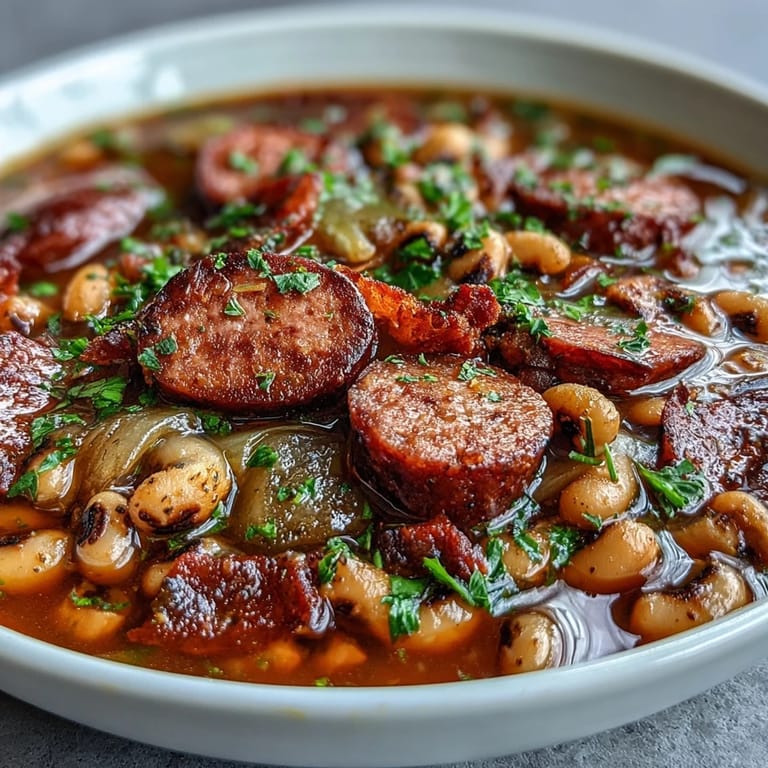
Traditionally you serve this over steamed rice or alongside cornbread, and those pairings exist for good reason—the starch soaks up the broth and balances the richness of the meat. But I've also ladled it into bowls with just a square of buttered cornbread crumbled on top, served it cold as a salad with vinegar and olive oil stirred in, and spooned it over creamy polenta when I wanted something a bit more luxurious.
- A crisp, dry white wine or iced tea cuts through the richness perfectly and makes you want another spoonful.
- Hot sauce on the side lets everyone adjust the heat level to their preference without overwhelming those smoky, savory flavors.
- Leftovers actually improve over a day or two as the flavors meld, so don't hesitate to make this ahead.
 Save to Pinterest
 There's something grounding about a dish that's been feeding people for generations, something that says you're part of a longer story. Make this, and you'll understand why those peas have lasted this long.
Recipe FAQ
- → Do I need to soak the black-eyed peas before cooking?
Yes, soaking dried black-eyed peas overnight helps them cook evenly and tenderly. For a faster method, cover them with boiling water and let stand for one hour before draining and proceeding with the recipe.
- → Can I make this dish vegetarian?
Absolutely. Simply omit the bacon and sausage, then use vegetable broth instead of chicken broth. Add extra smoked paprika or a few drops of liquid smoke to maintain that signature smoky depth.
- → What's the best way to serve Southern black-eyed peas?
Traditionally served over steamed white rice with a side of cornbread for soaking up the flavorful broth. Hot sauce on the side lets everyone adjust the heat to their preference. Sautéed collard greens or braised kale make excellent accompaniments.
- → How long will leftovers keep in the refrigerator?
Store cooled black-eyed peas in an airtight container for up to five days. The flavors often deepen and improve after a day or two. Reheat gently on the stovetop, adding a splash of water or broth if needed to loosen the consistency.
- → Can I use canned black-eyed peas instead of dried?
You can substitute canned peas, but the texture will be softer and less creamy. Rinse and drain about four 15-ounce cans, then add them during the last 30 minutes of simmering just to heat through and absorb flavors.
- → Why are black-eyed peas traditionally eaten on New Year's Day?
Southern folklore holds that eating black-eyed peas brings prosperity and luck in the coming year. The peas represent coins, while their swelling when cooked symbolize growing wealth. Combined with greens (representing paper money) and cornbread (gold), it's a hopeful start to the new year.