 Save to Pinterest
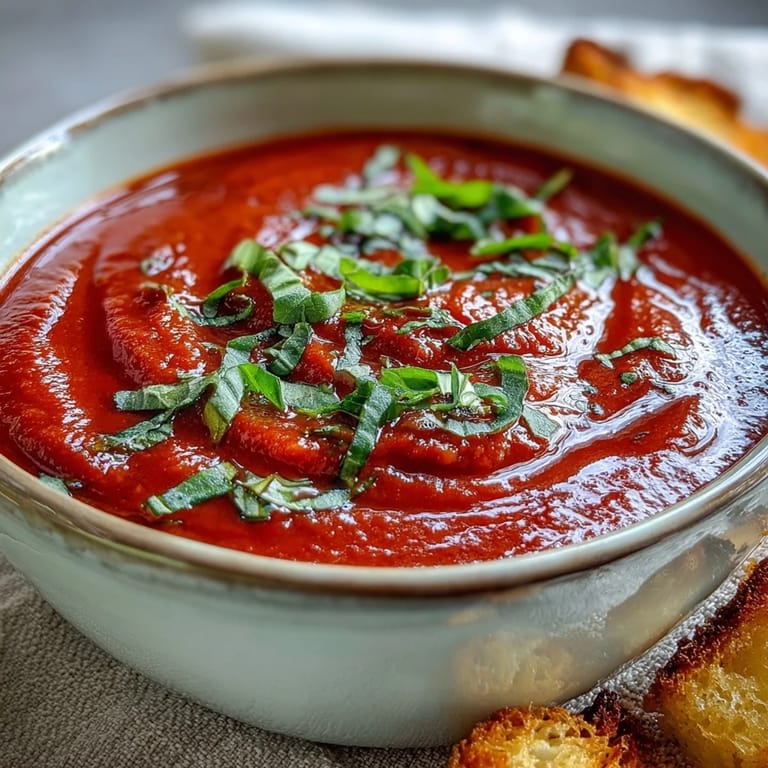
 I used to think soup in a can was peak comfort until the afternoon the kitchen filled with the scent of blistering tomatoes. The sun was hitting the counter just right and I realized that roasting the vegetables changed everything. Now every time I see a basket of ripe tomatoes at the market I feel that same rush of excitement. This recipe is not just about food because it is about that specific aroma of garlic and olive oil mingling in a hot oven. It is a ritual that marks the shift into cozy sweater weather for me.
One evening I accidentally left the onions in the oven a few minutes too long resulting in these dark charred edges. I worried I had ruined the batch but that smoky bitterness actually made the soup taste like it came from a high end Italian bistro. My friends still ask what my secret ingredient was that night. It taught me that sometimes the best flavors come from leaning into the heat. We sat on the floor with bowls in our laps dipping thick crusty bread until the pot was scraped clean.
Ingredients
- 1.5 kg ripe tomatoes: These are the heart of the dish and work best when they are heavy with juice.
- Large yellow onion: Quartering them allows the layers to caramelize individually for a more complex base.
- 6 cloves garlic: Roasting them mellows the sharp bite into a creamy and nutty sweetness.
- Extra virgin olive oil: A good quality oil carries the heat and helps the skins blister perfectly.
- Vegetable broth: Using a low sodium version gives you total control over the final salt balance.
- Fresh basil leaves: Adding these at the very end preserves their bright and peppery essence.
- Unsalted butter: A tiny knob swirled in right before blending creates a velvety mouthfeel.
- Sugar: Just a pinch acts as a bridge between the acidity of the fruit and the savory herbs.
Tired of Takeout? 🥡
Get 10 meals you can make faster than delivery arrives. Seriously.
One email. No spam. Unsubscribe anytime.
Instructions
- The Sheet Pan Prep:
- Arrange your halved tomatoes and aromatics on a lined tray with a generous drizzle of oil and seasoning.
- The Caramelization Phase:
- Slide the tray into a hot oven until the skins are shrivelled and the juices start to bubble.
- The Pot Assembly:
- Carefully slide every bit of those roasted treasures and their concentrated oils into your soup pot.
- The Herb Infusion:
- Add the broth and basil letting the mixture simmer just long enough for the flavors to introduce themselves.
- The Smooth Finish:
- Use an immersion blender to swirl everything into a vibrant silky liquid.
- The Final Polish:
- Taste for salt and acidity then pass it through a sieve if you want that ultra refined texture.
 Save to Pinterest
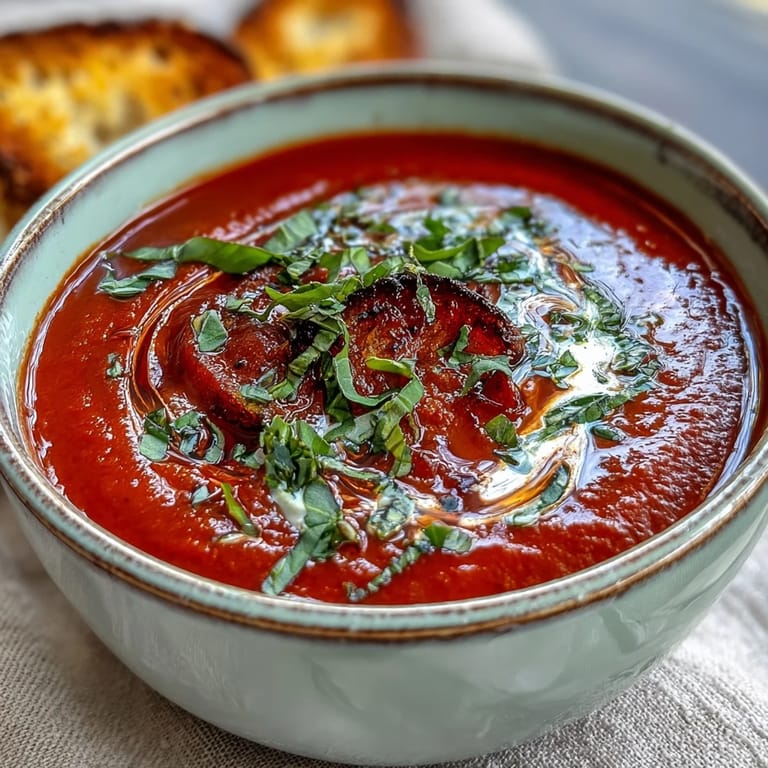
 There was a rainy Tuesday when my neighbor came over looking completely drained from work. I handed her a mug of this soup topped with a swirl of cream and I watched the tension leave her shoulders.
The Magic of High Heat
Turning the oven up to 220 degrees Celsius might feel intimidating but it is the key to that charred rustic flavor. This intense heat breaks down the tomato cell walls and releases a depth of flavor that a slow simmer never could. You want to see those dark spots on the onion edges because that is where the soul of the soup lives.
Finding the Perfect Texture
Whether you prefer a chunky rustic texture or a glass smooth finish is entirely up to your mood that day. I often find that using an immersion blender leaves just enough character to remind you of the fresh vegetables. If I am hosting a formal dinner I will take the extra step of straining it through a fine mesh.
Creative Variations and Pairings
While the classic version is hard to beat I love experimenting with small additions depending on what is in my pantry. A splash of balsamic vinegar right at the end can brighten the whole pot if the tomatoes were a bit dull. It really is a versatile canvas for whatever seasonal herbs you have on hand.
- Add a pinch of red pepper flakes if you want a subtle warmth that lingers.
- Stir in a spoonful of pesto for an even more intense herbal hit.
- Swap the butter for a thick cashew cream to keep things entirely plant based.
 Save to Pinterest
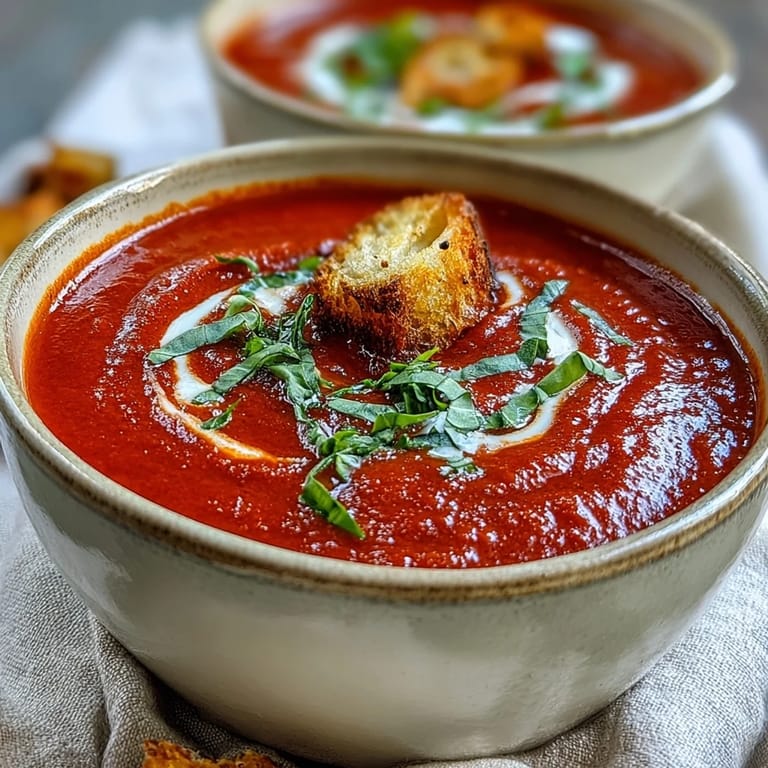
 This soup is a love letter to simple ingredients handled with a little bit of patience. I hope it brings as much warmth to your table as it does to mine.
Recipe FAQ
- → Can I make this soup ahead of time?
Absolutely. This soup actually develops deeper flavors when made ahead. Prepare up to 3 days in advance and store in an airtight container in the refrigerator. Reheat gently over medium-low heat, stirring occasionally. Add a splash of broth if it thickens too much upon standing.
- → What type of tomatoes work best?
Roma, San Marzano, or vine-ripened tomatoes yield the best results due to their meaty texture and natural sweetness. Even large beefsteak tomatoes work beautifully when fully ripe. Avoid underripe tomatoes as they won't develop the same caramelized depth during roasting.
- → Is the cream garnish necessary?
Not at all. The soup achieves wonderful silkiness through the roasted vegetables and optional butter. The cream adds richness and beautiful contrast, but many prefer the pure, vibrant flavor without it. For a vegan version, simply omit all dairy or use plant-based alternatives.
- → Can I freeze this soup?
Yes, it freezes exceptionally well. Cool completely before transferring to freezer-safe containers, leaving headspace for expansion. It keeps well for up to 3 months. Thaw overnight in the refrigerator and reheat gently. Note that cream should be added after thawing and reheating if you plan to freeze portions.
- → How do I adjust the consistency?
For a thinner soup, add more vegetable broth one quarter cup at a time until reaching your desired consistency. For thicker, heartier results, reduce the initial broth slightly or let it simmer longer to evaporate excess liquid. The optional fine sieve step creates an ultra-refined texture, though leaving it slightly rustic adds lovely body.