 Save to Pinterest
 I used to think broccoli only belonged on a plate next to a steak until a rainy Tuesday changed my mind. The air was thick with the scent of wet pavement and my pantry was looking suspiciously empty. I tossed some aging squash and a lonely head of broccoli onto a tray hoping for the best. What emerged from the oven was a golden charred revelation that transformed my kitchen into a cozy sanctuary. Now this soup is my favorite remedy for grey afternoons.
Last November I made a double batch for my neighbor who was feeling under the weather. We sat on her porch wrapped in blankets spooning up the warmth while the first frost settled on the lawn. It was the kind of quiet moment that makes you realize food is more than just fuel. Since then the smell of roasting cumin always brings back that feeling of connection.
Ingredients
- Butternut squash: Look for one that feels heavy for its size as it usually means the flesh is dense and sweet.
- Broccoli florets: Make sure they are cut into uniform sizes so they char evenly without burning the tips.
- Yellow onion: This provides a foundational sweetness that balances the earthy tones of the squash.
- Garlic cloves: Roasting them whole in their skins protects the delicate insides from becoming bitter.
- Vegetable broth: Use a low sodium version to maintain complete control over the final saltiness of your soup.
- Coconut milk: This adds a silky texture and a subtle tropical hint that plays well with the nutmeg.
- Olive oil: A high quality oil helps conduct the heat and creates those beautiful caramelized edges.
- Ground cumin: This spice adds an earthy depth that keeps the soup from feeling too sweet.
- Nutmeg: Just a tiny pinch at the end lifts the whole dish and makes it feel festive.
Tired of Takeout? 🥡
Get 10 meals you can make faster than delivery arrives. Seriously.
One email. No spam. Unsubscribe anytime.
Instructions
- Prep the oven:
- Get your oven screaming hot at 425 degrees and line your sheet with parchment for an easy cleanup. This high heat is essential for getting those flavorful browned bits.
- Season the veggies:
- Toss your squash, broccoli, onion, and garlic with oil and spices until they are glistening and ready for the heat. Ensure every piece is coated so the seasoning penetrates deep into the vegetables.
- Char to perfection:
- Let them roast until the edges are dark and caramelized, stirring once to make sure everyone gets a tan. This usually takes about 25 to 30 minutes depending on your oven.
- Simmer the base:
- Slide those roasted gems into a pot with the broth and let them get to know each other over a gentle flame. Ten minutes of simmering allows the roasted flavors to infuse into the liquid.
- Blend it smooth:
- Use your immersion blender to swirl everything into a velvet pool of gold. Work in a circular motion to ensure no stubborn chunks of squash remain.
- Final seasoning:
- Stir in your creamy coconut milk and that pinch of nutmeg to round out the flavors. Taste it now to see if you need an extra pinch of salt.
- Garnish and serve:
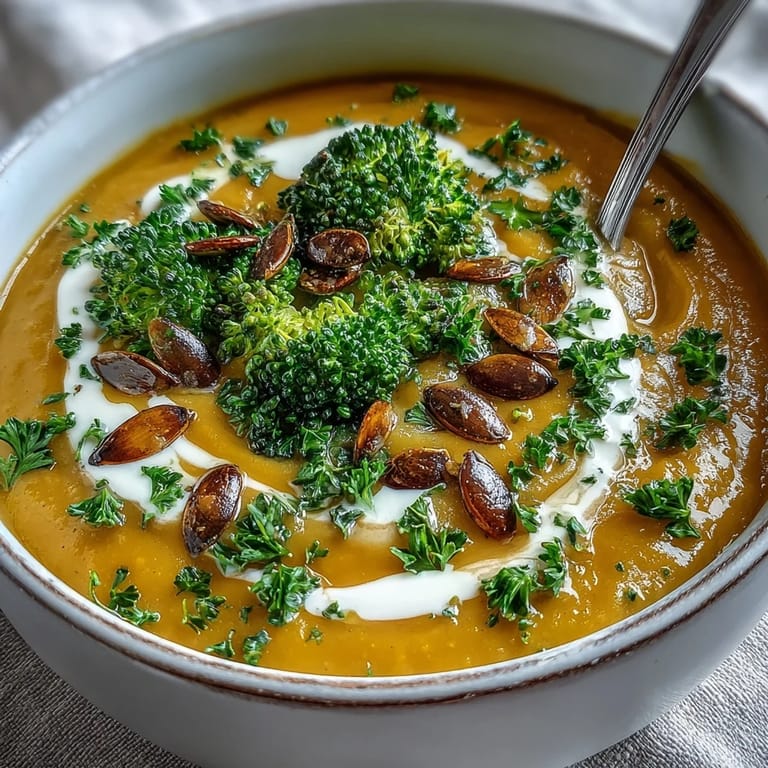
- Ladle the soup into bowls and top with crunchy seeds for a bit of texture. A final drizzle of cream makes it look like it came from a professional kitchen.
 Save to Pinterest
 One evening I accidentally left the garlic in the oven a few minutes too long fearing I had ruined the whole pot. Instead those deeply toasted cloves added a smoky complexity that I now try to replicate every single time. It was a happy accident that proved sometimes the best flavors come from pushing things just a little further. Cooking is often about these small discoveries that happen when we are not looking.
Selecting the Best Squash
Choosing the right butternut squash can feel like a guessing game at the market. I always look for a matte skin rather than a shiny one as shine often indicates the squash was picked too early. A thick neck usually means more usable flesh and fewer seeds to scoop out. This simple check ensures you get the most flavor for your effort.
Mastering the Blend
Getting that professional silkiness requires a bit of patience during the blending phase. I prefer using an immersion blender right in the pot to save on dishes and keep the heat contained. If you want it even smoother you can pass the final liquid through a fine mesh sieve. This extra step creates a luxury texture that feels special.
Creative Toppings and Variations
The beauty of a simple puree is how easily you can dress it up with what you have on hand. Sometimes I add a squeeze of fresh lemon right before serving to cut through the richness. You can experiment with different fats and crunches to change the mood of the meal.
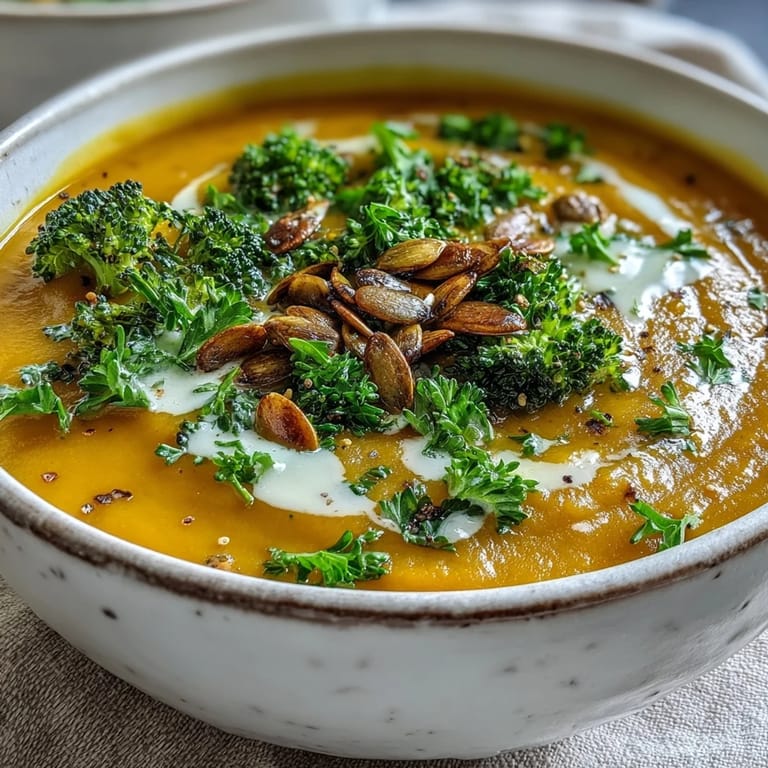
- Try toasted walnuts instead of pumpkin seeds for a deeper nutty crunch.
- A swirl of chili oil adds a lovely heat that contrasts with the sweet squash.
- Crispy sage leaves fried in a bit of butter make a very elegant garnish.
 Save to Pinterest
 I hope this bowl of liquid sunshine brings as much comfort to your table as it does to mine. Enjoy every spoonful of that roasted goodness.
Recipe FAQ
- → Can I freeze this soup?
Yes, this soup freezes beautifully for up to 3 months. Cool completely before transferring to airtight containers. Thaw overnight in the refrigerator and reheat gently on the stove, adding a splash of broth if needed to restore consistency.
- → What's the best way to achieve the smoothest texture?
An immersion blender works wonderfully directly in the pot. For ultra-smooth results, use a high-speed countertop blender in batches, venting slightly to release steam. Straining through a fine-mesh sieve removes any remaining fibers for restaurant-quality silkiness.
- → Can I make this without coconut milk?
Absolutely. Heavy cream creates a richer, more traditional finish. For a lighter version, simply omit the cream altogether—the roasted vegetables provide plenty of body. Greek yogurt stirred in at the end adds tangy creaminess without coconut flavor.
- → Why roast the vegetables instead of boiling them?
Roasting at 425°F caramelizes natural sugars, creating deep, complex flavors that boiling can't achieve. The slight char on broccoli edges and browned squash provide nutty, savory notes that make this soup exceptional rather than ordinary.
- → What other vegetables work well in this combination?
Sweet potato, cauliflower, or carrots blend seamlessly with the original flavors. Consider adding roasted red peppers for sweetness or a small potato for extra body. Keep proportions similar to maintain proper texture and seasoning balance.
- → How can I add more protein to make it a complete meal?
Stir in rinsed white beans during the final simmer for creamy protein and fiber. Rotisserie chicken chunks work beautifully if you're not vegetarian. A dollop of Greek yogurt or hemp seeds on top adds plant-based protein without altering the flavor profile.