 Save to Pinterest
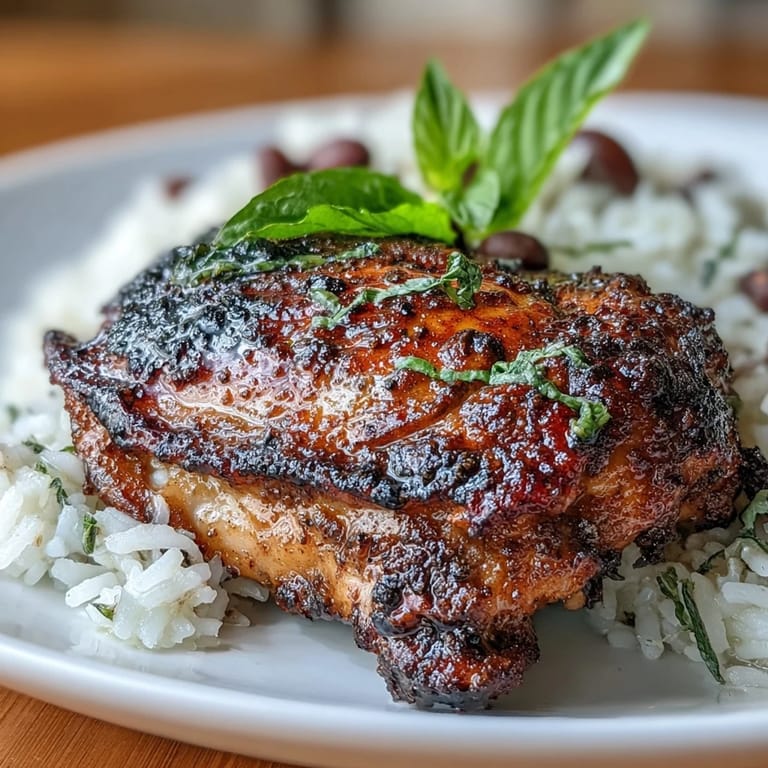
 My neighbor Marcus invited me over one humid Saturday afternoon, and the first thing that hit me when I walked through his door was this intoxicating blend of spice, thyme, and char that made my stomach rumble before we'd even said hello. He was pulling a tray of glistening jerk chicken from the oven, the skin crackling with heat, while coconut-scented steam rolled from a pot of rice studded with kidney beans. That moment—watching him plate it all together with such ease and pride—I knew I had to learn how to make this myself. Now it's become my go-to when I want to cook something that feels both impressive and genuinely comforting.
I made this for a dinner party last spring, and what started as casual cooking turned into my friend asking for the recipe before dessert even landed on the table. The combination of that smoky, slightly sweet chicken with the creamy coconut rice just seemed to quiet everyone down in the best way possible. There was something about the dish that made people linger at the table longer, asking for seconds, swapping stories.
Ingredients
- Bone-in, skin-on chicken thighs: These stay incredibly juicy and develop the crispiest skin when roasted, unlike breast meat which can dry out if you're not careful.
- Jerk seasoning blend: Don't skip mixing your own if you have the time—store-bought works, but homemade lets you control the heat level and freshness.
- Scotch bonnet pepper: This is where the heat lives, so wear gloves and remove the seeds if you prefer milder food, though the flavor is worth a little courage.
- Fresh thyme: The dried version will work in a pinch, but fresh thyme adds this bright, grassy note that makes the whole dish sing.
- Coconut milk: Full-fat is essential here—it creates that rich, creamy texture that makes the rice unforgettable.
- Kidney beans or pigeon peas: Beyond being traditional, they add substance and earthiness that balances the spice and sweetness.
Tired of Takeout? 🥡
Get 10 meals you can make faster than delivery arrives. Seriously.
One email. No spam. Unsubscribe anytime.
Instructions
- Build your spice paste:
- In a large bowl, combine all the jerk seasonings, lime juice, soy sauce, and brown sugar until you have a thick, fragrant paste that sticks to a spoon. This is where the magic starts—take a moment to smell it and adjust the heat level if needed.
- Coat the chicken thoroughly:
- Add chicken thighs to the paste and massage it in like you're really getting to know them, making sure every crevice is covered. Don't be shy with it.
- Let time do the work:
- Refrigerate for at least an hour, but overnight is genuinely better because the flavors deepen and the chicken absorbs everything more fully. Plan ahead if you can.
- Roast with confidence:
- Preheat your oven to 400°F, place the marinated chicken skin-side up on a foil-lined tray, and roast for 35 to 40 minutes until the skin is blistering and the meat pulls easily from the bone. If you want extra char, hit it with the broiler for a couple minutes at the end, watching carefully so it doesn't blacken.
- Prepare the rice and peas simultaneously:
- While chicken roasts, combine coconut milk, water, kidney beans, rice, spring onions, garlic, thyme, and bay leaf in a saucepan and bring to a boil. The kitchen will smell incredible as these cook together.
- Finish the rice gently:
- Reduce heat to low, cover, and let it simmer for 18 to 20 minutes until the rice is tender and liquid is absorbed. Remove from heat, leave it covered for 5 minutes so it steams and fluffs, then discard the bay leaf.
- Bring it all together:
- Plate the fluffy coconut rice, nestle the crispy jerk chicken on top, and serve hot with lime wedges if you have them.
 Save to Pinterest
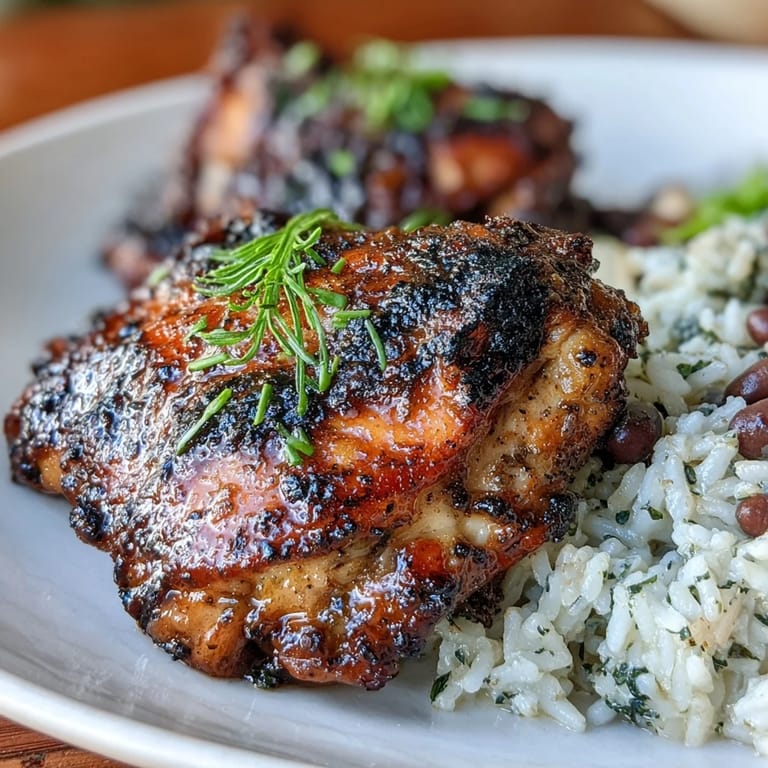
 There's a moment during cooking when the oven door opens and that first wave of jerk-spiced steam hits your face that you know you're making something special. It's the kind of dish that doesn't require fancy plating or complicated technique, just good ingredients and a little patience.
The Secret to Crispy Skin
Pat your chicken dry before it hits the oven—any moisture clinging to the skin will steam rather than crisp, and you'll miss out on that satisfying crackle when you bite into it. High heat and a dry surface are your only real secrets here. Some people finish under the broiler for the last few minutes, and honestly, that extra step of caramelization is worth the attention.
Adjusting the Heat Level
Caribbean food doesn't have to blow your head off to be authentic—it's about balance and letting flavors coexist. If you're cooking for people who aren't spice-tolerant, remove the seeds from your Scotch bonnet or use just half of it, and you'll still get that distinctive jerk flavor without the intense heat. Alternatively, let people add their own hot sauce at the table so everyone controls their own experience.
Serving Suggestions & Pairings
The beauty of this dish is how it plays with other flavors—a fresh mango salsa cuts through the spice with sweetness, while a cold lager just makes sense alongside it. Grilled vegetables like plantains or okra add another dimension if you want to expand the meal without much extra effort.
- A squeeze of fresh lime over everything brightens each bite and ties the flavors together beautifully.
- Leftover chicken shreds into amazing sandwich filling the next day, so don't hesitate to make extra.
- This freezes well too, so batch-cooking for the freezer is totally practical.
 Save to Pinterest
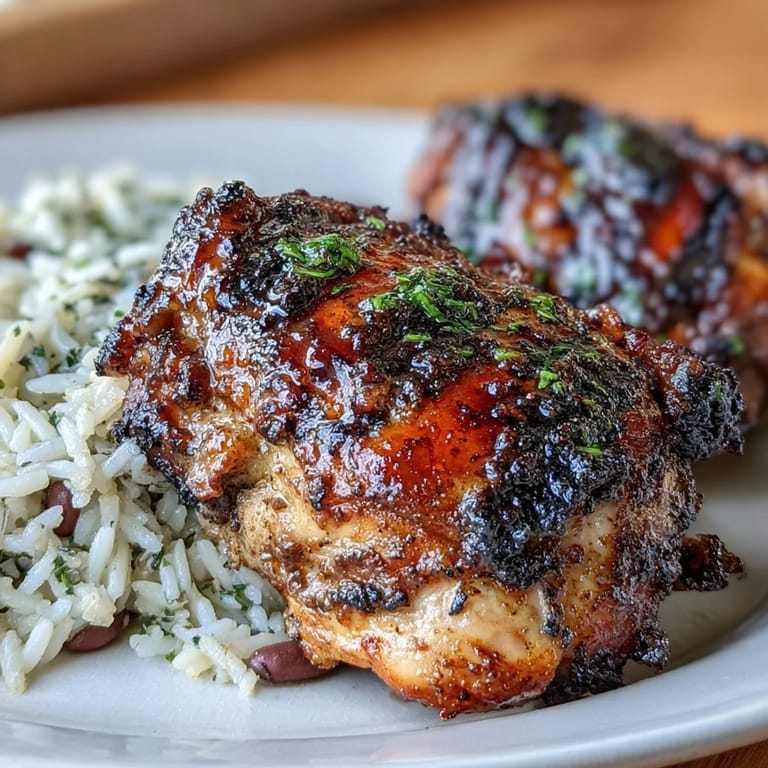
 This is the kind of meal that turns an ordinary evening into something memorable, whether you're cooking for yourself or a table full of hungry people. Once you make it once, it becomes part of your rotation permanently.
Recipe FAQ
- → How long should the chicken marinate?
For best flavor, marinate the chicken for at least 1 hour, though overnight in the refrigerator enhances the spice infusion.
- → Can I use other beans instead of kidney beans?
Yes, pigeon peas are a traditional alternative providing a slightly different texture and flavor.
- → How do I adjust the heat level?
Reducing or omitting the Scotch bonnet pepper lowers the spiciness, making the dish milder without sacrificing flavor.
- → What type of rice works best for this dish?
Long-grain varieties like basmati or jasmine are preferred for their aroma and fluffy texture.
- → Is it necessary to add bay leaf in the rice?
The bay leaf imparts a subtle herbal note to the rice but can be omitted if unavailable without drastically changing the flavor.