 Save to Pinterest
 There's a moment in every home cook's life when you stop ordering takeout and realize you can make the things you crave. For me, it was General Tso's chicken. I was standing in my kitchen on a random Tuesday, craving that glossy, tangy-sweet sauce and the crack of crispy fried chicken, when I thought: why am I paying fifteen dollars for this? Three attempts later, I nailed it, and now it's the dish I make when I want to feel like I've mastered something real.
I cooked this for my partner one night after they'd had a rough day, and watching their face light up at that first bite reminded me why homemade food matters. They asked if I'd been secretly training as a chef, and I just laughed—sometimes the best meals are born from genuine craving and a willingness to try.
Ingredients
- Boneless, skinless chicken thighs (600 g): Thighs hold moisture and fat better than breast meat, so they stay tender even after frying; they're also more forgiving if you overcook them slightly.
- Eggs (2 large): These create the binding layer that helps the coating stick and fry up extra crispy.
- Soy sauce (1 tbsp for marinade, 3 tbsp for sauce): Use regular soy sauce, not tamari, unless you're avoiding gluten—the saltiness anchors everything.
- Sesame oil (1 tsp for marinade, 2 tsp for sauce): This stuff is potent; a little goes a long way and adds that unmistakable toasted aroma.
- White pepper (¼ tsp): Sharper and more floral than black pepper; it adds a subtle heat without visible specks in the coating.
- Cornstarch and all-purpose flour (120 g and 60 g): The cornstarch is key—it's what makes the coating shatteringly crisp, while flour adds structure.
- Vegetable oil for frying: Use something neutral with a high smoke point; peanut oil works beautifully if you have it.
- Chicken broth (120 ml): Homemade is nicer, but good-quality store-bought works just fine.
- Rice vinegar (2 tbsp): This gives the sauce its bright, tangy backbone—don't skip it or use regular vinegar.
- Hoisin sauce (2 tbsp): The secret ingredient that adds depth and slight sweetness; look for it in the Asian aisle.
- Sugar (3 tbsp): Balances the acid and salty elements; taste as you go and adjust if needed.
- Cornstarch slurry (1 tbsp cornstarch mixed with water): This thickens the sauce and makes it glossy and clingable to the chicken.
- Chinese Shaoxing wine (1 tbsp, optional but recommended): Adds a subtle depth; dry sherry works as a substitute.
- Fresh garlic and ginger (3 cloves and 2 tsp): Mince the garlic fine and grate the ginger so it releases its oils into the hot oil.
- Dried red chilies (6-8): These infuse the oil with heat and fragrance; remove them before serving if you prefer milder bites.
- Spring onions and toasted sesame seeds: Fresh toppings that add color, freshness, and that final toasted finish.
Tired of Takeout? 🥡
Get 10 meals you can make faster than delivery arrives. Seriously.
One email. No spam. Unsubscribe anytime.
Instructions
- Marinate the chicken:
- Whisk your eggs with soy sauce, sesame oil, and white pepper in a bowl, then tumble in the chicken pieces and make sure every piece gets coated. Let this sit while you prep everything else; it doesn't need hours, just enough time for the seasonings to start penetrating the meat.
- Coat for crispiness:
- Mix cornstarch and flour in a shallow bowl, then dredge each chicken piece, shaking off any excess so you get a thin, even coating. This is where patience pays off—a thick coating gets gummy, not crispy.
- Fry until golden:
- Heat oil to 180°C (350°F) in a deep pan or wok; you'll know it's ready when a tiny piece of chicken sizzles immediately. Fry in batches so the pan isn't crowded, about 4–5 minutes per batch until the coating is deep golden, then drain on paper towels or a wire rack.
- Build the sauce:
- Whisk together broth, soy sauce, rice vinegar, hoisin, sugar, sesame oil, and wine in a bowl. Mix cornstarch with water to make a smooth slurry, then stir it in; this prevents lumps when the sauce hits the heat.
- Bloom the aromatics:
- Heat oil in your wok or skillet, then add dried chilies, garlic, and ginger, stirring for about a minute until the kitchen smells incredible. This brief moment is when all those flavors wake up and infuse the oil.
- Thicken and gloss:
- Pour in your sauce mixture and stir constantly for 2–3 minutes until it thickens, turns glossy, and clings to a spoon. You'll see the transformation happen—it goes from thin liquid to silky coating in real time.
- Bring it together:
- Add the fried chicken to the sauce and toss everything until every piece is evenly coated. Work quickly so the chicken stays warm and the coating doesn't soften.
- Serve with ceremony:
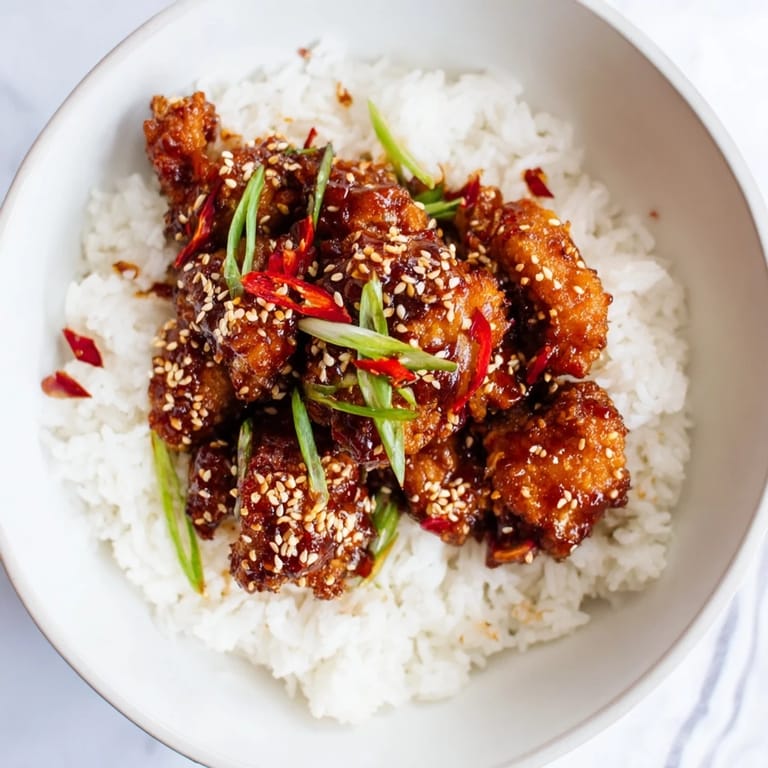
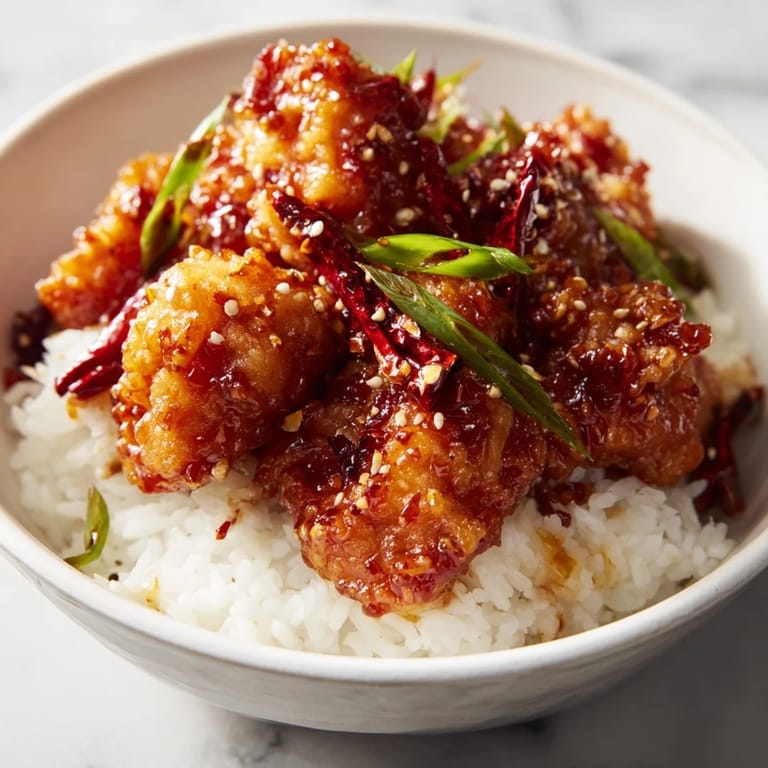
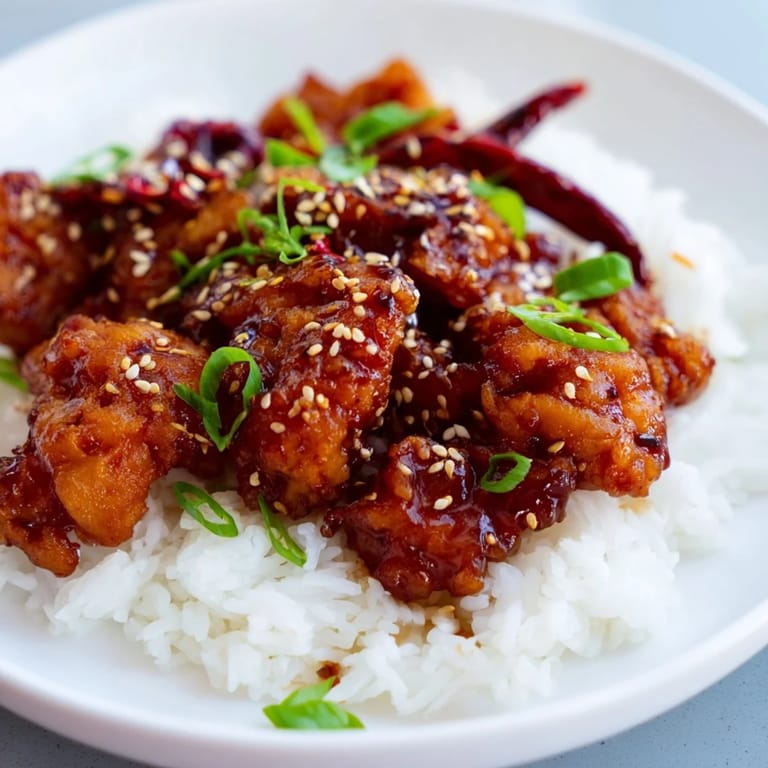
- Spoon everything over steamed rice, scatter spring onions and sesame seeds on top, and serve immediately while the sauce is still glossy and warm.
 Save to Pinterest
 The real magic of this dish isn't just the taste—it's the confidence you feel when friends taste it and say, 'You made this at home?' That moment when takeout becomes unnecessary.
The Crispy Coating Secret
The balance between cornstarch and flour matters more than you'd think. Too much cornstarch and the coating fries up too hard and flakes off; too much flour and it's thick but not crispy. I learned this by trial and error, and now I always use the two-to-one ratio—it gives you that shatteringly crisp shell that stays attached even when it's tossed in sauce.
Making It Your Own
This recipe is forgiving in ways that matter. If you like heat, pile on more chilies or swap them for fresh ones. If you want it less sweet, cut the sugar back by half a tablespoon and taste as you go. Some cooks add a splash of orange juice for brightness, others throw in a handful of cashews at the end for crunch. I've even made it with vegetables—snap peas, water chestnuts, or baby bok choy all work beautifully if you want to stretch it further or add color to your plate.
Wine Pairings and Serving Ideas
The sweet-tangy sauce pairs beautifully with light, aromatic white wines like Riesling or Albariño; if you prefer red, try a chilled Pinot Noir. For non-alcoholic options, jasmine tea or a ginger-lemon spritzer cuts through the richness perfectly. Serve it over jasmine rice for extra fragrance, or branch out with fried rice if you have leftover rice from the day before.
- A cold beer cuts through the sauce's richness better than you'd expect.
- Leftover chicken and sauce reheat beautifully in a wok with a splash of water to loosen the sauce.
- Make extra sauce if you're feeding a crowd—people always want more.
 Save to Pinterest
 This is the dish that taught me that restaurant food isn't magic—it's just technique, good ingredients, and a little patience. Once you make it once, you'll make it again and again.
Recipe FAQ
- → What cut of chicken works best for this dish?
Boneless, skinless chicken thighs are ideal, offering juicy texture and rich flavor that holds up well during frying and saucing.
- → How can I adjust the spiciness level?
Modify the number of dried red chilies or chili flakes according to your preferred heat intensity.
- → Is it possible to bake the chicken instead of deep-frying?
Yes, baking or air-frying can be used for a lighter version while still achieving a crispy exterior.
- → Can I use chicken breast instead of thighs?
Chicken breast can be substituted, but thighs are recommended for juiciness and better flavor retention.
- → What should I serve with this dish?
Serve over steamed white rice and garnish with spring onions and toasted sesame seeds for authentic taste and presentation.
- → What cooking tools are needed?
A wok or deep skillet, mixing bowls, slotted spoon, wire rack, and standard kitchen utensils are essential.