 Save to Pinterest
 There's something about the sound of butter hitting a hot pan that still makes me pause mid-morning. Years ago, my French roommate would wake up at the crack of dawn and make these omelets while I'd stumble into the kitchen, drawn by that sizzle and the smell of melting cheese. She made it look effortless, like folding an omelet was as natural as breathing. I finally asked her to teach me, and what I learned that morning changed how I think about breakfast forever—it's not about precision, it's about listening to the pan and trusting your instincts.
I made this for a hungover friend once on a Sunday morning, and they literally closed their eyes while eating it like they were experiencing some kind of revelation. When they asked me the secret, I realized there wasn't one—just hot butter, good timing, and not overthinking it. That moment stuck with me because it reminded me that the best meals aren't complicated, they're just done with a little care.
Ingredients
- Eggs: Four large ones, and please don't skip the milk or cream—it's what makes them fluffy instead of dense, and that difference is everything.
- Butter: One tablespoon of the unsalted kind, because you want to taste the eggs and cheese, not competing flavors.
- Cheese: About 80 grams of something melty like Gruyère or Cheddar—sharp enough to matter, but not so strong it overshadows the eggs.
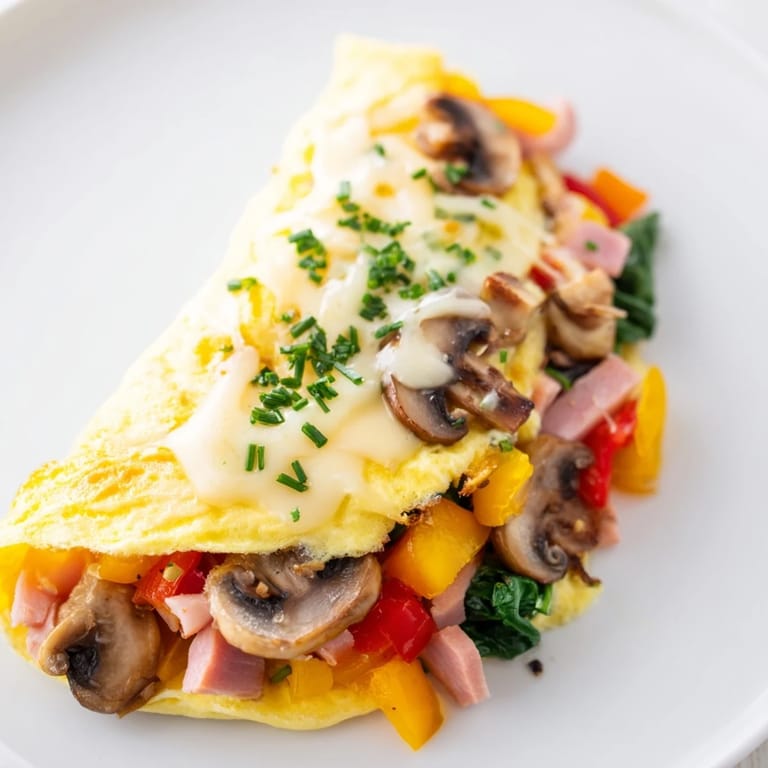
- Optional fillings: Ham, bell pepper, spinach, or mushrooms, whatever you have or whatever your mood demands that morning.
- Seasonings: Salt and pepper, and fresh chives or parsley if you want to feel extra about it.
Tired of Takeout? 🥡
Get 10 meals you can make faster than delivery arrives. Seriously.
One email. No spam. Unsubscribe anytime.
Instructions
- Crack and whisk:
- Break those four eggs into a bowl with two tablespoons of milk or cream, a pinch of salt, and a grind of black pepper. Whisk it like you mean it until you see small bubbles forming on top—that's your signal the eggs are ready to transform.
- Melt the butter just right:
- Heat your skillet over medium heat and add the butter. Watch it melt and start to foam, but pull it off the heat before it turns golden brown—you want bubbling, not browning.
- Pour and spread:
- Pour the egg mixture into the hot skillet and tilt it gently so it spreads evenly across the bottom. Let it sit undisturbed for about a minute—this is when the magic starts, and you'll see the edges beginning to set while the center still wobbles.
- Add the cheese and fillings:
- Sprinkle your grated cheese evenly over the eggs, then scatter on any fillings you're using. The residual heat will start softening everything, and the kitchen will smell impossibly good.
- Lift and flow:
- Using a spatula, gently push the cooked edges toward the center, tilting the pan so the uncooked egg can run underneath and cook. This takes another 1 to 2 minutes and is the moment where you stop watching and start enjoying the process.
- Fold and finish:
- When the top is still slightly creamy but mostly set, fold the omelet in half and cook for just 30 seconds more. Slide it onto your plate, garnish with fresh herbs if you like, and eat it while it's still steaming.
 Save to Pinterest
 I once made an omelet for someone on the morning they were moving away, and we sat on the kitchen counter eating it straight from the pan because neither of us wanted to make a mess or break the moment. Food isn't always about being fancy—sometimes it's just about being there.
The Cheese Question
Not all cheese behaves the same way in an omelet, and I learned this the hard way after trying some aged Parmesan that refused to melt properly. The best cheeses are ones that soften into a creamy layer without getting greasy or tough—Gruyère and Cheddar are reliable, but Emmental works beautifully too if you can find it. If you're using something harder or sharper, grate it finer so it has a better chance of melting evenly, and don't be afraid to taste a tiny pinch before committing a whole handful to your omelet.
Vegetables and Add-Ins
The fillings are where you can really make this recipe your own, but there's a trick I picked up: if you're using raw vegetables like bell peppers, either dice them small enough that they soften in the residual heat, or sauté them quickly in a separate pan first. Spinach wilts beautifully just from the heat of the eggs, and mushrooms actually benefit from a quick pan-sear before going in, which concentrates their flavor instead of making them watery.
Timing and Temperature
The difference between a barely-set omelet and an overdone one is about 30 seconds, so watch the top surface as your timer, not the clock. You want it to look almost set but still have a slight shimmer of barely-cooked egg—that's when you fold it. The pan heat does the rest once you've folded it, so you don't need to keep cooking it after that point.
- If your skillet is too small, the omelet will be thick instead of fluffy, so use one that's about 20 to 24 centimeters across.
- A nonstick pan is non-negotiable here unless you enjoy a struggle—it makes sliding the finished omelet onto the plate effortless.
- Let the butter fully melt before pouring in the eggs, or you'll end up with little pools of liquid butter between the cooked and uncooked parts.
 Save to Pinterest
 An omelet is proof that something simple, done well, can taste like home. Make this on a quiet morning and you'll understand why my roommate woke up early just to be alone with her kitchen for a little while.
Recipe FAQ
- → What type of cheese works best?
Gruyère, Cheddar, or Emmental provide excellent meltability and flavor in the omelet.
- → How can I make the omelet fluffier?
Beat the eggs vigorously or add a little extra milk before cooking to increase fluffiness.
- → Can I add vegetables to this dish?
Yes, diced bell peppers, spinach, and mushrooms complement the cheese and enhance texture.
- → What cooking tools are recommended?
A nonstick skillet, spatula, whisk, and mixing bowl help ensure even cooking and easy handling.
- → How do I prevent the omelet from sticking?
Use unsalted butter over medium heat and ensure it is melted and slightly bubbling before adding the egg mixture.