 Save to Pinterest
 I stumbled upon this butternut squash soup recipe during a particularly brutal midwest winter. The power had gone out during an ice storm, and with nothing but my gas stove working, I needed something warming that wouldn't require much fuss. My fingers were practically numb as I chopped the squash, but the kitchen gradually filled with the most heavenly aroma as it roasted. That first spoonful was like sunshine in a bowl.
Last October, my neighbor dropped off a massive butternut squash from her garden that sat on my counter for weeks, silently judging my procrastination. When she unexpectedly stopped by for coffee, I frantically threw this soup together while we chatted. The kitchen filled with warming spices as we caught up, and by the time she was ready to leave, I had the perfect parting gift that earned me gardening privileges for the following spring.
Ingredients
- Butternut Squash: Look for one with a matte skin rather than glossy, which means it has been cured properly and will be sweeter.
- Yellow Onion: The subtle sweetness balances the squash perfectly, though in a pinch, I've used red onions which add a slightly different but equally delicious dimension.
- Garlic Cloves: Roasting them whole with the vegetables creates a mellow, sweet flavor rather than the sharp bite of minced garlic.
- Ground Cinnamon: Just a touch transforms this from basic vegetable soup to something that feels like a proper autumn ritual.
- Vegetable Broth: I learned the hard way that regular sodium broth can quickly overpower the delicate squash flavor, so always go with low-sodium and adjust salt to taste.
Tired of Takeout? 🥡
Get 10 meals you can make faster than delivery arrives. Seriously.
One email. No spam. Unsubscribe anytime.
Instructions
- Roast the butternut gold:
- Spread your squash cubes in a single layer on that parchment-lined baking sheet, giving them plenty of personal space. Youll know theyre done when the edges develop that gorgeous caramelized color that signals natural sugars have concentrated.
- Build your flavor base:
- While the oven does its magic, get that pot going with your aromatics. The butter and oil dance together to coat the vegetables, releasing their flavors as they soften.
- Marry the ingredients:
- When you add those roasted squash cubes to the pot, youll notice they practically melt into the broth. This is exactly what you want.
- Blend to velvet:
- Take your time with the blending step, especially if using a countertop blender. Work in batches, starting slow and gradually increasing speed for that restaurant-quality smooth finish.
- Dress it up:
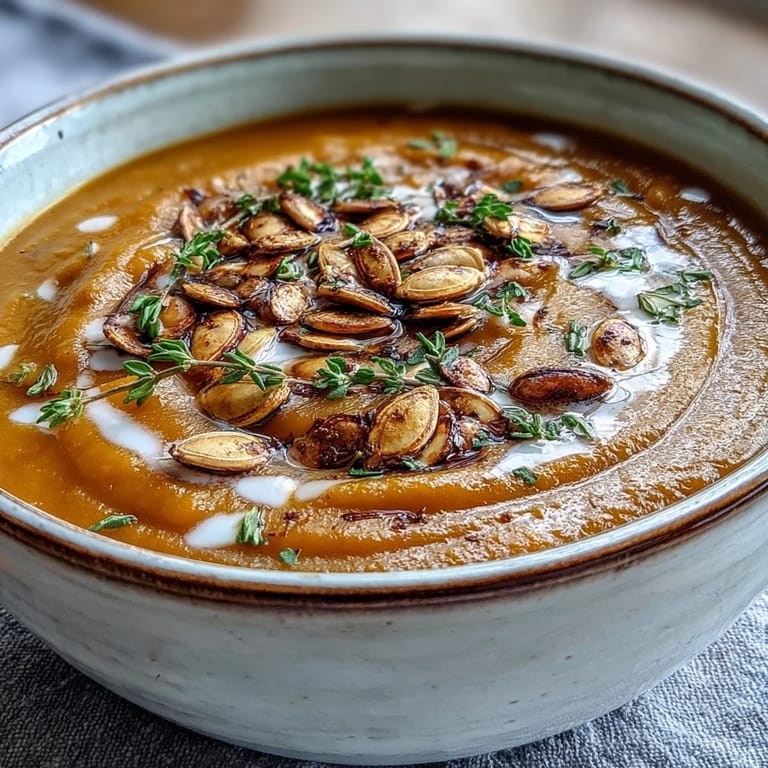
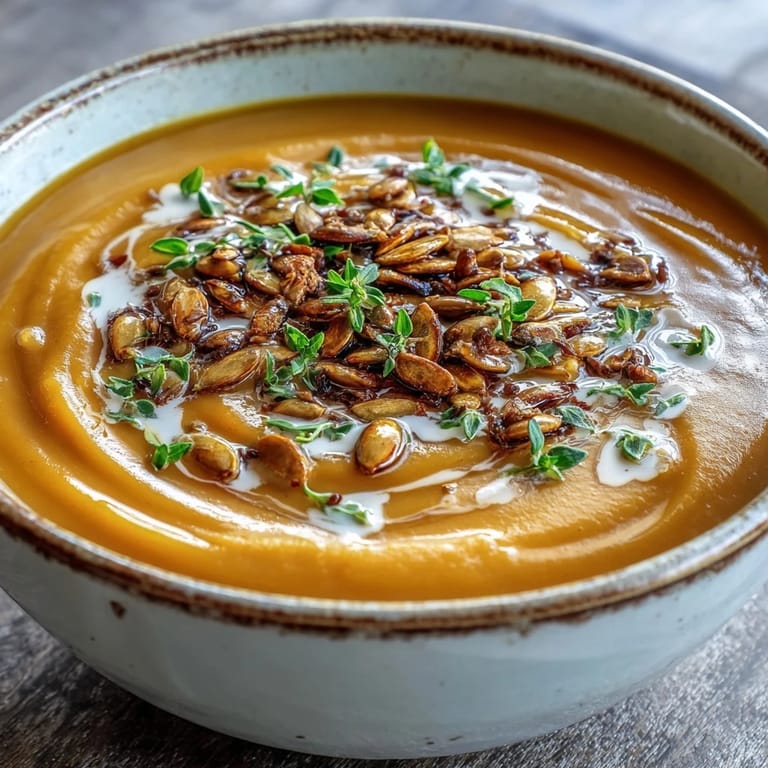
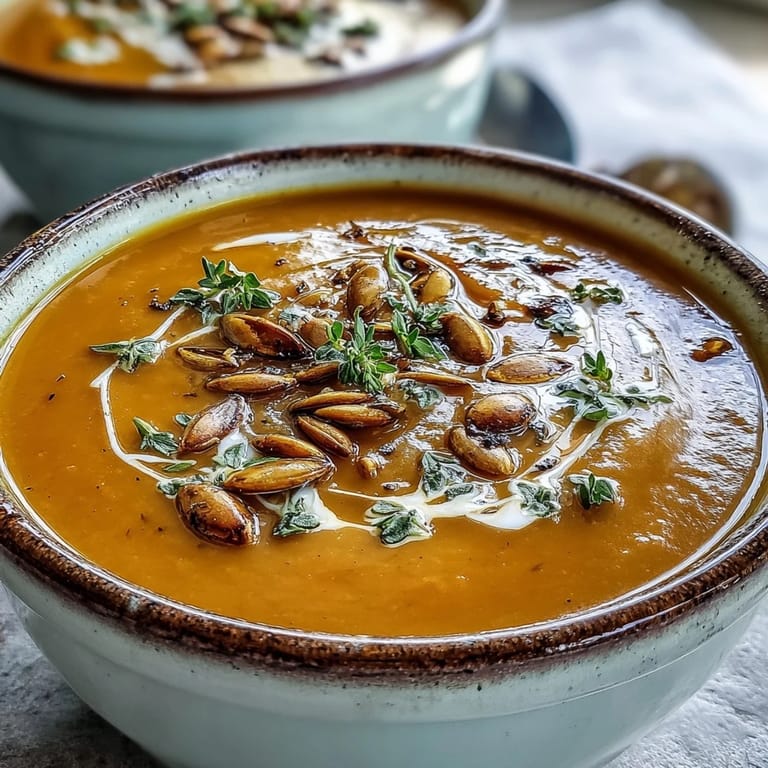
- The garnishes arent just pretty extras but flavor enhancers. The cream adds richness, pumpkin seeds bring necessary texture contrast, and fresh thyme offers bright herbal notes against the sweet backdrop.
 Save to Pinterest
 One particularly difficult winter, when seasonal depression was hitting me hard, I started making this soup weekly. The ritual of chopping vegetables and the physical warmth of the kitchen became a form of therapy. My teenage son, who typically avoids vegetables with Olympic-level dedication, started appearing in the kitchen whenever he smelled the squash roasting, bowl in hand, no longer bothering with the pretense that he wasnt interested.
Storing Leftovers
This soup develops deeper flavors overnight, making it possibly even better as leftovers. I store mine in wide-mouth mason jars in the refrigerator, where it keeps beautifully for up to four days. The soups natural thickness means it doesnt separate or get watery like some veggie soups can, though you might need to add a splash of broth when reheating if its thickened too much.
Seasonal Variations
In summer months when butternut isnt in season, Ive adapted this recipe using sweet potatoes with surprisingly good results. During fall harvest, try incorporating a small honeycrisp apple to the roasting pan for a subtle fruity undertone that plays beautifully with the spices. Winter variations benefit from a tablespoon of maple syrup added at the end, which somehow makes the soup feel even more warming on the coldest nights.
Serving Suggestions
While this soup stands perfectly well on its own, Ive discovered certain pairings that elevate the entire eating experience. A grilled cheese sandwich made with sharp cheddar and thinly sliced apples creates a meal that somehow feels both sophisticated and like childhood comfort food simultaneously.
- Serve in preheated bowls to keep the soup hot longer, especially important for those who like to savor each spoonful.
- A swirl of balsamic reduction on top adds a tangy counterpoint to the soups natural sweetness.
- For a complete meal that doesnt overwhelm the soup, pair with a simple arugula salad dressed with lemon and olive oil.
 Save to Pinterest
 This butternut squash soup has become more than just a recipe in my household - its a signal that comfort is coming. Whether youre making it for yourself or sharing with others, I hope it brings the same warmth to your home that it has to mine.
Recipe FAQ
- → Can I make this soup ahead of time?
Absolutely! This soup actually tastes better the next day as flavors have time to meld. Store in an airtight container in the refrigerator for up to 4 days, or freeze for up to 3 months.
- → What can I use instead of butternut squash?
Other winter squash like acorn, delicata, or kabocha work beautifully. Sweet potatoes also make a delicious alternative with similar sweetness and texture.
- → How do I get the smoothest texture?
Roasting the squash until fully tender is key. Using an immersion blender directly in the pot makes pureeing easy. For ultra-smooth results, pass through a fine-mesh sieve after blending.
- → Can I make this vegan?
Yes! Simply omit the butter and use only olive oil. Substitute coconut milk or your favorite plant-based cream for the heavy cream garnish.
- → What should I serve with this soup?
Crusty bread, grilled cheese sandwiches, or a simple green salad pair perfectly. The soup also makes a lovely starter alongside roasted meats or vegetarian mains.
- → Why roast the squash instead of boiling it?
Roasting concentrates the natural sugars and creates caramelized edges that add deep, sweet flavor. This extra step makes the soup much more complex and satisfying than boiled versions.