 Save to Pinterest
 My first deep-dish pizza came together almost by accident one snowy January when my brother insisted we could replicate what we'd eaten at a Chicago pizzeria the summer before. We didn't have a proper pan, so we improvised with a cake tin and a determination that felt more stubborn than skilled. Three hours later—dough risen on the radiator, sauce simmering while we debated toppings, cheese piled impossibly high—we pulled out something that looked nothing like a pizza but tasted like vindication. Now I make it whenever I want that feeling again, that sense of building something substantial with your own hands.
I remember my sister's skeptical face when I told her the crust would rise for an hour—she was used to frozen pizzas and the quick fix. When we sliced into it and steam rolled out, carrying the smell of oregano and bubbling tomato, her expression shifted. She reached for seconds before anyone else finished first. That's when I understood this wasn't just food; it was the difference between feeding someone and feeding them something that stays with them.
Ingredients
- All-purpose flour (3 1/4 cups): The foundation that needs patience—don't rush the kneading or you'll lose the tender crumb later.
- Yellow cornmeal (1/2 cup): This is your secret weapon for texture and flavor, giving the crust a subtle sweetness and grittiness that feels authentic to Chicago style.
- Active dry yeast (2 1/4 teaspoons): Make sure it's foamy after five minutes or your dough won't rise, and the whole project stalls.
- Warm water (1 1/4 cups): Check the temperature with your wrist—too hot kills the yeast, too cold and it barely wakes up.
- Olive oil and melted butter (1/4 cup plus 2 tablespoons): Together they create richness and a golden finish that makes the crust sing.
- Shredded mozzarella (3 cups): Don't skip the quality here—low-moisture mozzarella browns better than the watery supermarket kind.
- Grated Parmesan (1/2 cup): This adds sharpness and helps the cheese brown evenly across the top.
- Crushed tomatoes (28 oz can): San Marzano if you can find it, though I've made this work with whatever's on sale.
- Garlic, oregano, basil, and a pinch of sugar: The sauce needs time to marry these flavors, so don't skip the simmering step.
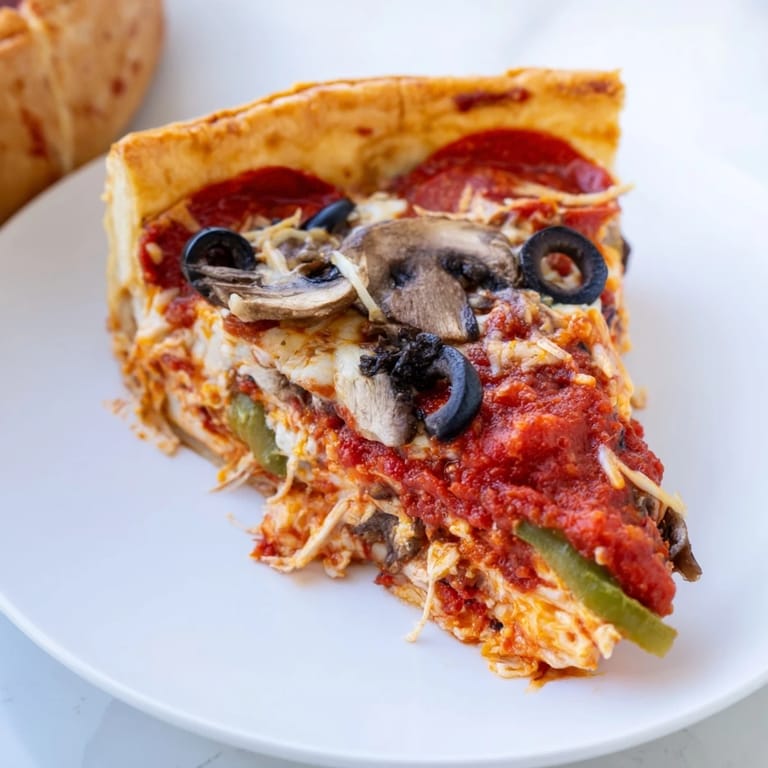
- Toppings (pepperoni, mushrooms, bell peppers, olives): Less is more here—overload the pizza and your crust never gets crispy, just steamed.
Tired of Takeout? 🥡
Get 10 meals you can make faster than delivery arrives. Seriously.
One email. No spam. Unsubscribe anytime.
Instructions
- Bloom the yeast:
- Pour warm water into a bowl and sprinkle the yeast over it, then wait five minutes for it to foam up like a small brown cloud. If nothing happens, your yeast is dead and you need to start over—there's no fixing that part.
- Build the dough:
- Mix in the flour, cornmeal, salt, oil, and melted butter until shaggy, then knead for five to seven minutes until the dough becomes smooth and slightly elastic. It should feel alive under your hands, not stiff.
- Let it rise:
- Oil a bowl, place the dough inside, cover it with a towel, and find a warm corner of your kitchen—ideally 75–80°F. In one hour it should roughly double; if your kitchen is cold, it'll take longer.
- Make the sauce while you wait:
- Warm olive oil in a saucepan, add minced garlic, and let it turn golden and fragrant before adding the crushed tomatoes and dried herbs. Simmer gently for twenty minutes, tasting as you go to adjust seasoning.
- Preheat and prepare:
- Set your oven to 425°F and grease a 12-inch deep-dish pan with oil, making sure to coat the corners where the crust will crisp up.
- Shape the crust:
- Press the risen dough into the pan with your fingertips, working it up the sides to create that characteristic thick, high edge that defines deep dish. Don't be shy about it—this dough has been resting and is ready.
- Layer strategically:
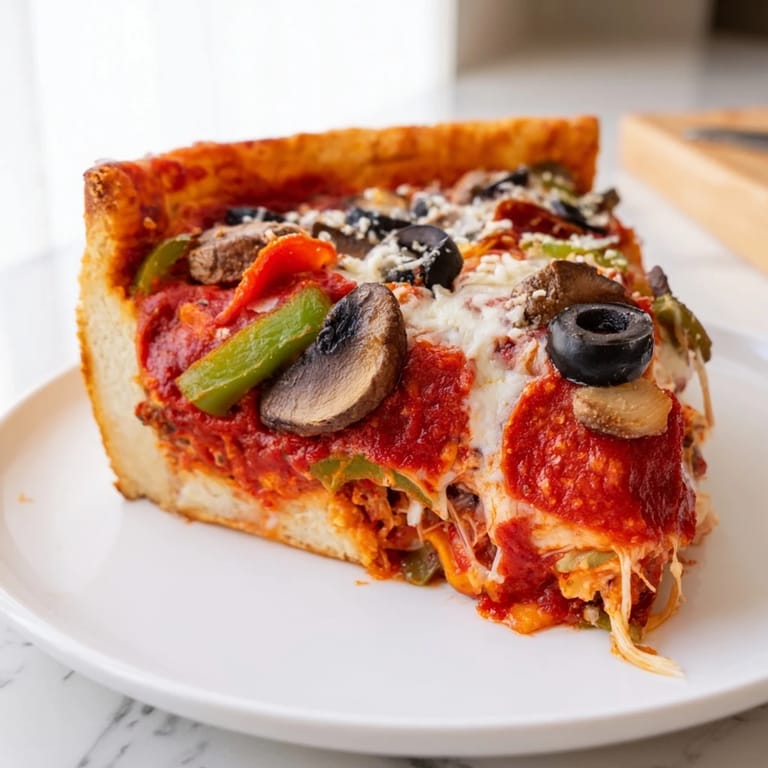
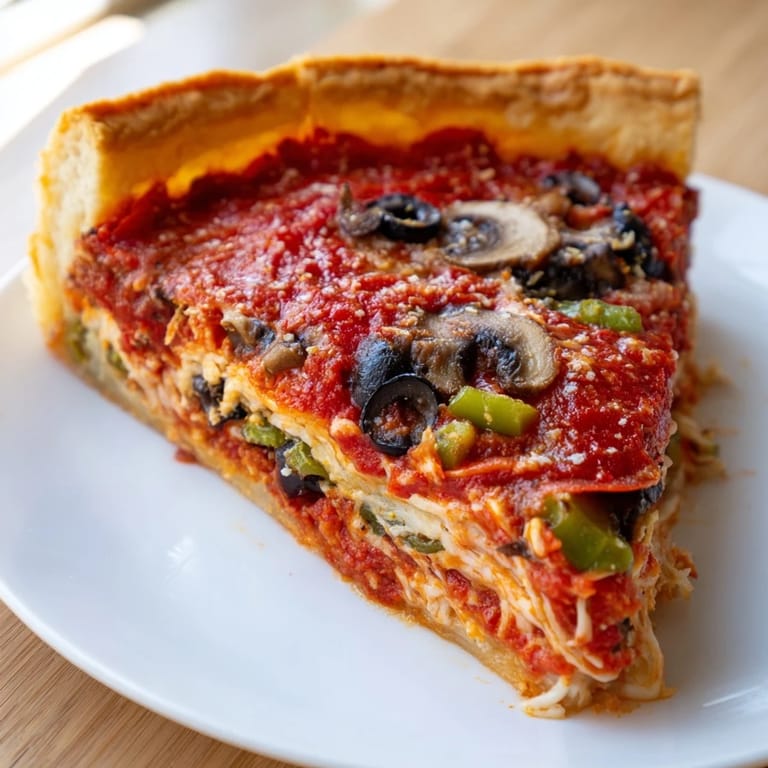
- Spread mozzarella first, directly on the dough—this creates a protective layer between crust and toppings. Then scatter your toppings (not too heavy), and finally pour the sauce over everything, finishing with Parmesan.
- Bake until golden:
- The pizza needs 35–40 minutes, and you'll know it's done when the crust is deep golden and the sauce is bubbling aggressively around the edges. If the crust is browning too fast, drape foil over the top halfway through.
- Rest before slicing:
- This is crucial—ten minutes lets the cheese set and the crust finish cooking through. Slice too early and it collapses; wait and it slices clean.
 Save to Pinterest
 There's a specific moment when deep-dish pizza stops being a recipe and becomes ritual—when the kitchen fills with that particular smell of yeast and tomato and cheese browning together, when you can't quite tell if you're hungry or just nostalgic. My kitchen never feels more like home than it does in those forty minutes of waiting.
On Chicago Tradition
Deep-dish pizza isn't really about reinventing the wheel; it's about respecting an invention that came from needing to feed a lot of people well. Chicago figured out that a thicker crust, more sauce, and serious cheese layers create something that satisfies in a way thin crust never quite does. Making it at home means you're joining a conversation that's been going on for decades in that city, and somehow that matters when you're standing at your oven.
Choosing Your Toppings
The beautiful part about this recipe is how it lets you choose your own adventure without ruining the foundation. Some people are pepperoni purists, others load it with vegetables, and I've made versions with sautéed spinach and caramelized onions that were equally honest. The rule is moderation—every extra ounce of topping is an ounce of moisture that has to escape, and your crust pays the price.
Variations and Serving
If store-bought dough calls to you, there's no shame in that—you're still building something from scratch in the important ways. A blend of provolone and mozzarella adds complexity, or you can experiment with smoked cheeses if you're feeling adventurous. Serve it with a simple green salad and a red wine like Chianti, or serve it with nothing but appetite and good company.
- Let any leftover pizza cool completely before wrapping it—warm pizza sweats and gets soggy in the fridge.
- Reheat a slice in a 350°F oven for five minutes rather than the microwave, which makes the crust tough and rubberlike.
- This pizza is forgiving enough to feed eight hungry people or four very satisfied ones.
 Save to Pinterest
 This is the kind of pizza that makes people linger at your table longer than they planned, that turns a regular weeknight into something worth remembering. Every time you make it, you get a little better at reading the oven and trusting your instincts about when it's done.
Recipe FAQ
- → What makes Chicago deep dish crust unique?
The crust combines all-purpose flour with yellow cornmeal for a buttery, crisp texture that holds generous toppings well.
- → Can vegetarian toppings be used?
Yes, omitting meat and increasing vegetables like mushrooms, bell peppers, and olives keeps it flavorful and suitable for vegetarians.
- → How long does the dough need to rise?
The dough should rise about one hour or until doubled in size to ensure a light and airy crust.
- → What type of cheese works best for this style?
Mozzarella provides meltiness, while Parmesan adds a sharp, nutty finish that complements the thick crust and sauce.
- → How is the tomato sauce prepared?
Sautéed garlic with olive oil, then simmer crushed tomatoes with oregano, basil, sugar, salt, and pepper creates a bright and balanced sauce.
- → What baking temperature ensures a perfect crust?
Baking at 425°F (220°C) allows the crust to turn golden brown while the toppings and sauce bubble nicely.