 Save to Pinterest
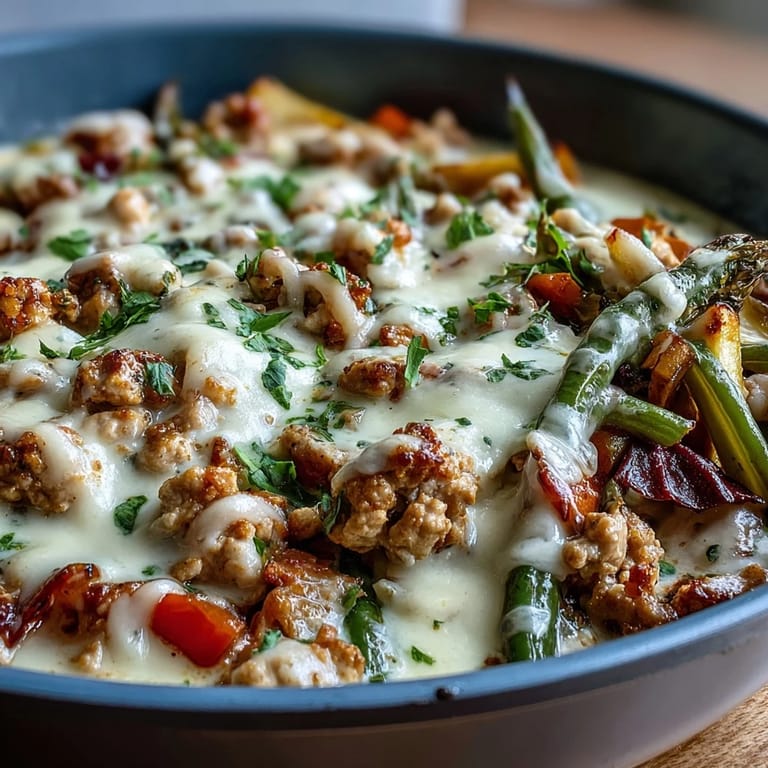
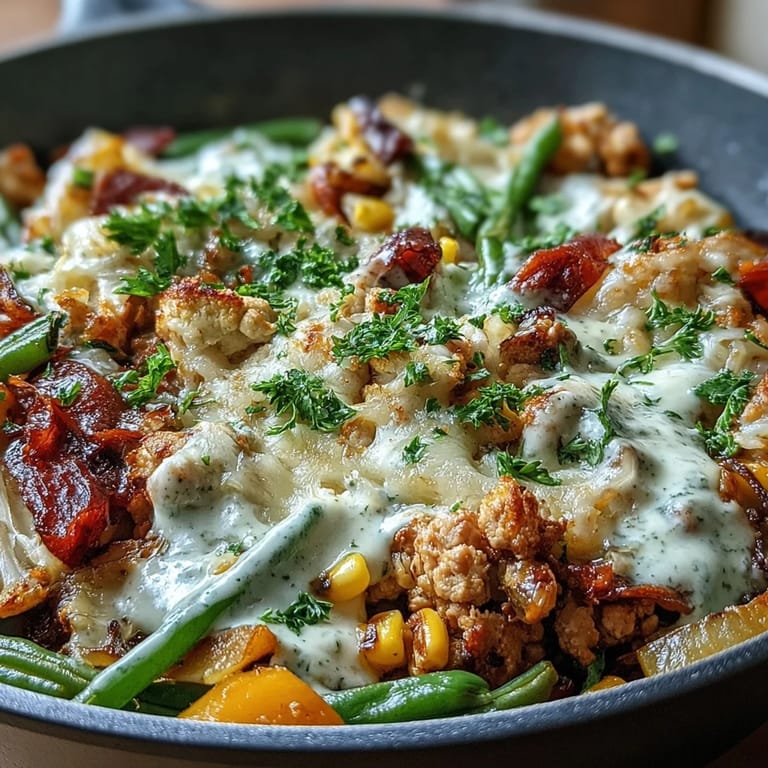
 There's something about a skillet dinner that just works on a Tuesday night when nobody's quite ready to think about cooking. I discovered this ranch turkey situation by accident, honestly—I had heavy cream that needed using, some ground turkey in the fridge, and an embarrassing amount of faith that ranch seasoning could save the day. Twenty minutes later, my kitchen smelled incredible, and my family was circling the stove before I'd even finished plating. It became the kind of meal that gets requested by name now.
I made this for my sister's family one Friday when she texted asking if I could feed four hungry kids and two exhausted adults. I had maybe ninety minutes and a pantry that looked picked over. This skillet came through—everyone ate it, nobody complained, and I got to sit down and actually talk to people instead of frantically cooking. That's when I knew this was keeper-level food.
Ingredients
- Ground turkey (1 lb): This is your protein anchor—it cooks faster than beef and stays tender if you don't overcrowd the pan or press it too hard while browning.
- Heavy cream (1 cup): Don't skip this or substitute it with milk; the fat content is what makes the sauce actually creamy instead of thin and sad.
- Sour cream (1/2 cup): This adds tanginess and richness—the combination of heavy cream and sour cream is the secret to sauce that tastes restaurant-quality.
- Shredded cheddar cheese (1 cup): Buy block cheese and shred it yourself if you can; pre-shredded has anti-caking agents that make the sauce slightly grainy.
- Mixed vegetables (2 cups): Bell peppers, carrots, green beans, and corn work beautifully together—frozen is genuinely fine here and often fresher than what's sitting in your produce drawer.
- Onion and garlic: These build the flavor foundation; don't rush through sautéing them, those few minutes matter.
- Ranch seasoning mix (2 tsp): A good quality mix is worth it, but you can make your own with dried parsley, chives, dill, garlic powder, and onion powder if you prefer.
- Olive oil, salt, and pepper: The oil prevents sticking; the salt and pepper are your final tweaks to taste.
Tired of Takeout? 🥡
Get 10 meals you can make faster than delivery arrives. Seriously.
One email. No spam. Unsubscribe anytime.
Instructions
- Warm your pan and soften the onion:
- Pour olive oil into a large skillet over medium heat, then add diced onion. You'll see it go from opaque to translucent and slightly golden in about 2–3 minutes—that's when the aromatics have really started releasing. If you're impatient like I sometimes am, resist the urge to rush it.
- Brown the turkey properly:
- Add your ground turkey directly to the pan, breaking it apart gently with a spatula as it cooks for about 5–6 minutes. You want a light golden color throughout, not gray, and all the pink gone. Listen for a gentle sizzle—that's how you know it's getting a good sear.
- Bloom the garlic:
- Stir in minced garlic and let it cook for just about 1 minute until your kitchen suddenly smells amazing. Any longer and garlic burns, leaving a bitter taste that you can't undo.
- Add the vegetables:
- Toss in your mixed vegetables and let them soften for 4–5 minutes if they're frozen, longer if they're fresh. Stir occasionally so they cook evenly and nothing sticks to the bottom of the pan.
- Season and reduce the heat:
- Build the cream sauce:
- Lower the heat to low, then sprinkle in the ranch seasoning, salt, and black pepper. Pour in the heavy cream and add spoonfuls of sour cream, stirring constantly until everything is smooth and combined. This should take about 2–3 minutes and you're looking for a luxurious, unified sauce.
- Finish with cheese:
- Scatter the cheddar cheese over everything and stir gently until it's melted and the whole mixture looks creamy and rich. Don't overstir once the cheese is in—just until it's integrated.
- Serve and enjoy:
- Spoon the turkey and vegetable mixture over your pasta or rice, garnish with fresh parsley if you have it, and serve while everything's still hot and the sauce is silky.
 Save to Pinterest
 My eight-year-old asked for seconds and then thirds of this, which genuinely shocked me because getting a kid excited about ground turkey felt impossible before this. That moment of her eyes lighting up and asking for more made me realize this wasn't just dinner—it was proof that simple, real food tastes better than anything fancy when you actually care about the details.
The Beauty of Building Flavor in Layers
This recipe works because you're not just mixing everything together at once like some kind of culinary shortcut. You sauté the onion first, then add the turkey, then the garlic, then the vegetables—each component gets its moment to develop flavor and deepen the overall taste of the finished dish. It's the difference between a skillet that tastes like ingredients and one that tastes like something intentional. That layering is what makes weeknight cooking feel special without requiring fancy techniques.
Flexibility Without Losing the Soul of the Dish
The genius of this skillet is that it bends without breaking. You can use chicken instead of turkey, swap broccoli or zucchini for the corn, use Greek yogurt if you want it lighter—the ranch seasoning and creamy sauce hold everything together and keep it recognizable. I've made it with whatever vegetables were on sale that week, and it's been excellent every single time. The core technique and flavor profile are so solid that variations feel like improvements rather than compromises.
Pasta or Rice and What Actually Matters
Some people are firm about pasta, others swear by rice—honestly, both work beautifully here because the sauce clings to either one and makes everything taste richer. What actually matters is that your pasta or rice is cooked just before you finish the skillet, so everything comes together hot and the sauce doesn't cool down while you're scrambling to finish side dishes. Timing is everything in a one-pan meal like this.
- Cook your pasta or rice while the turkey is browning so both finish around the same time.
- If you're using leftover pasta or rice, you can skip that step and just warm everything through together in the skillet for a few minutes.
- The sauce is generous enough that even if your pasta or rice is slightly cold when it goes on the plate, it'll warm up from the heat of the mixture beneath it.
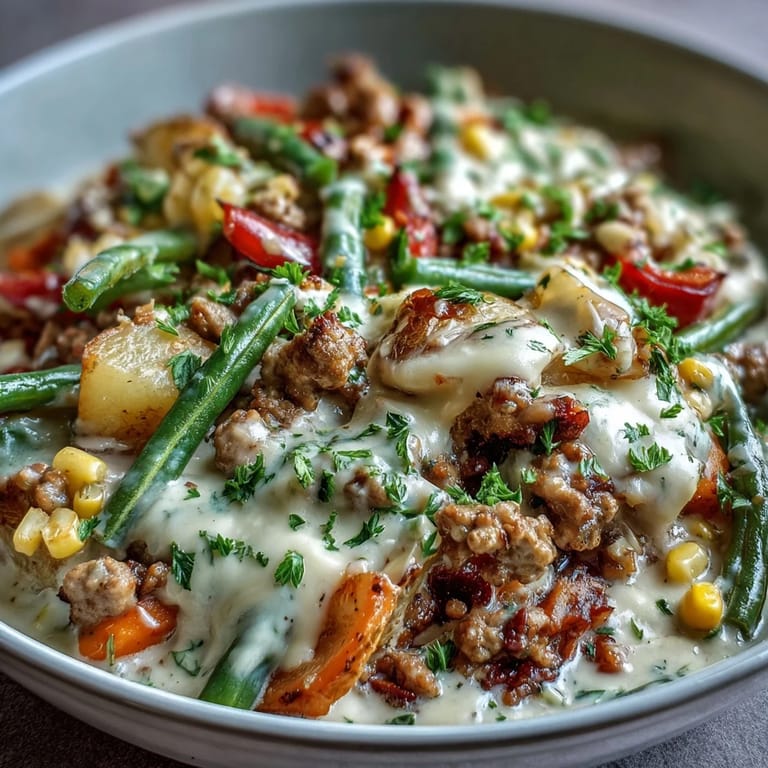 Save to Pinterest
 This is the kind of recipe that makes you feel like a good cook even on nights when you're tired and uninspired. It delivers comfort without demanding your full attention or keeping you in the kitchen forever.
Recipe FAQ
- → Can I use frozen vegetables instead of fresh?
Yes, frozen mixed vegetables work perfectly in this skillet. Simply add them directly from frozen and cook until tender, which may take an additional 2-3 minutes compared to fresh vegetables.
- → What can I substitute for heavy cream to make it lighter?
Replace heavy cream with half-and-half for a lighter version, or use evaporated milk for reduced calories. Greek yogurt can also replace sour cream while maintaining creaminess.
- → How long do leftovers keep in the refrigerator?
Store leftover skillet in an airtight container for up to 3-4 days. Reheat gently on the stove with a splash of cream or milk to restore the creamy consistency.
- → Can I make this dish ahead of time?
You can prepare the turkey and vegetable mixture up to a day in advance. Add the cream and cheese just before serving to prevent the sauce from separating or becoming too thick.
- → What type of pasta works best with this skillet?
Short pasta shapes like penne, rotini, or macaroni work well as they hold the creamy sauce nicely. Rice, couscous, or even mashed potatoes make excellent alternatives.
- → Can I use different ground meat?
Ground chicken, beef, or even sausage work well as substitutes. Adjust cooking time accordingly—beef may need slightly longer to brown thoroughly.