 Save to Pinterest
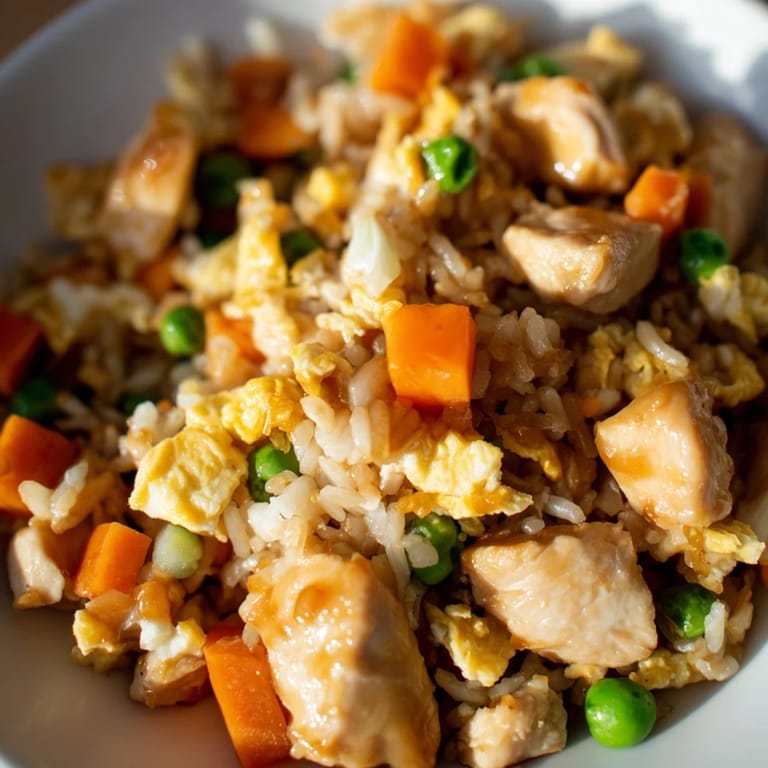
 There's something about the sizzle of a wok that makes everything feel possible. I discovered chicken fried rice during a Tuesday night when my fridge was nearly empty and my friends were coming over in twenty minutes. I had leftover rice, some chicken, and a determined mood. What emerged from that wok was so good that it's now my go-to move whenever I need to turn simple ingredients into something that tastes like I actually planned ahead.
My roommate swore I couldn't make restaurant-quality fried rice at home until I made this. Watching her eyes light up when she tasted it, then immediately asking for the recipe, reminded me why I love cooking. It's not about impressing people—it's about sharing something warm that you actually made with your own hands.
Ingredients
- Chicken breast or thigh, 300 g diced: Thighs stay juicier than breast, but either works if you don't overcook them past golden.
- Eggs, 2 large: They scramble into ribbons that bind everything together with richness.
- Carrot, 1 medium diced: The sweetness balances salt and soy, plus the color looks intentional.
- Frozen peas, 100 g: They thaw in seconds and add a pop without needing to defrost first.
- Onion, 1 small finely chopped: Softening this first builds a base layer of flavor.
- Spring onions, 2 sliced: The fresh bite at the end reminds you this came from your kitchen, not a takeout container.
- Jasmine or long-grain rice, 500 g cooked: Day-old rice is essential—fresh rice clumps no matter how hard you stir.
- Soy sauce, 3 tbsp: This is your backbone; taste as you go because some brands run saltier than others.
- Oyster sauce, 1 tbsp optional: It adds depth if you have it, but soy alone gets the job done.
- Sesame oil, 1 tsp: A small amount goes far; too much masks everything else.
- White pepper, 1/2 tsp: Ground white pepper feels less sharp than black and won't create dark specks.
- Vegetable oil, 2 tbsp divided: High heat needs an oil that won't smoke, so skip the olive oil here.
Tired of Takeout? 🥡
Get 10 meals you can make faster than delivery arrives. Seriously.
One email. No spam. Unsubscribe anytime.
Instructions
- Gather everything first:
- Cutting and measuring before you heat the wok means you're not scrambling while things cook. If your rice is fresh, spread it on a plate for ten minutes so it dries out slightly.
- Cook the chicken until it's golden:
- Heat 1 tablespoon of oil in your wok over medium-high heat, add the diced chicken, and listen for it to sizzle immediately. It takes about 4 to 5 minutes total; you're looking for the outside to turn golden and the inside to stop being pink, not for it to be cooked twice over.
- Build the vegetable base:
- Add the remaining oil, then the onion and carrot. These need 2 to 3 minutes in the heat to soften and release their sweetness. Toss in the peas for one more minute just until they warm through.
- Scramble the eggs in:
- Push your vegetables to the side so you have a clear spot in the wok. Crack your eggs right into that space and scramble them with a spatula until they're just set but still slightly soft. They'll keep cooking as everything combines.
- Add the rice and break up the clumps:
- Pour in all your rice and use two utensils to break apart any lumps and separate the grains. Stir constantly for about 2 minutes until the rice starts to look dry and individual instead of clustered.
- Bring everything together with sauce and chicken:
- Return the chicken to the wok, pour in the soy sauce, oyster sauce if you're using it, sesame oil, white pepper, and a pinch of salt. Stir everything constantly for 2 to 3 minutes until the seasonings coat everything evenly and you can smell the soy sauce starting to caramelize.
- Finish with fresh onions and a taste:
- Stir in the sliced spring onions and take a bite. Adjust salt or soy if it needs it—this is your moment to make it exactly how you like it.
- Plate and garnish:
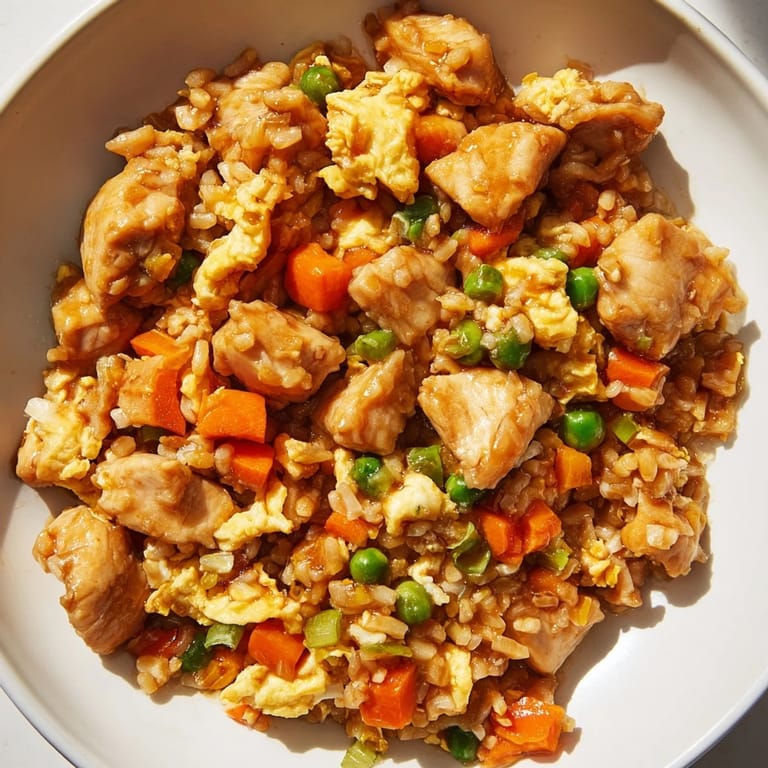
- Transfer to a bowl or plate and scatter extra spring onions on top. Serve it while it's still steaming.
 Save to Pinterest
 I learned that fried rice isn't just convenience food when I made it for my grandmother. She watched the whole process quietly, then took a bite and smiled in a way that made me understand—sometimes the best dishes aren't about technique, they're about care and attention. That's what a wok does when you're present while cooking.
Why Day-Old Rice Changes Everything
Fresh rice is too moist and will steam rather than fry, turning your wok into a pot of porridge. Chilling rice overnight lets the moisture evaporate, and the grains firm up enough to separate and develop a slight char instead of clumping. If you don't have leftovers, spread fresh rice on a baking sheet and refrigerate it for at least an hour.
The Order of Heat Matters
Cooking the chicken first means it doesn't get lost among the other ingredients, and the wok gets seasoned with its juices. The vegetables go next because they need less time than you'd think—2 to 3 minutes is enough to soften them while keeping them slightly crisp. Eggs scramble directly in the pan, which means they pick up all the flavors from what came before. This sequence builds layers instead of dumping everything at once.
Customizing Without Losing Balance
This recipe is flexible, but substitutions work best when you respect the ratios. Swap the chicken for shrimp, pork, or tofu and adjust the cooking time accordingly—shrimp takes 2 minutes, pork 6 to 8 minutes. You can add bell peppers, corn, or bean sprouts in place of some vegetables, but keep the total volume roughly the same so the rice doesn't become too wet. If you're adding something raw or tender like snap peas or mushrooms, add them near the end so they don't turn to mush.
- Serve with chili sauce, extra soy sauce, or a squeeze of lime if you want another dimension.
- Taste the rice before adding salt—soy sauce is already salty, and some brands are saltier than others.
- This keeps in the fridge for up to three days and reheats beautifully in the wok with a splash of water.
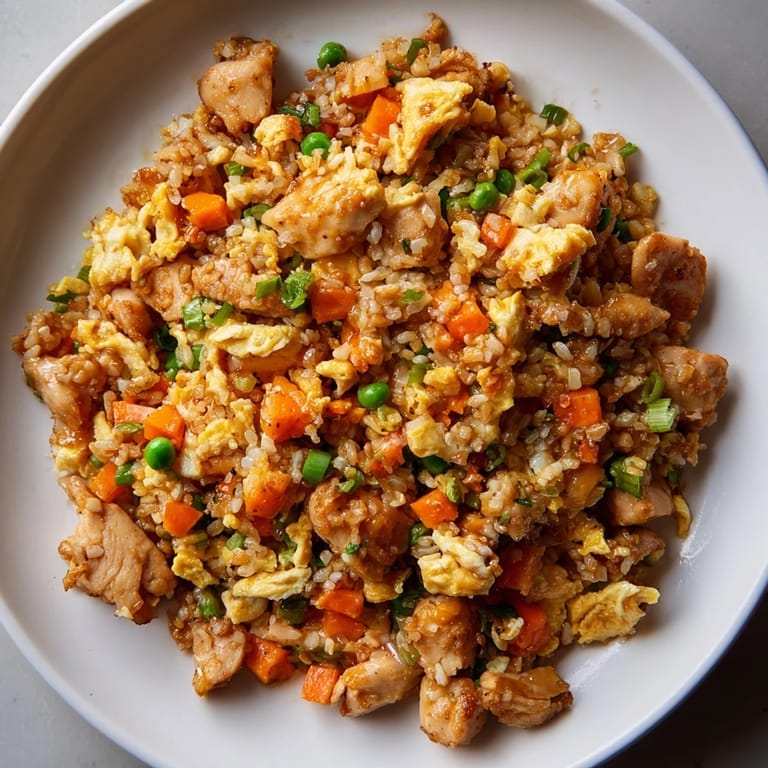 Save to Pinterest
 Fried rice became my confidence dish the first time someone asked me to make it and I realized I didn't need a recipe anymore. You'll get there too.
Recipe FAQ
- → What type of rice works best for this dish?
Day-old jasmine or long-grain rice is ideal as it’s drier, helping to achieve the perfect stir-fry texture without clumping.
- → Can I substitute the chicken with other proteins?
Yes, shrimp, pork, or tofu can be used as alternatives while maintaining great flavor and texture.
- → Why is sesame oil used in the cooking process?
Sesame oil adds a nutty, aromatic flavor that enhances the overall taste without overpowering the other ingredients.
- → How do I prevent the rice from becoming mushy?
Using chilled, day-old rice and frying over medium-high heat while stirring constantly helps keep the grains separate and fluffy.
- → What vegetables can I add for extra crunch?
Bell peppers, corn, or bean sprouts are great additions to enhance texture and freshness.