 Save to Pinterest
 My neighbor Sarah knocked on the door one July evening with a cedar plank tucked under her arm and a grin that said trouble. She'd just discovered these planks at the farmer's market and insisted we figure out what to do with one before the weekend was over. We threw together whatever salmon we had, squeezed a lemon, grabbed some dill from the garden, and ended up creating something so fragrant and effortless that it became our summer ritual.
I made this for my parents' anniversary dinner last summer, grilling it on a borrowed Weber while my mom fussed over the table inside. When my dad took that first bite, he got quiet in that way that means something just made his day. He asked for the recipe right then, fork still in hand, and I realized this simple plank of fish had somehow become the meal he'd remember.
Ingredients
- Salmon fillets (6 ounces each, skin-on): The skin keeps everything moist and gets gloriously crispy against the cedar, so don't you dare remove it.
- Olive oil: This is your binding agent and flavor carrier, so use something you'd actually taste on its own.
- Fresh lemon juice and zest: The juice adds brightness while the zest gives those little bursts of flavor that make people pause mid-bite.
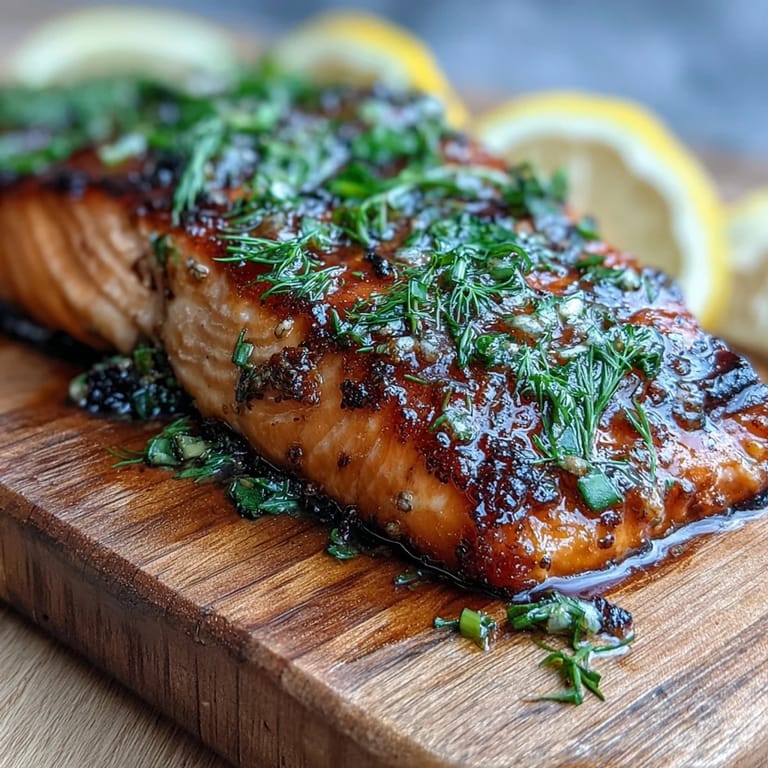
- Fresh dill: Chopped dill goes into the marinade and fresh sprigs garnish at the end because one note isn't enough.
- Garlic clove, minced: Just one, because we're letting the cedar and lemon be the stars here.
- Kosher salt and black pepper: Season generously but taste before you commit, since the lemon will also bring salt-like brightness.
- Cedar plank (untreated, soaked): This is non-negotiable and must soak for a full hour so it smolders instead of flames.
- Lemon slices and fresh dill sprigs: These finish the dish and add a final flourish of freshness when it hits the plate.
Tired of Takeout? 🥡
Get 10 meals you can make faster than delivery arrives. Seriously.
One email. No spam. Unsubscribe anytime.
Instructions
- Soak your cedar plank like you mean it:
- Fill a bucket or your sink with cold water and submerge that cedar plank completely for at least one hour, weighing it down with a can if it keeps floating up. This step isn't fancy, but it's everything between a beautiful smoky dinner and a flaming disaster.
- Make your marinade while you wait:
- In a small bowl, whisk together the olive oil, lemon juice, zest, chopped dill, minced garlic, salt, and pepper until it looks like a loose paste. Taste it and feel proud because you've already nailed the flavor part.
- Prepare and coat your salmon:
- Pat those salmon fillets dry with paper towels so the marinade actually sticks instead of sliding right off. Brush both sides generously with your mixture, then let them sit out for about fifteen minutes so the flavors start to wake up.
- Get your grill ready for action:
- Preheat your grill to medium-high, aiming for around four hundred degrees Fahrenheit. If you don't have a thermometer, hold your hand above the grates and count—you should only manage about three seconds before the heat drives you away.
- Wake up the cedar plank:
- Place that soaked plank directly on the grill grates, close the lid, and let it sit for three minutes until it starts crackling and releasing that smoky aroma that makes your whole neighborhood jealous. You'll see wisps of smoke and maybe even a little glow along the edges.
- Arrange and nestle your salmon:
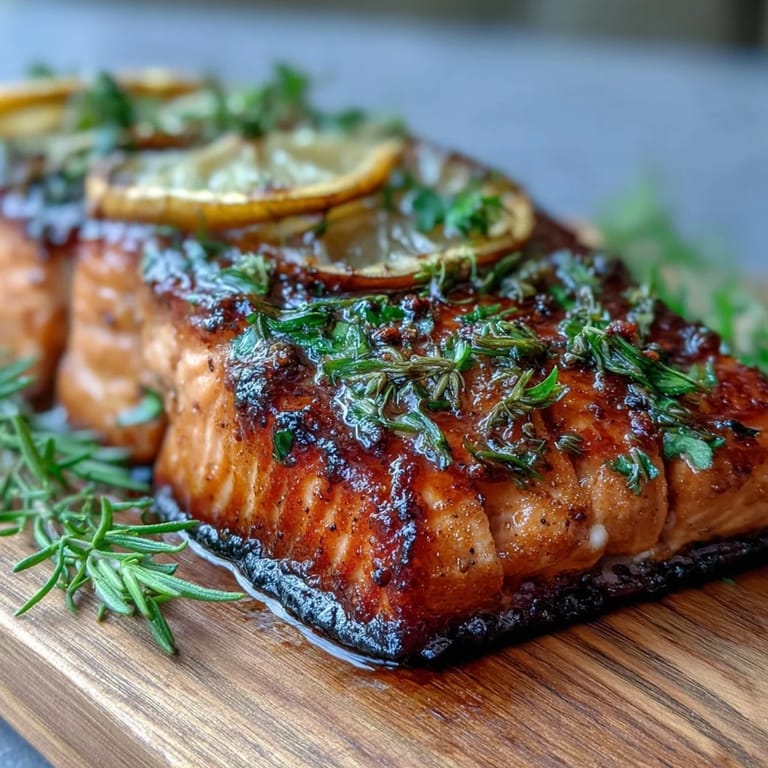
- Lay lemon slices in a single layer across the plank, then carefully position your salmon fillets skin-side down right on top of those lemons. The lemons act as little flavor bridges and keep everything from sticking.
- Close the lid and trust the process:
- Lower the grill lid and cook for fifteen to twenty minutes, resisting the urge to peek more than once or twice. The salmon is done when it flakes easily with a fork and the center still has just a hint of translucence.
- Rest and garnish before serving:
- Remove the whole plank from the grill using tongs and let everything rest for two minutes so the carryover heat finishes its work. Scatter fresh dill sprigs on top and serve the salmon right on the plank if you're feeling fancy.
 Save to Pinterest
 There's a moment when you pull that plank off the grill and the smoke rises up and hits your face, and suddenly you're not just cooking dinner anymore—you're creating something that tastes like summer tastes like outdoor dinners with people you actually want to sit with for hours. That's what this dish does.
Why Cedar Planks Change Everything
The first time I used a cedar plank, I was genuinely skeptical that a piece of wood could be a cooking vessel without causing chaos. But cedar is special because it burns slowly and evenly, infusing everything with a gentle smoke that doesn't overpower but rather embraces the fish like a warm blanket. The wood also keeps direct heat at bay, which means your salmon stays tender and moist while everything around it gets kissed by smoke and flame. It's honestly hard to mess this up once you understand that the plank is doing the protecting and flavoring for you.
The Lemon Dill Marriage
I learned this the hard way after making sad salmon too many times—dill and lemon aren't just nice together, they're essential to each other. The citrus cuts through the richness of the salmon while the dill adds an herbaceous calm that keeps everything balanced. What really shifted for me was learning to use both the juice and the zest, so you get the brightness of fresh lemon in the marinade and then tiny pockets of concentrated lemon flavor throughout every bite. It's a simple pairing that somehow feels both elegant and completely unpretentious.
Timing and Temperature Tips
Getting the grill temperature right is honestly the only real skill here because everything else is just assembly and patience. If your grill runs hot or your salmon fillets are thicker than average, start checking around the twelve-minute mark by gently pressing the thickest part with your finger—it should give just slightly but still feel somewhat firm. Some grills have hot spots and cool zones, so don't hesitate to slide the plank around if one side seems to be cooking faster than the other. That final two-minute rest after you pull it off is when the residual heat finishes the cooking gently, so don't skip it even though you're hungry.
- If your plank starts smoking heavily, close the grill lid to trap the heat and smoke instead of letting it escape.
- A meat thermometer inserted into the thickest part should read one hundred twenty-five degrees Fahrenheit for medium-rare, which is genuinely the sweet spot for salmon.
- Thick fillets can take closer to twenty minutes while thinner ones might be done in fifteen, so know your fish before you start.
 Save to Pinterest
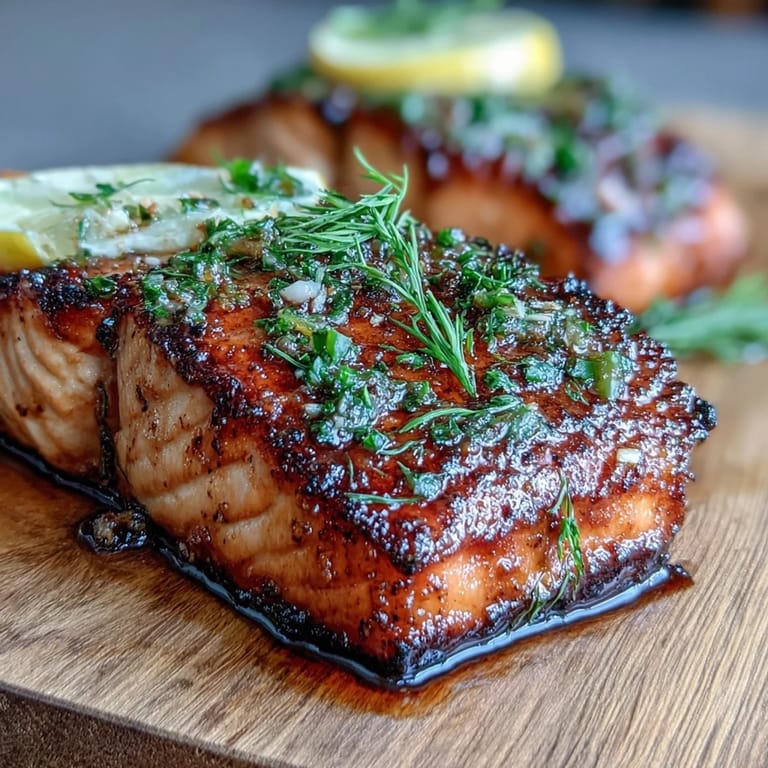
 This recipe taught me that sometimes the best meals come from borrowed ideas and backyard experiments, the kind where everyone leaves the table still talking about what they just ate. Serve it with chilled white wine and nothing fancy, because the salmon is already doing all the heavy lifting.