 Save to Pinterest
 My first California roll came together in a friend's tiny kitchen on a foggy San Francisco evening, and I remember being shocked at how forgiving it actually was. We were nervous about rolling it—worried we'd mess it up spectacularly—but somewhere between the sticky rice and that first crispy bite of cucumber, it clicked. Now it's become my go-to when I want something that feels a little fancy but doesn't require a culinary degree.
There was this one time I made a batch for a potluck, and watching people who swore they couldn't eat sushi dive into their third piece was genuinely thrilling. They kept asking if I'd bought them from a restaurant, and I just smiled into my drink—that moment made me realize how a homemade California roll somehow feels more personal than restaurant versions.
Ingredients
- Sushi rice (1 ½ cups): This is your foundation, so don't skip the rinsing step—it removes excess starch and lets the grains separate properly when cooked.
- Water (2 cups): The ratio matters here; too much and your rice turns mushy, too little and you'll have crunchy bits.
- Rice vinegar (2 ½ tbsp): This is what gives sushi rice its signature tangy sweetness, so don't substitute regular vinegar or your rolls will taste off.
- Sugar (1 tbsp): Balances the vinegar's acidity and brings gentle sweetness that ties everything together.
- Salt (¾ tsp): A small amount makes a huge difference in seasoning the entire dish.
- Crabmeat or imitation crab (120 g): Imitation crab works beautifully here and is more affordable; just make sure it's shredded into thin, manageable pieces.
- Avocado (1 ripe): Choose one that yields slightly to pressure but isn't mushy—slice it right before assembling so it doesn't brown.
- Cucumber (½): Peel and seed it to avoid watery rolls; the thin strips provide that refreshing crunch everyone loves.
- Mayonnaise (2 tbsp, optional): A thin line adds richness, but resist the urge to overdo it or your rolls become greasy.
- Nori sheets (4): Buy good quality—you can taste the difference between fresh and old sheets, and fresh ones roll so much more smoothly.
- Toasted sesame seeds (2 tbsp): Toast them yourself if possible; the nutty flavor makes a noticeable difference.
Tired of Takeout? 🥡
Get 10 meals you can make faster than delivery arrives. Seriously.
One email. No spam. Unsubscribe anytime.
Instructions
- Prepare and season the rice:
- Rinse your rice under cold running water, rubbing it gently between your fingers until the water turns clear—this removes the starch that would make everything sticky. Cook it with the water, then while it's still warm, fold in the vinegar mixture gently so each grain gets coated without breaking.
- Cool everything down:
- Let that seasoned rice cool to room temperature before rolling; warm rice will make your nori soggy and ruin the texture you're after.
- Set up your rolling station:
- Place your bamboo mat on the counter, cover it with plastic wrap (this prevents sticking), and lay down your nori shiny side down. The shiny side should be facing the mat.
- Rice application technique:
- Wet your hands lightly with water, then spread about three-quarters of a cup of rice evenly across the nori, leaving that 2 cm border at the top—this is where you'll seal the roll. Sprinkle sesame seeds right after, pressing gently so they stick.
- The flip and fill:
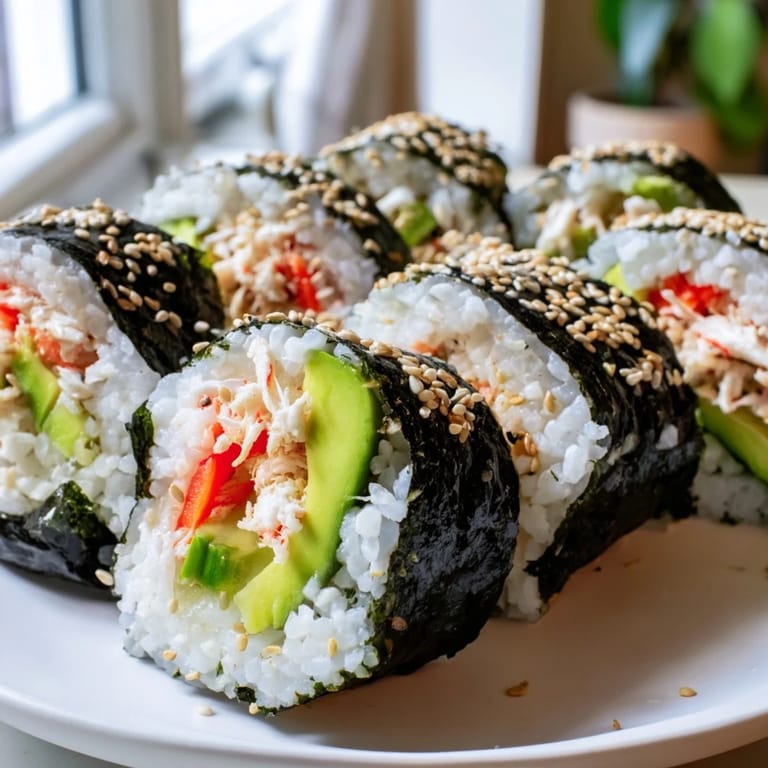
- Carefully flip your rice-covered nori so the rice is now face down on the mat. Arrange your crab, avocado, and cucumber in a thin line along the bottom edge, add a tiny line of mayo if you're using it, and take a breath—you're almost there.
- The crucial roll:
- Lift the bottom edge of the mat and roll it up tightly away from you, using the mat to keep everything compressed and shape the roll into a cylinder. Press gently as you go, and when you reach the end, wet that bare border of nori with a little water to seal it shut.
- Slice with intention:
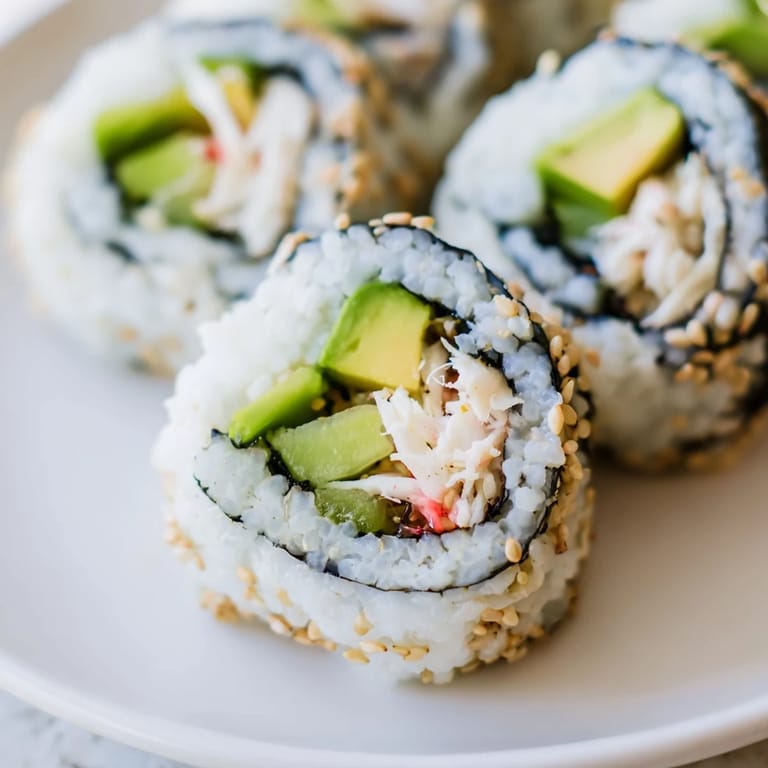
- Use a sharp knife that you've dampened under water, and wipe it clean between each cut—this gives you clean slices instead of torn, squished pieces. You should get six pieces per roll.
- Plate and serve:
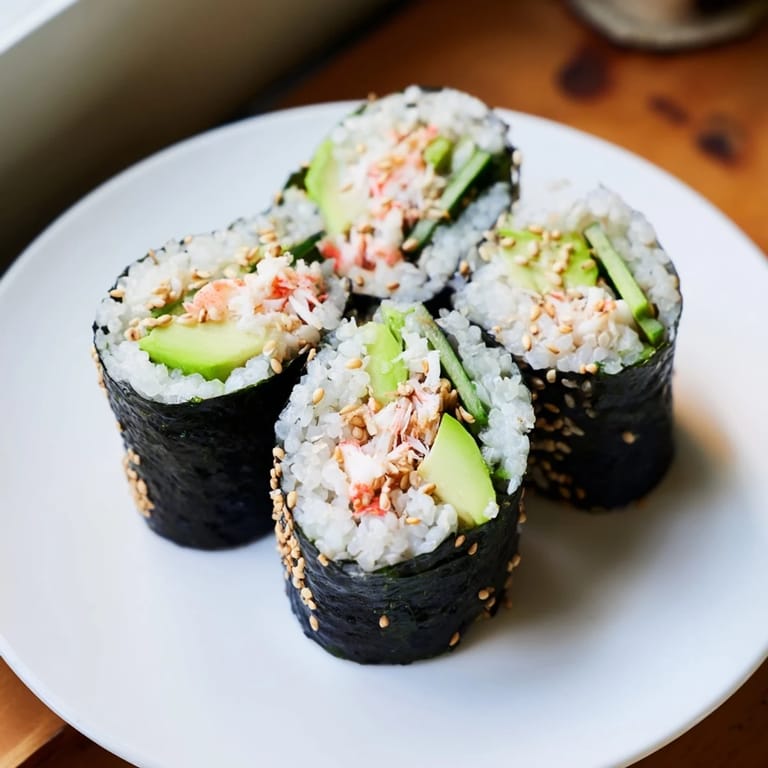
- Arrange your slices on a plate with small bowls of soy sauce, pickled ginger, and wasabi alongside. The ginger is meant to cleanse your palate between bites, so use it thoughtfully.
 Save to Pinterest
 There's something almost meditative about the rolling process once you've done it a few times, and I genuinely look forward to making these now. It's become less about following steps and more about that satisfying moment when you slice into a perfectly rolled cylinder and everything holds together just right.
The Story Behind California Rolls
California rolls are a fascinating intersection of cultures—invented in North America but perfected through Japanese sushi traditions. They're often seen as the gateway roll, the one that got a lot of people excited about sushi in the first place, and there's something charming about that. The fact that they use imitation crab and put the rice on the outside (inside-out style) is actually what makes them feel accessible instead of intimidating, which I think was kind of the point all along.
Getting Your Technique Right
The biggest shift for me was realizing that rolling sushi isn't about perfection—it's about consistency and confidence. Your first roll might look lumpy, but your tenth will be noticeably better, and by your twentieth you'll barely be thinking about it. I used to watch sushi chefs in restaurants and think they had some secret I'd never understand, but really it's just repetition and knowing your materials.
Making It Your Own
Once you've mastered the basic California roll, the fun part is playing with it. I've added thin slices of cooked shrimp, experimented with different vegetables, and even tried a spicy mayo version that my friends requested multiple times. The structure stays the same, but your fillings can tell your own story.
- Try adding a thin layer of spicy mayo mixed with sriracha for heat without overwhelming the delicate flavors.
- A vegetarian version works beautifully if you use extra avocado, cucumber, and maybe roasted sweet potato strips for substance.
- Keep your ingredients prepped and chilled so everything stays fresh and crisp once assembled.
 Save to Pinterest
 Making California rolls at home transforms them from something you order from a restaurant into something you create with your own hands—and somehow that makes them taste better. Whether you're cooking for friends or just for yourself, these rolls deserve to be on your regular rotation.
Recipe FAQ
- → What is the best way to prepare sushi rice for the roll?
Rinse the rice until the water runs clear before boiling. After cooking, fold in a mixture of rice vinegar, sugar, and salt while the rice is still warm for optimal flavor and texture.
- → Can imitation crab be used instead of real crab?
Yes, imitation crab (surimi) works well and provides a similar texture and flavor for the roll, making it a convenient substitute.
- → How do you prevent the roll from falling apart when slicing?
Use a sharp, damp knife and slice with a gentle sawing motion to retain the shape and prevent the rice and fillings from squishing out.
- → What are suitable accompaniments for this roll?
Classic accompaniments include soy sauce, pickled ginger, and wasabi, which enhance the flavors and provide balance to the roll.
- → Is there a vegetarian alternative to this roll?
Yes, substitute crab with extra avocado and cucumber or tofu for a fresh vegetarian option that maintains the roll’s texture and taste.